

The Future of Digitalisation in Sudan Amid Recent Developments
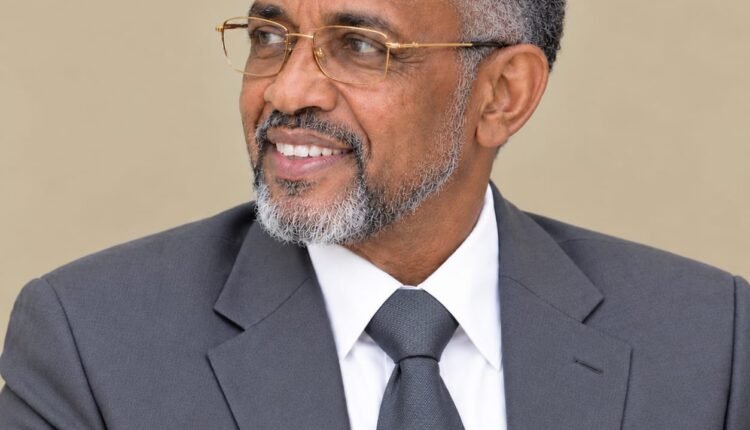
Eng. M. Mohamed Al-Shater Al-Amin
Digitalisation in Sudan is no longer a technological luxury or a slogan raised at conferences; it has become a necessity for survival, imposed by war and the absence of alternatives. As the war destroyed infrastructure and disrupted banks, schools and hospitals, Sudanese people found themselves facing a single choice: move into the digital world or become disconnected from the world altogether. The mobile phone suddenly became a bank, a school, a marketplace and a hospital all at once. This paradox was described by Independent Arabia in November 2026 as a new window of hope for Sudan’s reconstruction.
This transformation began from the grassroots before being driven from the top, and its human dimension cannot be reduced to statistics. There is a displaced teacher who fled Khartoum to Gedaref and teaches her pupils through a messaging application using a single mobile phone; a trader in Omdurman who manages his goods through banking applications after his shop was burnt down; and a volunteer in an emergency response room coordinating the distribution of medicines through a network he built himself. These are practices documented by Independent Arabia itself as spontaneous responses by a people determined not to be cut off. The state subsequently recognised this momentum. According to the Sudan News Agency, Dr Ahmed Al-Aqeed, Director-General of the Digital Transformation Authority, announced at the United Nations Governance Innovation Summit in Baku in November 2026 that digitalisation was a driving force behind reconstruction. Laws governing digital transformation, cybersecurity, data protection and artificial intelligence were approved, and the Baladna platform was launched. According to the Digital Transformation Authority, the platform brings together more than 46 institutions and offers over 134 services.
Financial transformation has had the most profound impact of these developments. With cash in short supply and the banking system collapsing, activations of banking applications increased to approximately 85 per cent since the outbreak of the war, according to a 2026 report by Torch Media Africa. The Bankak application has become a lifeline for more than ten million users, according to Google Play data, with Oo-Cash and other applications following suit. The introduction of the National Instant Payment System, owned by the Central Bank of Sudan, provided this transformation with a unified infrastructure. Al Arabiya reported on 23 November 2026 that the system connects banks and digital wallets through a platform operating around the clock, enabling transfers within seconds using a mobile phone number and functioning through Unstructured Supplementary Service Data (USSD) without an internet connection. Banking applications have thus become bridges connecting cities with villages, rather than a single application monopolising the landscape. The diaspora has also been an integral partner in this process, with expatriates financing initiatives and their children developing applications from abroad.
Meanwhile, satellite internet has stepped in to fill the gap left by terrestrial networks, with Starlink becoming the country’s second-largest service provider, according to Torch Media Africa. Nevertheless, internet penetration remains below 30 per cent, according to DataReportal’s Digital 2026 report, published in October 2025. The number of users stands at 14.9 million out of an estimated total population of 52 million, meaning that more than seven in every ten Sudanese remain offline. This is compounded by the emigration of skilled professionals and a lack of trust. More dangerously, digitalisation in wartime may become a tool for surveillance or for targeting volunteers, a risk documented in a study published on the arXiv platform on 5 November 2026 concerning emergency response room volunteers. This raises the question of digital sovereignty: who owns the data, and who protects it?
The Central Bank of Sudan’s confirmation, reported by Al Arabiya, that ownership of the instant payment platform and its data rests entirely with the Bank is an important first step. However, it will not be sufficient without a national infrastructure for servers and encryption.
Nevertheless, artificial intelligence opens up horizons beyond humanitarian relief and into development. In agriculture, it can forecast weather, monitor crops and connect farmers to markets without intermediaries. In healthcare, it can support remote diagnosis and track epidemics in displacement areas. In education, it can transform the emergency solution imposed by war into a permanent hybrid system combining classroom attendance with distance learning. In urban planning, it can help a country rebuild its cities on smarter, more equitable foundations. Within this vision, the diaspora once again becomes a bridge for knowledge: an engineer in Riyadh and a doctor in London can contribute without having to return physically.
The future of digitalisation will not be determined in conferences or legal texts, but by the answers to three questions citizens ask every day: Can I transfer money to my family right now? Can I obtain an official document without travelling long distances? Can I learn and work while displaced? If digitalisation succeeds in answering these questions with a yes, it will genuinely become a driving force behind reconstruction. If it fails, it will remain a suspended project awaiting the end of the war.
Sudan faces a rare opportunity: not to rebuild what existed before, but to build from the ground up a state that is leaner, faster, more transparent and more equitable; a state that owns its data and protects its citizens. Yet this window of opportunity will not remain open indefinitely. Those who squander the chance to rebuild at a moment of collapse may find themselves forced to rebuild later under far more difficult circumstances and at a much higher cost.
Researcher in Strategic Planning, Islamic Economics and Digitalisation
Shortlink: https://sudanhorizon.com/?p=20749