

Beyond Polarisation: Is There Common Ground for an Inclusive Sudanese National Project?
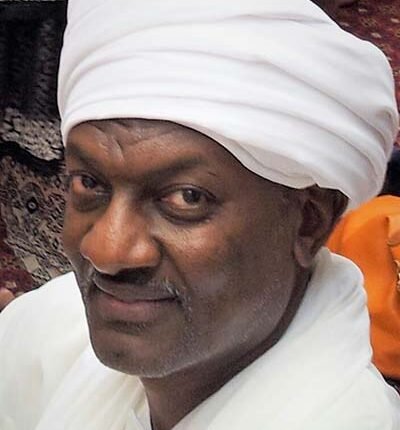
Hisham Yousif Abdulrahman
At its core, Sudan’s tragedy has never been a lack of intellectual talent, ideas or political projects. Sudan has produced thinkers and people with divergent visions who have grappled with questions of statehood, identity, justice, freedom, development, and the relationship between religion and politics. Yet this intellectual richness has failed to translate into a firmly established national consensus or institutions capable of managing differences without allowing them to escalate into conflicts that threaten the country’s very existence.
Today, in the aftermath of the destruction, displacement and divisions wrought by war, reality poses a question that goes beyond who prevails on the battlefield: Can Sudanese people, despite their diverse ideological and intellectual backgrounds, find common ground on which to rebuild their state without any party having to abandon its convictions?
The aim is not to unite the right and the left, Islamists and secularists, advocates of gradual reform and proponents of radical refoundation. Differences are a reality, and they can be a source of richness. What is needed, rather, is to seek a minimum set of national principles that everyone agrees to safeguard, while leaving ample room for peaceful political and intellectual competition. There may be no need to agree on the economic system, the interpretation of history or the ideological foundations of authority. The priority is to agree on the rules that make such disagreements possible and legitimate, without turning them into a struggle over the nation’s very existence.
In Sudan’s political landscape, we find figures such as Al-Tijani Abdul Qadir, Abdelwahab El-Affendi, Al-Mahboub Abdel-Salam, Mohamed Jalal Hashim, Al-Shafi’i Khidr, Al-Wathiq Kameir, Mutasim Al-Aqra’ and others whose visions stem from different, and sometimes conflicting, intellectual traditions. It would be unfair to reduce their ideas to simplistic formulations or assume that they agree on positions they have never expressed. But are their intellectual contributions not worth exploring for what might bring them together, rather than focusing exclusively on what divides them?
Perhaps part of our crisis lies in the fact that political dialogue has been more concerned with proving the correctness of one’s own vision and the fallacy of others than with establishing the rules for their coexistence within a single state. Disagreement over the nature of the state has thus become a struggle to possess it, rather than a dialogue about how it should be governed.
Can we agree that the state is not an ideological spoils of war, that its institutions belong to all citizens, that power should change hands peacefully, and that religious, cultural or regional affiliation must never deprive anyone of their rights? And will these principles remain binding when those who uphold them move from opposition to government?
The question of religion and the state stands out as one of the most polarising issues. Islam is deeply rooted in Sudan’s history and in the consciousness of broad sections of its population; it is not a political phenomenon that can be erased by a constitutional decree. Yet respecting this heritage does not justify monopolising power or diminishing the rights of those with different religious or intellectual beliefs. Is it not possible to seek a formula that safeguards freedom of belief and equal citizenship, respects religious and moral heritage, and prevents the use of religion as a tool of exclusion, without requiring everyone to agree on a single philosophy governing the relationship between religion and the state?
The question of identity is no less complex. Sudan is a multicultural country with diverse languages and affiliations, African and Arab connections, and historically unequal relationships between the centre and the regions. Experience has demonstrated that subsuming this diversity within a single, exclusive definition of identity has failed to produce the unity we seek. How, then, can we move from acknowledging diversity to establishing a just partnership in which citizens in Darfur, the East, Kordofan, the North and the Central region feel that their rights and opportunities do not depend on their proximity to the centres of power?
Identity is closely linked to justice, development and the distribution of resources. Elite consensus on slogans is not enough while imbalances in power, wealth and public services persist, without effective mechanisms for accountability, participation and balanced development. A national project that does not improve people’s daily lives or address historical grievances risks becoming an agreement among centres of influence rather than a national compact among citizens.
Then comes the dilemma of the relationship between arms and politics. No stable state can exist while independent centres of armed decision-making compete for power. Can the state’s exclusive legitimate authority over the use of force, and the subordination of military and security institutions to the law and constitutional civilian authority, become principles that are not subject to partisan bargaining?
State-building, however, is not limited to regulating this relationship. Our experience reveals a gap between the ideas adopted by political parties and movements and their ability to translate those ideas into democratic practice and workable programmes. Why do organisations established in the first place to overcome past failures repeatedly reproduce them? How can we move from charters and declarations to judicial independence, administrative reform, the rule of law, institutional efficiency and transparent management of resources?
On the external front, Sudan is situated amid overlapping interests involving Egypt, Saudi Arabia, Ethiopia, its African and Arab neighbours, and international powers. Can we agree that Sudanese national interests should guide foreign policy, and that diversifying partnerships should strengthen the independence of national decision-making rather than turn the country into an arena for competing alignments?
Perhaps the most important distinction is between what must be agreed upon and what may remain open to disagreement. The economic system, social policies and development priorities are matters for democratic competition. Citizenship, the rule of law, and the rejection of violence and exclusion, however, should not be contingent on who holds power. Nor does common ground mean turning the page on grievances and violations, or overlooking victims’ rights in the name of reconciliation. Justice is a prerequisite for the credibility and sustainability of consensus. Good intentions alone are insufficient without guarantees against a return to exclusion and authoritarianism, and without binding all political competitors to the same rules, whether in power or out of it.
It may be worthwhile for thinkers from different schools of thought to open this discussion without claiming to represent their entire constituencies or presuming that consensus can be reached in advance. The objective is not to have them sign a single declaration, but to test the space their ideas create for dialogue. Nor should they be expected to shape Sudan’s future on their own. No national project can be legitimate without the participation of political, civil and social forces, and without giving a voice to the communities that have borne the brunt of war and marginalisation.
Sudan does not need a single school of thought monopolising the truth. It needs a state that protects the plurality of ideas and guarantees that the people and their constitutional institutions are the ultimate arbiters. Perhaps the question that deserves to bring those who disagree together, before they delve into the details of their respective projects, is both simple and profound:
Can we agree on the country within which we disagree, before we disagree once again over who governs it and how?
If we can find a practical answer, we may lay the first building blocks of an inclusive national project, one that does not abolish differences, but makes their peaceful management the foundation for building the Sudanese state we aspire to.
Shortlink: https://sudanhorizon.com/?p=20747