

Sudanese-Libyan Talks in Geneva on the Situation of Refugees and Migrants
Port Sudan – Sudanhorizon
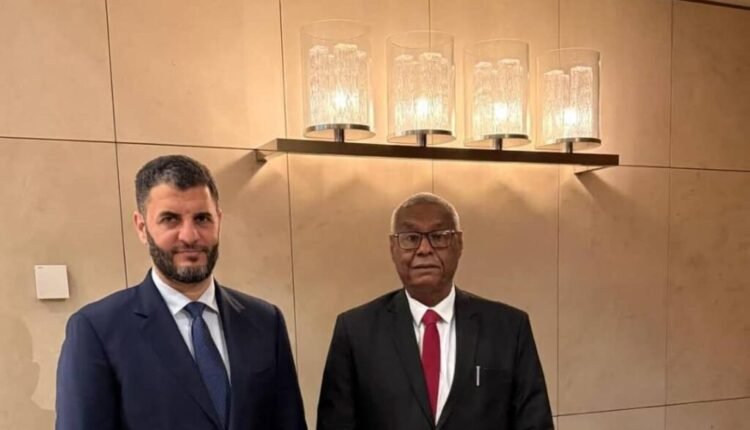
The Sudanese Interior Minister, Babiker Samra Mustafa, held talks on Saturday with his Libyan counterpart in the Government of National Unity, Imad Al-Tarabulsi, focusing on the situation of refugees, migration issues, and efforts toward voluntary return.
Some 467,000 Sudanese, out of a total of 4.3 million who crossed the border after the outbreak of the war in April 2013, sought refuge in Libya, already hosting tens of thousands of Sudanese.
The talks were held on the sidelines of the African Ministerial Round-table on Migration, part of the 1216th session of the International Organization for Migration (IOM) in Geneva.
The Sudanese Interior Ministry said in a statement that the Sudanese and the libyan ministers have discussed prospects for bilateral cooperation and coordination in addressing the situation of refugees and migration issues, especially given that Sudan and Libya are both source and transit countries for irregular migration in the region.
The statement indicated that the meeting reviewed the situation of Sudanese migrants in Libya and the ongoing steps to complete the repatriation and voluntary return operations, in coordination with the International Organization for Migration (IOM), to ensure these operations are carried out safely while enhancing the protection of the most vulnerable groups.
The statement added that the two ministers have affirmed their commitment to strengthening joint efforts and to developing coordination mechanisms between the two countries to address the humanitarian and security challenges related to migration, in a way that serves regional security and stability.
Meanwhile, in his statement at the high-level ministerial round-table, Sudan’s Interior Minister, Babiker Samra, reviewed Sudan’s pre-war role in the Khartoum Process and its efforts to develop a regional approach to migration based on partnership and regular pathways, combating smuggling and human trafficking, supporting labor mobility, and strengthening cooperation within the frameworks of IGAD, COMESA, and the African Union.
He stated that the proxy war waged by the Rapid Support Forces (RSF) militias has disrupted these efforts and created the world’s largest forced displacement crisis today, necessitating enhanced regional and international solidarity to rebuild Sudan’s capacities and restore its leading role on the continent in combating irregular migration.
Minister Babiker explained that the security and humanitarian challenges resulting from the war include increased risks of irregular migration, the expansion of smuggling and human trafficking networks, and heightened protection needs.
He stated that Sudan, despite the difficult circumstances, is exerting efforts, including tightening border controls, dismantling smuggling networks, arresting and prosecuting perpetrators, rehabilitating shelters, and rebuilding databases after the systematic destruction of state institutions by the Rapid Support Forces militias.
Samra reiterated Sudan’s continued commitment to combating transnational organized crime, emphasizing that restoring security and stability in Sudan is a prerequisite for addressing the complexities of migration in the region.
Shortlink: https://sudanhorizon.com/?p=9335