

Sudanese Exports Losing Their Shine in Global Markets: Causes and Solutions
Sudanhorizon – Nazik Shamam
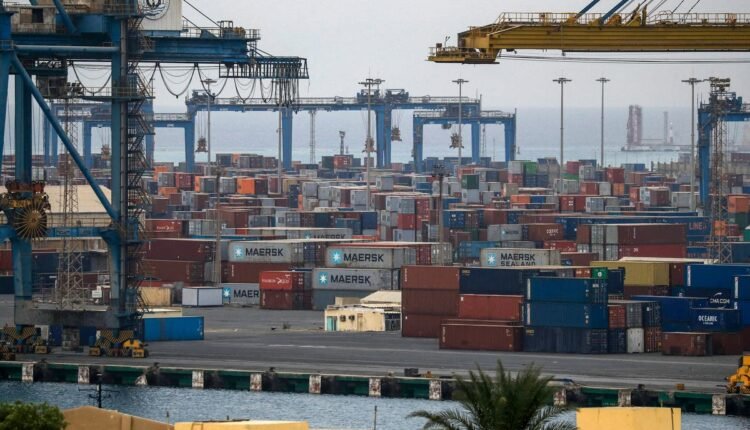
After decades of prominence, Sudanese exports have begun losing their competitive edge in global markets amid deeply complex political and economic conditions sweeping the country. This comes at a time when Sudan’s economy is in urgent need of export revenues to address the growing imbalance in the trade deficit, driven by a sharp decline in export earnings alongside rising import costs.
The situation has pushed the government to intensify meetings in an effort to contain the deteriorating economic crisis caused by the war and the inability to control the collapse of the Sudanese pound against foreign currencies.
Despite heavy reliance on exports, numerous obstacles and challenges have contributed to Sudanese products losing their leading positions in international markets—particularly sesame, peanuts, watermelon seeds, gum arabic, and even gold, which itself remains caught between rampant smuggling and unmotivating government policies.
Sudanese sesame exports have witnessed a dramatic decline in global markets, losing 94% of their share in the international market, according to recent economic reports.
The decline is not limited to sesame. Peanut exports are facing a similar fate, as the price per ton in Sudan has risen to $1,350 compared to $1,300 in Chinese markets, China being the largest importer of Sudanese peanuts. This has pushed Chinese buyers toward lower-priced suppliers.
Figures and Statistics
Sudan’s total exports last year amounted to approximately $2.64 billion, compared to imports worth $6.49 billion, resulting in a trade deficit of nearly $3.86 billion.
According to the statistical report issued by the Central Bank of Sudan, exports were dominated by minerals, agricultural products, and livestock.
The report revealed that Sudan exported 14 tons, 722 kilograms, and 15 grams of gold valued at $1.536 billion. It also exported live animals worth $466 million and sesame valued at $333 million. Central bank data indicates that gold alone accounted for more than 58% of Sudan’s total exports last year.
Decline in Sesame Cultivation
Sesame trader Yasser Ali Al-Saab from Gedaref Market believes Sudan lost its leadership in sesame exports due to high production costs and diseases affecting sesame crops, which he linked to the declining role of plant protection programs.
Speaking to Sudanhorizon, Al-Saab said the emergence of the “hamoush” disease affecting sesame crops significantly damaged productivity.
He added that falling global sesame prices combined with rising domestic production costs contributed heavily to the shrinking cultivation areas dedicated to the crop.
The Collapse of Sudanese Sesame
Last week, National Exporters Chamber member Muhannad Awad Mahmoud lamented in an article published on the Sudanhorizon platform the fall of Sudanese sesame from a position of leadership to the margins of the market, as other countries occupied the space Sudan had abandoned.
In the article, Muhannad revealed that Sudan had lost nearly 94% of its share in the Chinese market—the world’s largest sesame market—within just a few years.
He explained that in 2018, China imported 254,935 tons of Sudanese sesame out of total imports of 827,878 tons, representing around 30.8% of the Chinese market share. By 2025, that figure had dropped to only 26,618 tons out of 1,460,169 tons in total imports, or roughly 1.8%.
The article noted that countries such as Niger, Tanzania, Mozambique, and Brazil had replaced Sudan as suppliers to China.
Awad attributed the decline to the high price of Sudanese sesame in international markets, reaching $1,450 per ton, while competitors’ prices do not exceed $950 per ton.
He dismissed the ongoing war in Sudan as the sole reason behind the decline in sesame exports, arguing that producers in Sudan do not lose profits in the fields but rather become drained before their products even reach the ports due to accumulated fees, taxes, and rising transport costs.
Regarding peanuts, Awad said they are heading down the same path as Sudanese sesame because of the levies and unofficial charges imposed on them, especially after the Rapid Support Forces took control of production areas and the export center shifted to Al-Dabbah in northern Sudan. This, he explained, caused fees and taxes to raise the cost per ton above global market prices.
Decision-Makers’ Inertia
Economic journalist Abdel Wahab Gomaa explained that the reasons behind the decline of Sudanese exports in global markets stem largely from the absence of supportive policies—not only among export authorities, but also among institutions responsible for production itself.
Speaking to Sudanhorizon, Gomaa said the inconsistency and lack of cumulative, progressive policies pushed Sudanese exports into a state of suffocation.
He noted that since the separation of South Sudan in 2011, policies supporting exports have steadily deteriorated despite attempts to portray them as improving. He attributed this to what he described as the “laziness” of decision-makers and their failure to keep up with changes in international trade.
Continued Decline
Gomaa stressed that the problems facing exports are well known, but no authority or individual appears willing to take action or develop solutions.
He warned that without deep reforms affecting exports, production processes, and monetary and financial policies, Sudanese exports would continue to decline.
He further cautioned that Sudan could eventually reach “zero exports,” which would trigger a severe shock across the entire Sudanese economy and erase decades of export achievements.
Roadmap for Recovery
Regarding a roadmap to restore Sudanese exports, Gomaa said the country needs both an emergency plan and a long-term strategy.
He explained that the emergency plan requires coordination between state and federal authorities to establish a “green corridor” for exports through policies and decisions that support products from the fields, throughout supply chains, and all the way to export ports. He also emphasized the importance of mobilizing banking resources to finance exports.
Gomaa called for involving the private sector and incentivizing it to achieve export targets through customs and tax exemptions that increase according to export performance.
Urgent Requirements
Economic expert Ahmed Bin Omar believes the return of Sudanese exports to competitiveness depends first on securing production and export routes.
He told Sudanhorizon that exports cannot recover without reopening and securing routes between production areas, ports, and border crossings, as the war has sharply increased transportation costs and disrupted the flow of goods to international markets.
Bin Omar also stressed the need to unify fees and eliminate multiple levies.
“One of the biggest reasons behind weak exports is the multiplicity of taxes and charges on goods,” he said, calling for unified customs and state fees and reduced unofficial levies to make Sudanese exports more competitive.
He emphasized the importance of implementing a single-window system at ports and customs facilities and rehabilitating logistical infrastructure.
Sudan, he said, urgently needs reforms in roads, warehouses, ports, customs inspection areas, and cargo handling systems, as weaknesses in these sectors increase losses and delay exports even when production is available.
He also called for focusing on products capable of quickly regaining access to markets, combating smuggling, increasing official exports, and reviving agricultural value chains.
Shortlink: https://sudanhorizon.com/?p=13754