

Sudanese Democratic Bloc’s Meeting Adjourned Without Conclusive Agreement
Cairo – Sudanhorizon – Sabah Moussa
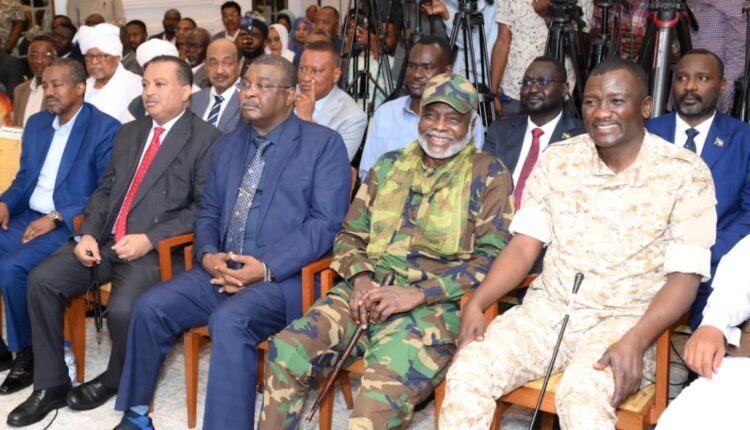
The Sudanese Democratic Bloc has concluded its second organizational conference on Monday, approving the bloc’s bylaws, as well as its political vision and organizational structure. This step aims to reorganize the alliance and enhance its effectiveness in the coming phase.
Final Statement
In its final statement following the conference deliberations, the bloc emphasized the need to end the current Sudanese crisis on foundations chosen and approved by the Sudanese people themselves. It stressed the importance of launching an all-inclusive peace process that ends hate speech and establishes a phase of nation-building. The statement also called for broad coordination to open safe corridors for delivering humanitarian aid through a humanitarian charter that guarantees the protection of civilians. At the same time, it commended the efforts and roles of the international and regional communities and Sudan’s partners.
Internal Rift
Sources within the bloc revealed to the news website “Sudanhorizon” that the conference approved the bylaws and agreed on an organizational structure comprising deputies, assistants, and heads of sectors. However, they acknowledged a clear internal rift regarding positions. The sources explained that the bloc currently includes three disparate groups: The first group includes the head of the Sudan Liberation Movement, Minni Arko Minawi; the head of the Democratic Alliance for Justice, Mubarak Ardol; Amin Daoud from the Popular Front for Liberation and Justice; Al-Hajj Roma; and Salah Dar Masa, representing civil society organizations and an executive member of the Sudan Liberation Movement. According to the sources, this group does not object to dealing with the Founding Entity and the Sumud Group, but it rejects the participation of Islamists in the dialogue.
A Hardline Stance
In contrast, the second group includes the Justice and Equality Movement (JEM) led by Dr. Jibril Ibrahim, the Beja Tribal Council (BTA) led by Mohamed al-Amin Tirik, the Revolutionary Front Unionist Party (FUP) represented by al-Tom Hajo, the Transitional Council led by Salah Rasas, the Sudan Liberation Forces Alliance led by Abdullah Yahya, the Sudan Liberation Movement (SLM) led by Mustafa Tambour, and the Leadership Council led by Mohamed Ali Shakoush. Sources indicated that this group adopts a hardline stance, refusing to sit down with any Tasssis entity, but does not object to indirect communication with the “Sumud” (Steadfastness) movement. It also does not oppose the participation of Islamists in the dialogue should they wish to participate in the process. As for the third group, sources described it as having an unclear direction and leaning towards a balanced approach. It includes Jaafar al-Mirghani, Nabil Adib, Sally Zaki, Mirghani Musa, and Nidal Hisham.
Clear Rivalry
Sources indicated a clear rivalry between the Justice and Equality Movement (JEM), led by Jibril Ibrahim, and the Sudan Liberation Movement (SLM), led by Minni Arko Minawi. They emphasized that neither movement accepts the other’s dominance, noting that the SLM excluded JEM from its structure. Jibril Ibrahim and Mohamed al-Amin Turk were placed in the positions of vice president without executive powers, which the sources described as equivalent to sector head positions. This, they argued, is inaccurate, as sector heads possess executive powers and direct oversight of the secretariats.
Directing the Course
Sources added that the first group, which seized control of the political and foreign relations sectors, may use them in negotiations with the Tassis and Sumud movement. They also revealed a previous proposal to appoint Mubarak Ardol as head of the foreign relations sector, but Musa Hilal objected, considering Ardol to represent the Tassis. This ultimately led to his appointment as an assistant to the president without any real authority. The sources explained that the head of the foreign relations sector, Sovereign Council member Abdullah Yahya, does not participate in the bloc’s meetings and will be represented by the political secretary, while no agreement has yet been reached on who will fill this position.
Achieving Balance
Sources indicated that the Justice and Equality Movement (JEM) sought to obtain the Foreign Relations sector, especially after the Sudan Liberation Movement (SLM) assumed leadership of the Political Sector. JEM proposed a distribution of positions to achieve a balance between the two movements, with the sector head from one side and the political secretary from the other. The sources confirmed that the meeting was adjourned for further consultations after the final statement was amended and paragraphs related to the allocation of positions were removed without public announcement. They noted that what was circulated in the media did not reflect a complete consensus, and that continued disagreements could lead to a rift and division within the bloc. They added that consultations would continue by the bloc’s leader to reach a consensus formula regarding the distribution of positions.
Heated Debates
In contrast, other sources told Sudanhorizon that the three-day conference witnessed heated debates on several key issues, most notably the bloc’s independence from the military establishment and its political decision-making autonomy, as well as the controversy surrounding the participation of some of its members in the Berlin Conference.
Divergent Positions
Discussions also addressed ways to link the political and military tracks in the coming phase, in addition to differences regarding the Quartet Initiative. Some members rejected it due to the participation of the United Arab Emirates, while others felt this stance could be interpreted as a lack of appreciation for Sudan’s allies, particularly Egypt and Saudi Arabia. Sources revealed sharp disagreements over the positions of Head of the Foreign Relations Sector and Secretary of Political Relations. The Justice and Equality Movement sought to obtain these positions, while Mubarak Ardol insisted on heading the Foreign Relations Sector. This was met with objection from Al-Tom Hajo, who believed that Ardol’s participation in the Berlin meetings and other international forums could affect the unity of the bloc. Amid these disagreements, Mohamed Al-Amin Tirik, head of the Supreme Council of Beja Nazirs and Independent Sheikhdoms, presented a compromise proposal. This proposal stipulated that Ardol be appointed Assistant to the President, and that Sovereign Council member Abdullah Yahya be assigned to head the Foreign Relations Sector, in an attempt to contain the differences.
Unannounced Structure
At the conclusion of the conference, the bloc finalized its organizational structure without officially announcing it. According to leaks, Jaafar al-Mirghani was chosen as the head of the alliance for two years
In addition, Jibril Ibrahim and Mohamed al-Amin Tirik were appointed as vice presidents. Three presidential assistants were also appointed: Salah Rasas, Mubarak Ardol, and Sally Zaki. The appointments included the selection of Minni Arko Minawi as head of the political sector, Musa Hilal for the social affairs sector, Mustafa Tambour for the peace and reconciliation sector, Al-Tom Hajo for the organizational sector, Mohamed Ali Shakoush for the regional sector, Al-Amin Daoud for the media sector, Haroun Adam for the economic sector, Al-Hajj Roma for the sectors of various groups and the public, and Nabil Adib for the constitutional and human rights sector.
Shortlink: https://sudanhorizon.com/?p=13267