

Sudan Needs Dialogue to Forge a New National Consensus
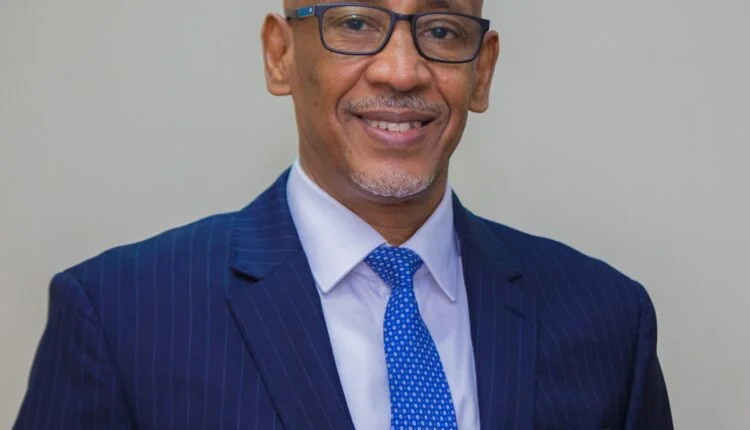
By: Dr Mohamed Elmunir Ahmed Safieldin
The call for an intra-Sudanese dialogue within Sudan is gaining momentum. Political parties and coalitions, social and religious groups, and representatives of youth, women, professionals, displaced people and refugees have expressed support and readiness to participate. The debate should therefore move beyond whether dialogue should take place to the more difficult question of how it should be designed and what it should achieve.
The starting point should not be how many seats each group receives, but a more fundamental question: What do Sudanese want the dialogue to achieve for their country?
Its purpose should be to build the broadest possible national consensus on ending the war, rebuilding the state and restoring political legitimacy through peaceful and representative institutions. Once that objective is clear, questions of agenda, participation and process can follow.
Dialogue Must Not Become a Gateway to Power
One principle is essential: participation in the dialogue should not, in itself, create an entitlement to political office.
Political and social forces have every right to help shape Sudan’s future, and broad participation is indispensable to a credible national process. But representation in the dialogue should not automatically translate into shares of government, sovereign bodies or legislative institutions. Otherwise, competition for seats risks overshadowing the dialogue’s real purpose.
The focus should instead be on the fundamental issues shaping Sudan’s future: peace and reconciliation; the nature of the state and system of government; relations between the centre and the regions; citizenship and fundamental rights; economic recovery and reconstruction; transitional arrangements; and the eventual restoration of democratic legitimacy through the will of the Sudanese people.
Representation Without Quotas
Sudan’s future cannot be negotiated by political parties alone. Women, young people, professionals, farmers, pastoralists, economic sectors, displaced people, refugees, Sudanese abroad and national experts should all have meaningful space in the process.
Inclusiveness, however, should not produce an unwieldy process or impose mechanical equality among groups with very different political and social weight. Transparent and objective criteria are needed to balance broad representation with the dialogue’s ability to function effectively and reach meaningful conclusions.
Nor should participation be framed through a simplistic distinction between political forces “inside” and “outside” Sudan. Geography should neither strengthen nor weaken a claim to participation. What matters is genuine political and social representation.
Who Should Manage the Process?
The next question is institutional: Who should design and manage the dialogue?
One option is an independent commission of competent national figures acting in their individual capacities rather than as party representatives. Its role would be professional and organisational: to prepare and facilitate the dialogue and apply agreed rules, not determine political outcomes.
Alongside it, a broadly representative advisory body could help build agreement on the agenda, participation criteria and decision-making procedures. Such an arrangement could combine independent management with meaningful political and social participation without creating either a miniature parliament or a parallel political authority.
The essential principle is a clear distinction between those who administer the process and those who negotiate its rules and substance.
Consensus, Not Winners and Losers
How decisions are reached will be as important as who participates. Simple majority voting on fundamental national questions risks reproducing the politics of winners and losers. Broad consensus should therefore be the guiding principle, supported by a previously agreed mechanism for resolving issues on which full consensus proves impossible.
The objective is not to manufacture a victorious majority and a defeated minority, but to establish sufficient common ground on which the widest possible spectrum of Sudanese can stand.
The dialogue should consequently produce more than general recommendations. It should seek coherent understandings on the foundations of the state, constitutional principles and transitional institutions, peace and national reconciliation, recovery and reconstruction, legal and institutional reform, and the eventual transition to free and fair elections.
Sudanese do not need to agree on every political question. They need to agree on the framework within which their differences can thereafter be managed peacefully and institutionally.
From Dialogue to a New National Compact
A credible dialogue cannot end with another document that political actors may embrace or disregard at will. From the outset, participants should agree on how its conclusions will be endorsed, translated into political commitments and constitutional, legal and institutional arrangements, and subsequently implemented and monitored.
The resulting consensus should become a governing national reference for the transitional period rather than being reopened whenever political alliances or balances of power shift.
But transitional consensus cannot replace permanent democratic legitimacy. Dialogue can establish the framework for moving Sudan from war towards a functioning state; ultimately, citizens must choose their leaders through free and fair elections.
In this sense, the dialogue could produce a new national compact: a framework for moving from war to state-building, and from competing claims to legitimacy towards legitimacy grounded in the popular will.
The international community can contribute constructively as an observer and witness to the process’s integrity and inclusiveness, strengthening confidence in its outcomes and providing an additional safeguard against manipulation. But international engagement must reinforce, not displace, Sudanese ownership. The dialogue’s fundamental legitimacy must derive from national consensus and, ultimately, the will of the Sudanese people.
The Debate Should Begin Now
The immediate challenge, therefore, is not simply who participates or how many seats each group receives. Sudanese should debate what the dialogue is meant to achieve, what its agenda should encompass, how participation can be broad without becoming a system of political quotas, what institutional structure should manage it, and how its conclusions can become both implementable and nationally binding.
No single political force or institution has all the answers. Indeed, an important test of the process will be whether the design of the dialogue itself becomes the subject of open national debate before its rules are fixed.
Ultimately, the question around the table should be less “What will I gain from this dialogue?” and more “What do we want Sudan, together, to gain from it?”
Dialogue is neither a shortcut to power nor an end in itself. It is a means of building what Sudan urgently needs: a national consensus capable of helping end the war, rebuild the state, manage political differences peacefully and move from transitional agreement towards democratic legitimacy rooted in the will of the Sudanese people.
The views and proposals expressed in this article are those of the author alone. They are offered as a contribution to public debate and do not represent the position of any other organisation or institution.
Shortlink: https://sudanhorizon.com/?p=20585