

Politics Is About Interests, Not Emotions
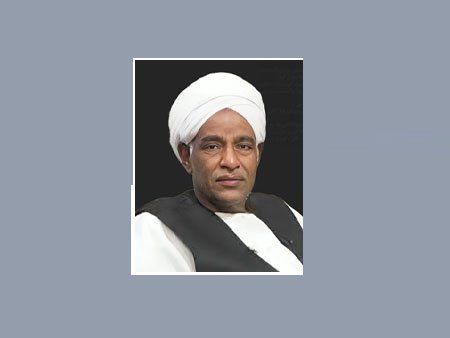
Mahjoub Fadl Badri
Some may also say politics is about ideas, not individuals, because a political figure must embody the ideas and programmes of the platform under which he operates.
Had I not been far from our country, I would not have hesitated for a moment to attend the meeting that brought fellow journalists together with His Excellency General Abdel Fattah Al-Burhan, Chairman of the Transitional Sovereignty Council and Commander-in-Chief of the Sudanese Armed Forces. It would have been enough for me simply to know about the meeting, even if I had not been invited—not out of intrusion, but because the Commander-in-Chief does not belong to any individual or particular institution. His person, time and work belong to everyone.
His magnanimity has even extended to those who opposed him: he has pardoned, shaken hands with and forgiven them, and overlooked much on the part of many enemies. I would not have waited for an invitation, because meeting the Commander-in-Chief is a great honour for every devoted patriot who appreciates the standing of the army’s men, who have offered their blood cheaply in the cause of Allah and the nation.
It is sufficient to recall the extraordinary bravery displayed by the Presidential Guard in defending the “Commander”. The final instruction given by the martyred Imam, the Guard’s commander, to his men was: “Protect the Commander.” Whoever that commander might be. It is enough that he represents the symbol, regardless of his name or rank.
Had the Commander-in-Chief at that moment been Field Marshal Omar Hassan Ahmed Al-Bashir, they would have performed the same duty they performed for General Abdel Fattah Al-Burhan.
And since one thing leads to another, and since no voice should rise above the voice of battle, mention was made of the establishment of the Rapid Support Forces during Al-Bashir’s era. These were the leadership’s assessments at the time, whether right or wrong. Likewise, after the change, the leadership assessed that the commander of the Rapid Support Forces should become First Vice-President, that his powers relating to recruitment, armament, and deployment should be expanded, or that the forces should be allowed to establish a presence in strategic locations within the capital. All these were decisions and assessments made by the leadership.
General Abdel Fattah Al-Burhan has received unprecedented support because of his bravery, courage and resolute character in confronting the horrors that almost swept away our country and our army. The people will preserve for him a splendid chapter in the annals of history, and all the voices that once questioned the sincerity of his direction will fade.
Yet something will remain unsettled in the heart because of his position towards the former Commander-in-Chief, Omar Al-Bashir. The latter has grown old while enduring prolonged imprisonment. His mother, wife, brothers and maternal uncle have died, and he was not permitted to attend their funerals, although Al-Burhan could have allowed him to do so.
What compassionate people fear most is that we might hear the following announcement on the “Eight O’clock Bulletin”: “Omar Hassan Ahmed Al-Bashir has passed away, and the mourning ceremony will be held at the family home in Kober.”
May Allah grant him a long life and release him from captivity.
After Nimeiri carried out his great assault against the communists—executing some, imprisoning others and expelling others—one of those imprisoned was the late poet Mahjoub Sharif. Seeking to console himself, he wrote:
Your prisoners, your prisoners,
We sing within your prison cells,
Like wounded birds, slashed by your knives.
We sing while held in your captivity,
While you tremble in your palace;
Your skies are filled with smoke.
But Al-Burhan does not tremble before his enemy. And the sweetest poetry is the most untruthful!
Returning to the title of this article, politics is about interests, not emotions. Had I attended the meeting, I would have whispered to General Al-Burhan that, as a matter of advice and in the interests of the country, His Excellency President Al-Burhan should not delay any longer in allowing former President Omar Hassan Ahmed Al-Bashir—who spent half a century in active military service after graduating in 1967, excluding two years at the Military Academy and the additional years counted for service in operational areas, and who is now over eighty years old—to travel abroad for medical treatment wherever he chooses.
This is particularly so because he poses no challenge to Al-Burhan’s rule. Al-Burhan should also take inspiration from the blessed group of Presidential Guard personnel who were martyred, at the mention of whom he was overcome with emotion. He should remember the former Commander-in-Chief, Al-Bashir, who demonstrated through his actions his good treatment of his predecessor, the late General Fathi Ahmed Ali; the former President and Commander-in-Chief, the late Jaafar Nimeiri; his predecessor as Chairman of the Sovereignty Council, the late Ahmed Al-Mirghani; and the former Prime Minister, the late Al-Sadiq Al-Mahdi.
And there were others among his opponents, including his fiercest adversary, Colonel John Garang.
Despite the prevailing saying, there is indeed room for emotion in our heritage, our religion, and our authentic Sudanese society. Professor Abdelbasit Sabrdat says that people love with their hearts, except in Sudan, where they love with their livers. He is right: children are pieces of their parents’ livers, while fathers are the support of their children. Omar Al-Bashir is a father to everyone, including the entire army and its current leadership.
Have I not conveyed the message?
O Allah, bear witness. I’ve passed the message.
Shortlink: https://sudanhorizon.com/?p=17997