

Government and WFP Talks to Enhance Food Security and Provide Agricultural Inputs
Khartoum – Sudanhorizon
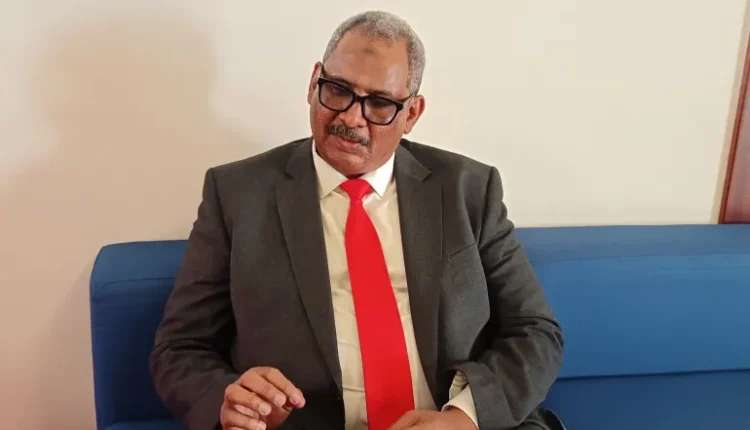
The Sudanese Minister of Agriculture and Irrigation, Dr. Ismat Qureshi, called for enhanced cooperation with the World Food Programme (WFP) in the areas of food security, agriculture, irrigation, the provision of agricultural inputs, and support for local production.
During his meeting on Monday with the WFP Resident Representative in Sudan, Abdullah Al-Wardat, the Minister discussed cooperation relations and joint projects between the Ministry and the Programme, as well as ways to activate several initiatives implemented by the Programme in Sudan to support the agricultural sector and enhance its ability to meet current challenges.
The Minister affirmed that Sudan possesses the natural resources and technical capabilities that qualify it to achieve food security at both the national and regional levels, noting the importance of utilizing these capabilities through the implementation of joint programs and projects with international organizations and development partners.
He stated that the Ministry is open to cooperation with the World Food Programme, emphasizing the Ministry’s need for genuine partners and sustainable development interventions that contribute to rebuilding the agricultural sector and supporting producers. He explained that the ministry’s focus in the coming phase will be on supporting small-scale farmers and organizing them into agricultural and livestock cooperatives, linking financing to agricultural extension services, insurance, and value chains, thus ensuring the sustainability of the production process and improving producers’ incomes.
For his part, the World Food Programme’s Resident Representative in Sudan, Abdullah Al-Wardat, reaffirmed that the doors to recovery remain open for Sudan. He stressed the importance of developing a clear strategy for cooperation between the ministry and the program, and forming a joint committee to monitor and implement priority areas of cooperation and projects.
Al-Wardat announced the program’s readiness to work in the field of capacity building and training, noting that the next phase will see a greater focus on productive projects and strengthening local production, thereby supporting communities’ self-reliance and enhancing food security.
Both sides emphasized the importance of continued coordination and cooperation, identifying shared priorities, particularly in the areas of supporting small-scale producers, providing agricultural inputs, rehabilitating agricultural projects and irrigation systems, building capacity, localizing seed production, and strengthening value chains and local production.
Shortlink: https://sudanhorizon.com/?p=17582