

Dialogue: Challenges at the Outset and Opportunities for Success
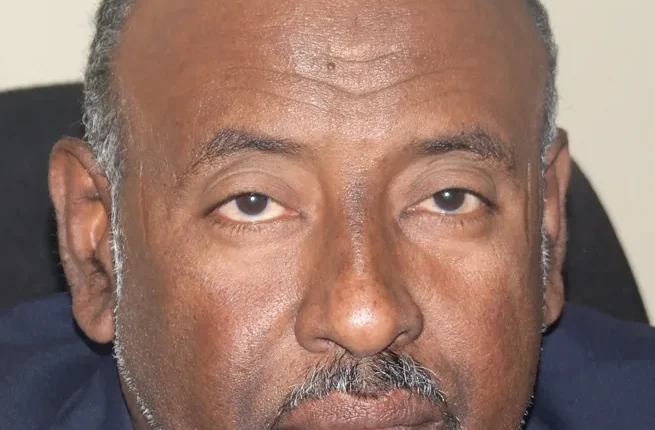
Professor Ahmed Majzoub Ahmed Ali
I do not believe that any sensible person would reject a call for dialogue, regardless of where it is held, how it is conducted, or who extends the invitation. Dialogue is the method of the prophets and messengers, as well as that of preachers, reformers, leaders, politicians and thinkers. It was therefore with great satisfaction that everyone welcomed the announcement by the President of the Sovereignty Council calling for dialogue among all Sudanese—a dialogue that reflects the nation, its culture and values, its aspirations and hopes, as well as its suffering and pain; a dialogue in which the government does not interfere or influence its proceedings. This approach is supported by the Sudanese people’s extensive experience and rich record in this field.
There is no need to emphasise that the proper starting point is for the Sudanese people to find, in the committee facilitating the dialogue, whatever reassures them that the process can reach its intended destination. This requires clarity on the facilitators’ vision and role, the absence of any political or personal interests, complete independence, and freedom from any domestic or foreign agenda. They must also possess the wisdom, fairness and integrity that place them above suspicion.
Perhaps the first thing that can inspire confidence is a clear work plan. This can be achieved by presenting, discussing and approving the dialogue plan live and in public, so that all concerned can see it. The plan should clearly set out the committee’s methodology for establishing membership criteria: will representation be geographical, partisan, sectoral, or based on social groupings?
It should also clarify how all segments of society will be involved: university professors and teachers, traders, farmers, workers, pastoralists and others. How will gender and age representation be ensured—men and women, young men and young women? How many participants will there be, and what criteria will determine that number? Will the dialogue be decentralised, with conferences held in villages, rural settlements, localities, and states, so their outcomes can be compiled and submitted to a national body to consider in light of the recommendations placed before it?
Clarity in the criteria for selecting participants is one of the most important elements of the dialogue’s success. Genuine dialogue is one in which all Sudanese take part: men and women, the elderly and the young, people of learning, thought and culture; those who stood up to aggression and conspiracy; those who led popular mobilisation campaigns of dignity and established and supported takaya; those who sacrificed dearly for their country; those who carried the nation’s concerns as though they were held in the very pupils of their eyes; those who experienced the horrors of war, including displacement, looting and dispossession; and those who led awareness campaigns and devoted their pens to defending the nation.
This underscores the importance of determining how the Armed Forces and other regular forces will participate and be represented. They are among the groups most profoundly affected by the war. They have lost commanders, course-mates and comrades in the trenches, including those who were mobilised and those who fought alongside them. It is therefore essential to agree on how they will participate in the dialogue and to ensure their acceptance of the process. They constitute a fundamental segment of society whose role must not be overlooked and whose views must not be neglected.
Another matter facilitators are expected to clarify is the basis, mechanisms, and methodology for decision-making within the dialogue, as well as how its decisions will be implemented. There is no value in a dialogue that produces no decisions; nor is there value in decisions issued unilaterally by a particular group; and there is no value in a dialogue whose recommendations and decisions are buried in office archives and files.
Nor can a process truly be called dialogue unless its subjects are known: What are they, and who determines them? These matters constitute the heart of the issue and the substance of the discussion. The state leadership’s declaration that it will not interfere in the dialogue is a commitment to ensuring freedom of deliberation. This means that all participants should determine the dialogue’s themes through open mechanisms and accessible platforms, where proposals are presented, debated, approved and adopted before the specialised dialogue sessions begin. No one should guard the participants, nor should external options be imposed on them.
Determining and agreeing upon the agenda is therefore one of the most important stages of the process. The agenda defines the path and establishes the methodology. This requires issuing a broad call for everyone to contribute their views through all available means and media, and establishing a platform to receive proposals, examine them and consolidate them into principal themes, so that their summaries become the agenda for the dialogue.
It should be recognised that some of the issues to be addressed by the dialogue are not new. Rather, they are accumulated and longstanding issues that merely need to be articulated and brought into the open, while being removed from external agendas. What we are experiencing today is not a disagreement among Sudanese over a domestic agenda; it is a conflict between external agendas that have turned Sudan into a battlefield and used some Sudanese as instruments to advance their objectives.
Everyone knows that, in the period preceding the war, Sudan became exposed to the activities of international intelligence services, while some ambassadors operated as they pleased, without regard for even the most basic principles of diplomatic practice. They aimed to impose their will upon the Sudanese, exploiting people of weak character who allowed themselves to become vehicles for advancing foreign agendas in return for a handful of coins.
We should thank the President of the Sovereignty Council for removing this burden by making the dialogue Sudanese and holding it inside Sudan. In doing so, he has closed the greatest avenue through which external interference could reach the participants. If the outside world is to have any role or consideration, then the Sudanese themselves are the ones concerned, having devoted their efforts and resources to supporting their country through political mobilisation and financial contributions. Facilitators must understand this, as it is one of the most important guiding principles.
There is no dispute that the role of a facilitator is to bring together the parties to the dialogue who have accepted the values, ethics and principles of the nation, foremost among which is the recognition that Sudan is an independent state with free will, capable of determining its own visions and choices in both domestic and foreign affairs. Understanding this role and not exceeding it is the first step on the road to success.
The fact that the dialogue is Sudanese and is being held inside Sudan affirms and warns that foreign tutelage and interference are rejected. Thus, the dialogue’s broad framework becomes clear.
Making the dialogue open to all reinforces the principle of liberation from dependency and submission, and emancipation from domination and hegemony—claims made by some who sought to inherit Sudan and its people. This establishes an important principle: no one should claim to represent citizens or possess a mandate from them.
Representation should be achieved through electoral mechanisms within professional associations, societies and sporting and cultural organisations whose constitutions provide for the free and direct selection of their representatives. It may also take place through social or religious entities that have their own criteria for selecting leaders to represent them.
All of this, however, is a transitional arrangement that should ultimately culminate in the establishment of institutions that genuinely represent the people and are empowered thereafter to decide on all matters concerning the nation. Transitional stages, policies and measures cease to apply once the circumstances that necessitated them disappear. Elections are the mechanism locally and internationally recognised for representing peoples. So long as this is the case, no one should exercise guardianship over the Sudanese people, even if they seek the support of every government and international organisation in the world.
Dialogue requires meticulous preparation, careful management, agreement on its outcomes, and a focus on areas of broad agreement or consensus on the issues under consideration. This, in turn, requires the people entrusted with the process to have the scientific and intellectual capabilities, knowledge, expertise, and practical experience. Mental, physical and health capacities are also necessary complements to the performance of such a demanding task.
Ultimately, however, implementing the dialogue’s outcomes will remain the principal challenge and the true test for those who have called for it.
I shall return in a forthcoming article, God willing, to discuss the issues the dialogue should address.
Shortlink: https://sudanhorizon.com/?p=17741