

The Sudanese Government’s Initiative: A Sudanese Solution Confronting the Sponsors of War
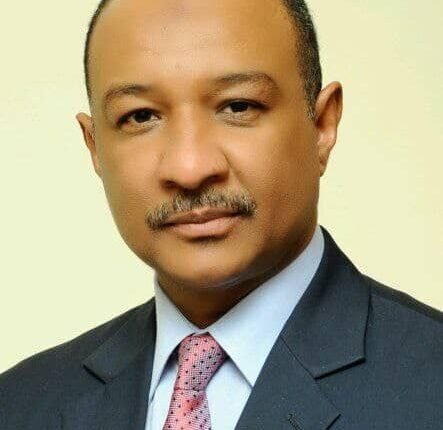
Dr Mohammed Hasab Al-Rasoul
At the United Nations Security Council session held last Monday, the Sudanese government, through its Prime Minister Kamil Idris, presented a comprehensive national initiative aimed at ending the war that has been raging in Sudan for more than a thousand days, and at opening a new political track grounded in a Sudanese national reference. The initiative seeks to move away from external proposals through which the United States and the international and regional powers backing the war have sought to manage the conflict rather than end it.
Idris stressed that the initiative represents a purely Sudanese option for overcoming the crisis, warning that the continuation of the war has become an existential threat to the state, leading to the dismantling of its institutions and deepening the scale of the humanitarian catastrophe in the country.
Components of the Initiative
The Sudanese government’s initiative is built around a set of integrated core components encompassing political, security, humanitarian, and societal dimensions. Together, they aim to end the war, restore national sovereignty, and ensure a smooth transition towards stable national governance, as follows:
An immediate and comprehensive ceasefire across the entire country, accompanied by the withdrawal of the Rapid Support Forces (RSF) from cities, civilian facilities, and vital infrastructure, under international and regional supervision. This is intended to ensure security and stability, protect civilians, and create an enabling environment for a multidimensional national process.
The assembly of RSF elements in agreed-upon camps, their disarmament, and the termination of their military and political role, thereby ending the existence of any force parallel to the state and its institutions, and paving the way for the professional and orderly implementation of Disarmament, Demobilisation, and Reintegration (DDR) programmes.
The establishment of a unified framework for the armed forces that guarantees their unity, confines weapons exclusively to them, and strengthens their role in protecting the country, its sovereignty, and the independence of its national decision-making.
Facilitating humanitarian access and the voluntary, safe return of internally displaced persons and refugees to their areas of origin, alongside the implementation of reconstruction programmes in affected regions, to ensure the stability of indigenous local communities and restore demographic balance.
The launch of an inclusive national dialogue involving all national political and societal forces, excluding only those implicated in war crimes and serious violations, to reach consensus on transitional arrangements that lay the foundations for popular governance and electoral legitimacy through free and fair general elections under international supervision.
Guaranteeing the national character of solutions and entrenching independent Sudanese will, free from any external tutelage or foreign agendas, so that the present and future of the country are shaped in accordance with Sudanese interests and choices.
The Four Most Sensitive Pillars
The Sudanese government’s initiative advances four key pillars that represent the most acute points of friction with the external forces behind the war, while simultaneously revealing one of the clearest dimensions of the true nature of the conflict in Sudan:
First, the gathering and disarmament of RSF elements and the termination of their military and political role. This measure is intended to dismantle the armed structure upon which the war has been built and to prevent the continued use of militias as functional tools serving foreign projects and safeguarding external influence within Sudanese space.
Second, the return of indigenous populations to their homes after having been forcibly displaced by the RSF. This return constitutes an antidote to the demographic engineering project, one of the war against Sudan’s strategic objectives. Just as Western powers have opposed the right of Palestinians to return to Palestine, the same forces oppose the return of indigenous populations to their homes and resist the restoration of their historical rights, as well as any action that would secure demographic balance—particularly in Darfur.
Third, democratic transformation and the return of authority to the people through free elections. This path likewise encounters external resistance, as it directly undermines the interests of foreign powers that are fully aware that fair elections would lead to the rise of national forces committed to sovereignty and independence, while leaving externally aligned groups with no realistic chance of electoral victory or access to power.
Fourth, the national ownership of the solution itself, which is also rejected by both external and internal forces of war, because nationally driven solutions rooted in sovereign interests fundamentally conflict with projects of tutelage, domination, and “new colonialism”.
Through this initiative, the Sudanese government moves beyond all external agendas and proposals, whether international or regional, effectively setting aside the quadrilateral mechanism’s initiative, which has lost its legitimacy and foundation. Those initiatives were designed to manage the war and prolong it, ensuring continued dominance over Sudan after exhausting it and dismantling its sources of strength.
The Hard Questions
The Sudanese initiative was presented at a decisive moment, when the continuation of the war had become an existential threat to the state and to the very notion of a country called Sudan—through the exhaustion of its people, the depletion of their capacities, the weakening of state institutions, and the imposition of demographic and political realities by force of military aggression and external pressure. In this context of national exhaustion, the government’s initiative represents an advanced political step towards reclaiming national decision-making and shifting the country from a logic of externally managed conflict to a path aimed at ending the war through an independent national vision, in which halting external interference is a foundational condition for shaping the present and building the future in accordance with the will of the Sudanese people.
By presenting the initiative before the Security Council, the Sudanese government has placed the international community—both regional and global actors—before a genuine test of credibility: will external powers stand with nationally rooted solutions that uphold independence, sovereignty, and stability, or will they remain captive to their colonial projects? At the same time, the most pressing question remains directed inward, to Sudan itself: will the state adhere firmly to this initiative as a sovereign, unifying option for ending the war, or will it yield to regional and international pressures that seek to manage the conflict rather than bring it to a decisive end?
Shortlink: https://sudanhorizon.com/?p=9914