

“The South Sudanese Opposition at the Moment of Transition to an Alternative Political Project”
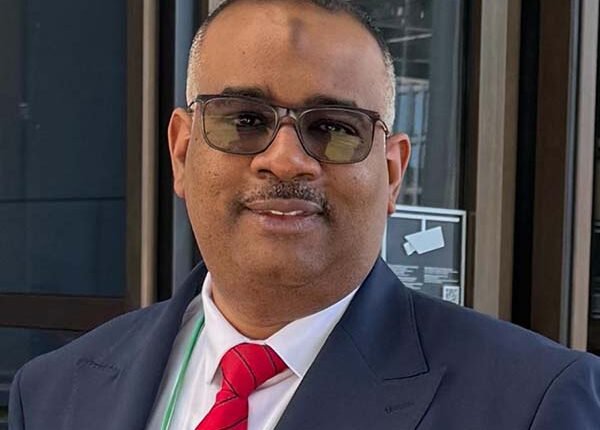
By: Muhannad Awad Mahmoud
The conflict in South Sudan can no longer be reduced to the familiar binary of government versus opposition, as political and media discourse has long portrayed it. The country has now entered a far more complex and delicate phase—one in which the structural crisis of governance intersects with state fragmentation, a blocked transitional horizon, and the rise of a new, more organised and expansive opposition capable of posing a real threat to the survival of the current regime. What we are witnessing is not a repetition of the splits of 2013 or 2016; rather, it is the transition of the South Sudanese opposition from a fragmented protest movement to a coherent alternative political project, emerging precisely at a moment when the ruling SPLM faces unprecedented weakness and a profound erosion of both political and popular legitimacy.
The previous form of opposition was constrained by fragile peace agreements, limited by international ceilings that prevented decisive outcomes, and reliant heavily on military mobilisation and ethnic alignments. Today, however, these forces have reorganised themselves under a new political–organisational framework that does not reduce the conflict to a matter of tribe or region, but frames it as a comprehensive crisis of governance. This transformation has crystallised with the formal announcement of the Political Charter of the United People’s Alliance (UPA), adopted and signed on 1 November 2025, as a foundational document for the opposition—not merely a passing political statement.
The charter begins with a direct diagnosis of South Sudan’s crisis as that of a state captured by a narrow elite in Juba—an elite that has employed violence, effectively suspended the constitution, hollowed out peace agreements, instrumentalised ethnicity as a tool of rule, and treated national resources as spoils. Strikingly, the charter goes beyond criticism and explicitly affirms the people’s right to resist and overthrow any authority that obstructs the peaceful transfer of power or suppresses the popular will. This formulation represents a direct challenge to President Salva Kiir’s legitimacy, especially given his overt and practical refusal to hold elections, fully aware that no genuine electoral process would return him to power.
The charter presents a coherent programme for systemic and irreversible transformation, beginning with the establishment of a new transitional authority and culminating in a federal democratic state built on free elections, separation of powers, professional and non-ethnic security institutions, and tackling corruption as a governing system, not mere individual misconduct. It also places significant emphasis on external legitimacy through adherence to international humanitarian law, the protection of civilians, and pragmatic engagement with regional and global partners—reflecting a clear understanding that the battle to isolate or topple the regime will be political and diplomatic as much as internal.
The strategic significance of the charter lies not only in its content, but in the identity of its signatories. For the first time, senior political and military leaders from diverse regions and communities—including prominent figures from the Dinka, historically the SPLM’s backbone—have united behind a single document and a unified political agenda. Among the most notable signatories are:
Gen. Pagan Amum Okiech, leader of the Real SPLM (R-SPLM) and a historic figure of the original SPLM;
Gen. Paul Malong Awan, leader of the South Sudan United Front/Army (SSUF/A), an influential Dinka military figure once at the heart of the ruling establishment and now one of its most formidable opponents;
Gen. Mario Loku Thomas, leader of the National Salvation Front (NAS-RCC), representing Equatoria’s key military bloc;
Gen. Stephen Buay Rolnyang, leader of the South Sudan People’s Movement/Army (SSPM/A);
Dr. Matur Gorjok Gak, head of the National People’s Movement (NPM), the civilian political pillar;
Gen. Henry Oyay Nyago, leader of the Upper Nile People’s Liberation Front (UNPLF);
Gen. Nyal Deng Nyal, leader of the South Sudan Salvation Movement (SSSM).
This broad alignment—bringing together leaders from Dinka, Equatoria, Upper Nile and other regions—has transformed the opposition from a historically fragmented landscape into a structured coalition. It has broken the SPLM’s long-standing narrative that its opponents are merely anti-majority or anti-revolution elements. As a result, the regime now faces a genuine legitimacy crisis; it can no longer credibly claim to represent the revolution, the majority, or even the state.
Meanwhile, the ruling SPLM is suffering visible structural exhaustion. It is no longer a party of the state but a network of security–economic interests that governs by the logic of survival rather than popular mandate. Leadership divisions, declining military discipline, weakened mobilisation capacity, and a complete collapse of trust between state and society all render elections an existential threat rather than a postponed obligation. Consequently, Salva Kiir is betting on prolonging the transitional period and obstructing any electoral path, combined with tactics of partial co-optation and selective reconciliation—bringing some figures back into government or opening back-channels to dilute opposition pressure—all while preserving the core architecture of power.
Regionally, these dynamics acquire another layer. Kenya has become the primary political host for the South Sudanese opposition, offering space for movement and international engagement without providing direct military support. It plays a strategic role in reshaping political balances. Uganda, despite President Museveni’s personal ties to some opposition leaders, still leans towards maintaining the current order or preventing its abrupt collapse, yet keeps communication lines open as a contingency, recognising that Salva Kiir is no longer the strong and reliable partner he once was.
From a security perspective, these shifts push South Sudan into a phase of heightened political fluidity whose effects will spill directly onto neighbouring Sudan—along the long border stretching from Upper Nile through Kordofan and West Kordofan to South Darfur. Dense social interconnections, pastoral routes, informal markets and cross-border flows of arms mark this region. These transformations require Khartoum to adopt a precise and deeply informed reading of South Sudan’s political landscape, understanding its power dynamics and strategic trajectories, while maintaining a posture of discreet monitoring—fully aware of the unfolding game yet holding all levers of influence without deploying them overtly.
In conclusion, South Sudan stands at a defining crossroads. The opposition—unlike in past phases—now possesses the charter, the leadership, the cross-ethnic penetration, the coherent programme, and the regional momentum necessary to threaten the survival of Salva Kiir’s rule, even without militarily toppling it. The regime, in turn, is banking on time, containment, and limited external backing to delay the moment of reckoning. Yet the overall direction unmistakably suggests that the old governing formula is no longer sustainable; the question is no longer whether change is coming, but how, when, and at what political and security cost for South Sudan and the wider region.
Shortlink: https://sudanhorizon.com/?p=9622