

Why Are Sudanese Elites Silent?
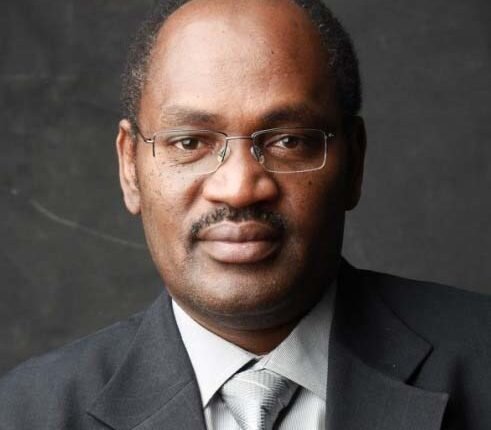
By: Ramadan Ahmed
Sudanese intellectual elites have, by and large, remained silent regarding what has been unfolding in the country since the fall of the Ingaz regime. This silence has left the arena wide open for activists and opportunists to tamper with the country’s future through the spread of hatred and political, regional, and ethnic polarisation. The current war is but one manifestation of this elite passivity.
Several questions arise:
What has caused the educated elite to refrain from contributing to shaping public opinion in ways that serve the national interest, especially given the availability of open digital spaces that allow reformers to speak directly to the public without intermediaries? Is this abstention rooted in greed or fear—greed for a position or benefit from one side or the other, or fear for personal interests? Or have the country’s educated elites simply failed to grasp the importance of social media and its role in creating and steering public opinion?
We will attempt to answer these questions in this article, which we hope will be completed by readers’ contributions.
WhatsApp groups, as well as Zoom and Teams platforms, are ideal venues for contributing to public discourse. They allow people to convene in real time—either face-to-face via Zoom or Teams, or through live text conversations. It is worth noting that such virtual meetings surpass physical meetings in a number of ways:
First:
Participants can hear each other clearly and contribute equally. They can interact in various ways—raising their hands, reacting with facial expressions and emojis—visible to everyone, unlike in-person meetings where even hearing the speaker may pose a challenge, let alone interacting with them.
Second:
Participants can instantly obtain a written record of the discussions and agreed outcomes, as well as written interventions, ensuring a level of transparency that physical meetings rarely afford.
Third:
Virtual meetings drastically reduce costs—both financial and physical. Participants can join from their own bedrooms at no cost whatsoever.
Fourth:
Given the capabilities offered by digital platforms, most human activities have now shifted online, where collective decision-making has become the norm. In-person meetings have been reduced in scope, reserved only for situations where physical presence is part of the objective.
Regrettably, the Sudanese intellectual elite has not taken advantage of these digital platforms, despite all the benefits outlined above. Engagement with the written material remains extremely weak. This necessarily means that specialists and experts are abstaining from helping shape public opinion.
For instance, in many WhatsApp groups comprising no fewer than 400 members, only a handful of people drive the discussion. What, then, explains this reluctance to participate in shaping public discourse? Some members are highly respected figures in society, yet they do not participate at all in discussions of the most pressing issues that require sound judgment. Is this a kind of aloofness? Ambition for positions? Fear of being labelled? Or disbelief in the usefulness of digital platforms?
The consequences of scholars, intellectuals, and people of sound judgement withdrawing from open digital spaces have been as follows:
First:
Public opinion is now shaped by activists and opportunists who directly fuel hatred and polarisation—so much so that the ongoing “war” on social media between Sudanese rivals is fiercer than the actual war on the ground between the RSF and its backers, and the Sudanese Armed Forces and their backers.
Second:
Superficial thinking has spread—akin to “fast-food culture”—at the expense of objective, analytical reasoning. Strategic thinking has vanished even at the state level. People now fight symptoms instead of diagnosing and treating the underlying causes.
Third (and related):
Because of this extreme superficiality, any discussion about the future is now frowned upon. Activists and opportunists repeatedly say: “Let us end the war first, then think about the future!”
Yet the natural order in times like these is for the military to focus on matters of war, while intellectuals and thinkers carve out a vision for the future so that once the war ends, people know what is expected of them, both collectively and individually.
Shaping the future means raising awareness, educating citizens about the values of citizenship, their rights and obligations, and the nature of the modern state that should arise from the ashes of war—
a state built on citizenship rather than elite privilege;
a state with a strategic vision for development and nation-building.
This societal movement, led by intellectuals, is essential to avoid sliding into unnecessary post-war conflicts that drain our energies and resources once again. Unfortunately, this is precisely what now appears on the horizon.
Fourth:
There is a complete absence of research centres capable of producing evidence-based studies grounded in data and facts to support state decision-makers. The result is the total absence of strategic thinking at the state level. Decisions are no longer based on any realistic considerations, leaving the government visibly floundering.
One of the most striking consequences of the absence — or deliberate sidelining — of intellectuals, scholars, and experts from the scene is that activists and opportunists have succeeded in embedding in people’s minds a language of eliminating the “other” rather than diagnosing the ailment and addressing it. The focus has shifted from confronting the behaviour to destroying the person exhibiting the behaviour. This is irrational. Bad conduct is naturally detestable and must be confronted, but once an individual renounces such conduct or shows willingness to change, coexistence becomes necessary—rather than seeking to eradicate them entirely.
I must commend the youth of the Reconstruction and Development Movement, led by the brilliant young men Hisham Shams Al-Din and Qasim Al-Zaafir. This movement transcends all political currents in Sudan, offering sophisticated and enlightened approaches to economics, development, and community awareness. It is innovative, while political organisations have been consumed by conflict and by amplifying one another’s flaws. The movement is among the few that have effectively utilised open digital spaces, attracting hundreds of thousands of young Sudanese.
In conclusion:
Sudanese intellectuals, experts, and scholars of all backgrounds must recognise the importance of using digital communication platforms to convey the voice of truth—far from the toxic discourse of demonisation that has divided Sudanese society, spread hatred, and sparked needless battles.
The Sudanese people are yearning for the voices of the wise among their educated elite—
those best equipped to lead a movement of enlightenment, unify discourse, and guide public opinion toward our shared national aspirations as a society striving to take its rightful place among respected nations.
Shortlink: https://sudanhorizon.com/?p=9488