

Burhan’s Directives on Petroleum Imports: A Solution or a Complication?
Sudanhorizon – Nazik Shamam
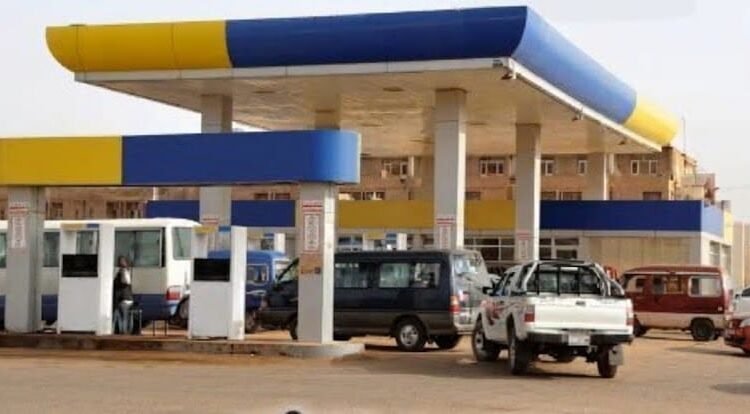
At the end of each month, fuel crises become glaringly apparent. Long lines of vehicles waiting at gas stations are a stark indicator that the crisis persists. Despite official assurances that there is no crisis, reality contradicts these claims, amidst veiled accusations traded between the government and companies regarding who is responsible.
Following the war, the oil fields that previously supplied a portion of domestic consumption ceased operations, and the Khartoum refinery shut down. Sudan became reliant on imports, operating under a system of procedures between the government and private sector companies. These companies, in turn, were subject to import requirements, most notably the requirement to deposit 200 kilograms of gold as a guarantee of their import capacity, with the gold deposited in the Bank of Sudan.
After this condition was imposed, eight companies became the sole importers of petroleum products, under the supervision of the Sudanese Petroleum Corporation, which resumed operations after being dissolved during the government of former Prime Minister Abdalla Hamdok. In an effort to resolve the fuel crisis, the Chairman of the Sovereign Council, General Abdel Fattah al-Burhan, visited Port Sudan branch of the Sudanese Petroleum Corporation last Wednesday. He directed that qualified companies from both the public and private sectors be allowed to import all petroleum products and that procedures be streamlined, under the supervision and coordination of the Sudanese Petroleum Corporation.
Burhan’s directive has opened the door to the conclusion that this step will be a double-edged sword. While it may provide petroleum products, it will simultaneously lead to a rise in the exchange rate of the dollar against the Sudanese pound, thus increasing the price of fuel for citizens. Furthermore, it will likely cause congestion at ports, given that many companies lack storage facilities or service stations.
Former Oil Minister and Advisor, Ishaq Jamaa, believes that fuel imports should be overseen by the Ministry of Energy and the General Petroleum Corporation.
In a statement Jamaa explained that allowing market traders to import fuel has drained foreign currency from the parallel market, as these traders possess substantial cash reserves in local currency generated from selling fuel for cash.
He warned that inflation would continue to rise in the absence of genuine economic policies, given that energy is an intermediate commodity that impacts the overall prices of goods and services.
The former minister stressed the necessity of subjecting the import of petroleum products to strict technical and logistical arrangements before importation begins. These arrangements should include regulating supply chains from customs clearance and pipeline pumping to storage, and ensuring adherence to technical specifications appropriate for Sudan’s climate.
Jamaa cautioned against the risks of purchasing from the spot market and intermediaries, pointing to external studies that prove fraudulent practices in some dubious regional markets, such as the mixing of gasoline with lubricating oils in the Fujairah market, at a time when technical oversight is lacking from the Ministries of Energy and Customs.
He called for the direct importation of gasoline from international refineries, requiring the inclusion of original specifications certificates certified by the international inspection company SGS to guarantee fuel quality and protect consumers and the economy.
For his part, a high-ranking source at a fuel importing company – who preferred to remain anonymous – confirmed that the main problem of fuel shortages in Sudan stems from the Central Bank of Sudan’s inability to provide foreign currency.
He explained that petroleum products are available globally, but the obstacle lies in payment procedures and securing the hard currency needed for imports, especially given the complete reliance on imports and the shutdown of the Al-Gaili refinery.
The source revealed that the value of tanker shipments has increased, ranging between $20 million and $40 million or $50 million per shipment.
The source stated that “companies previously obtained foreign currency from their own resources or the market to pay for the shipments and transfer the funds outside the banking system.” However, he added that “the Bank of Sudan recently directed that transfers be made through the banking system and with its approval, with a commitment to provide the companies with the funds for the shipments.”
According to the source, the bank was unable to fulfill this commitment, leading to payment delays, accumulating fines, and a significant shortage in supplies.
The source explained that the Chairman of the Sovereign Council personally assumed the chairmanship of the Fuel Committee, directly overseeing the study of the companies’ problems and ensuring the smooth flow of supplies. He indicated that his visit to Port Sudan was part of these tasks.
He noted that a directive had been issued to the eight fuel companies—which had previously committed to guaranteeing 200 kilograms of gold with the Bank of Sudan to be allowed to import—regarding addressing the problems of tankers and pending orders.
He pointed out that government fees represent a significant burden, potentially reaching 30% of the tanker’s value, and that the companies had been requesting facilitations in this regard but were facing difficulties in obtaining them.
He explained that Burhan’s directive addressed the issue of government fees and ensured they would not impede the entry of tankers and the delivery of shipments, with the possibility of postponing some matters later. However, he emphasized that the issue of providing hard currency was not presented as a radical solution in this context.
The source confirmed that administrative decisions might address a limited percentage of the problems, but a fundamental solution to the crisis remains contingent on addressing the exchange rate issue and providing foreign currency to the companies. He noted that a meeting was held at the Ministry of Energy, bringing together the companies and relevant authorities to discuss the latest developments
Shortlink: https://sudanhorizon.com/?p=20758