

Sudanese Memory: Mohamed Abdullah Al-Wali – A Biography of Sudanese Enlightenment Pioneers
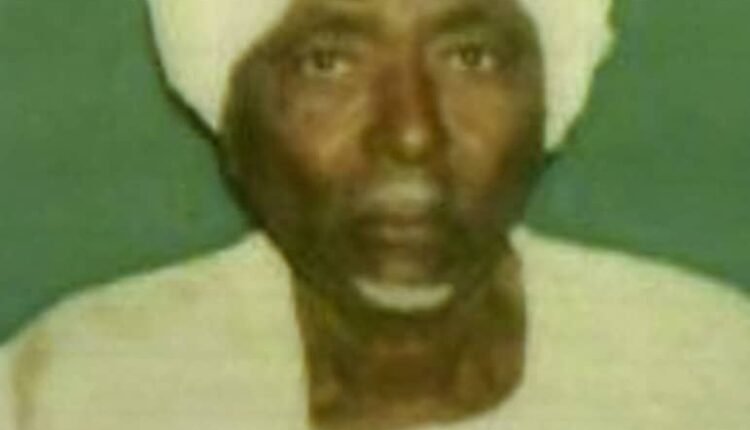
Mohamed El-Sheikh Hussein
On a cold January evening in 2019, winter breezes swept through Dr Mansour Khalid’s office, situated in an elevated ground-floor annex within the reception salon of his elegant home in central Khartoum. The capital was in ferment in those days, shortly before the end of the era of the National Salvation Revolution in Sudan (30 June 1989–11 April 2019).
Our conversation with the late Mansour Khalid flowed naturally. He was in high spirits at the time, celebrating the publication of his four-volume memoir, Fragments and Marginal Notes on an Autobiography, which lay before us on his office table. Beside it was a daily newspaper carrying a striking headline about Al-Merrikh Club and Jamal Al-Wali.
Journalistic curiosity prompted me to ask him directly about the controversy surrounding his friendship with Jamal Al-Wali: What was behind it?
He smiled and replied with a laugh: “Controversy, my foot! My relationship with Jamal Al-Wali goes back to my friendship with his father, the noble Sheikh Mohamed Abdullah Al-Wali.”
He then added, in a more serious and dignified tone: “Incidentally, Sheikh Mohamed Abdullah Al-Wali was one of Sudan’s pioneers of enlightenment. Imagine this: in 1952, I was a second-year law student at the University of Khartoum, reading newspaper articles by Mohamed Abdullah Al-Wali discussing alternatives to cotton as a crop in the Gezira Scheme, or examining the crisis facing Gezira farmers in terms of its causes, responsibility and remedies.”
The late Mansour Khalid concluded by emphasising that Mohamed Abdullah Al-Wali, despite receiving his education in a khalwa (traditional Quranic school) and studying under several sheikhs, was largely self-educated and among Sudan’s pioneers of enlightenment, particularly in his struggle against the Farmers’ Union becoming a front for any political party.
(1)
This introduction was brought back to mind by a telephone call from my dear friend, the accomplished journalist Diaa Al-Din Bilal, who told me that Professor Nasr Al-Din Mohamed Abdullah Al-Wali had sent me a copy of a new book entitled Features of the Gezira: The Scheme, the Village and Society.
The book brings together articles written by Mohamed Abdullah Al-Wali and published in various newspapers over a period of fifty years. His son, Professor Nasr Al-Din, collected and edited them.
The book comprises 422 medium-format pages, with seven introductory essays, four main sections and a fifth section devoted to appendices. What is striking is that, despite the diversity of its subjects, the book is well organised, beautifully printed and elegantly presented. It pays particular attention to the traditional aesthetic of such publications, with a layout that facilitates reading, fine-quality printing and a hardback cover whose agricultural green adds to its freshness and appeal.
(2)
Before delving into the chapters and the intricacies of the book, it is worth noting that Sheikh Mohamed Abdullah Al-Wali (1916–1990), its author, was a prominent figure in the Fedasi Al-Halimab area. However, his roots traced back to Al-Zeidab in River Nile State. He was a leading figure in the unionist movement and a renowned trade union leader. He was also an astute politician who served as the first chairman of the Gezira Scheme Farmers’ Union.
The author possessed extensive experience and a rich understanding of Sudanese life, acquired through independent study and self-reliance, his education in traditional khalwas and under the sheikhs from whom he learnt, as well as his exposure to a national political school encompassing diverse intellectual currents.
(3)
One question that has confronted thinkers throughout history is how enlightenment can become a way of thinking, a pattern of behaviour, and a commitment to a system of moral values embraced by a broad section of society.
We are not here to answer that question. Broadly speaking, however, Mohamed Abdullah Al-Wali’s writings call for a return to heritage to revive rational, scientific and empirical ideas. Yet this endeavour—or, more precisely, the reformist current of that period—faced attempts to suppress it, owing to the dominance of currents that regarded enlightenment as a threat to their own sphere of influence.
All the author’s articles, written over more than fifty years and published across the book’s five sections, invite us to explore how enlightenment ideas might be transformed from mere knowledge into a living culture.
(4)
Modernists are mistaken if they assume that modernity has profoundly transformed Sudanese society through their own efforts. Such an assumption may lead us down other paths, for Khartoum, the capital, is not the whole of Sudan; it is only a small part of it.
Evidence of this can be found in the observation made by the late Dr Al-Haj Hamad Mohamed Khair, a researcher in population and development, who said that people migrating from rural areas to Khartoum had ruralised its outskirts, while Khartoum had failed to urbanise them.
Returning to Mohamed Abdullah Al-Wali, we find that his articles remind us that human development is a challenge facing all humanity. Building people is a societal undertaking, not one that belongs exclusively to the government or political parties. This was the recurring theme of his writings. Perhaps the central message is that we need a strong, effective effort to nurture and develop the Sudanese character so it can evolve in keeping with the demands of the modern age.
(5)
This is a book of considerable value among Sudanese publications. Indeed, its section entitled The Gezira Scheme is particularly noteworthy. It contains articles discussing the demands of Gezira farmers in the light of overriding national considerations. In these articles, the author vigorously defended their rights, addressed their responsibilities, and wrote about crop rotation.
This section also includes articles and responses by Professor Makki Abbas, Professor Makki Shibeika and Ahmed Mukhtar, editor-in-chief of Al-Hadaf newspaper.
This section is important because it contains some of the finest writing on the Gezira Scheme. It is essential reading for researchers and policymakers alike. The author was a productive farmer and a farmers’ leader. He served as secretary of the Farmers’ Union in several terms, was a member of the Gezira Scheme Board of Directors and served on the board of the Agricultural Bank as a representative of the farmers.
(6)
The general character of Mohamed Abdullah Al-Wali’s articles was one of steadfast advocacy and defence of farmers’ rights. This was acknowledged by Mohamed Khair Al-Badawi, who wrote about Sheikh Al-Wali on 1 March 1957, when he was editor-in-chief of Al-Jazira newspaper. We quote the following passage:
“There is no doubt that the esteemed الأستاذ Al-Wali occupies a distinguished position among this newspaper’s editorial family and its readers. We do not wish to boast of the attention his articles receive or the titles we bestow upon him, for we deserve no credit for these things. They are honours he has earned through his noble character, dignified style and enlightened ideas. If his articles do not receive our full attention, we would consider ourselves remiss, not merely towards the writer himself, but also towards our readers and our obligations to them.”
(7)
The book’s second section is entitled Education and Culture. Its most notable contribution is an article published in Al-Risala magazine, issue 856, dated 28 January 1949, under the title The Latter Generations of This Nation Can Only Be Reformed by What Reformed Its Earlier Generations.
The significance of this article lies partly in the fact that Al-Risala was the leading literary magazine in the Arab world, and its founder and editor-in-chief, Ahmed Hassan Al-Zayyat, published only high-calibre contributions by distinguished writers. Publishing the article was, in itself, a strong testament to the author’s standing.
The author also won first prize in Al-Jazira newspaper’s competition for his article Fedasi: Between Yesterday and Today, published on 9 July 1964.
(9)
The author devoted considerable attention to education, drawing on his experience of nearly two decades as a teacher in primary schools and at the Fedasi Intermediate Scientific Institute.
His article entitled The Tragedy of Intermediate Education, published in Al-Jazira newspaper, issue 71, dated 15 April 1953, attracted considerable attention from officials and readers alike.
The Farmers’ Union, chaired by Sheikh Wad Al-Azairiq, discussed the issue at an expanded meeting. Attention also extended to the management of the Scheme in Barakat, the provincial administration, the Ministry of Education and the Social Services Committee. Newspapers published in the capital also took an interest.
This extensive mobilisation eventually led to the establishment of five intermediate schools in the Gezira, which opened successively from 1953 onwards in Al-Madina Arab, Al-Hasahisa, Al-Hosh, Al-Muhairiba and Kab Al-Jadad.
(10)
The pages and diverse sections of the book are rich with examples of the author’s varied interests in life and society.
In education, particularly noteworthy is his article defending the establishment of the Department of Religious Affairs, published in Al-Rai Al-Aam newspaper in response to an article in its From Day to Day column expressing reservations about the department’s creation.
Nor did he limit himself to such responses in education. When Mohamed Mohamed Ali published an article in Al-Rai Al-Aam entitled Close These Scientific Institutes in Their Present Form, the author responded in the same newspaper with an article entitled Religious Institutes Will Remain as Long as This Country Remains Arab and Muslim.
(11)
The author’s articles were not confined to Sudanese affairs; they also extended beyond the country’s borders.
On 8 June 1962, he published a two-part article in Al-Rai Al-Aam entitled A Busy Friday in Cairo. The first part discussed a seminar held by Abbas Al-Aqqad.
The second part, published in the same newspaper on 9 June 1962, was entitled Friday Prayers at Al-Azhar.
The author also wrote in Al-Sudan Al-Jadid newspaper in response to Mustafa Abu Sharaf, who wrote the Abu Sharaf’s Selections column. In his reply, he said:
“Sir, I noticed that you quoted Imam Ali as saying: ‘If the veil were lifted for me, I would gain no more certainty.’ The correct wording is: ‘If the veil were lifted for me, I would gain no more in certainty,’ omitting the exception particle illa.”
(12)
The title of this article, Mohamed Abdullah Al-Wali: A Biography of Sudanese Enlightenment Pioneers, is justified by a letter written by Dr Mohamed Al-Nuwaihi, a professor at the Faculty of Arts, University of Khartoum, in response to the author.
The story began when Al-Nuwaihi published a series of articles in Al-Rai Al-Aam newspaper in 1955 entitled Compassion in Islam. The author subsequently commented in the same newspaper, offering corrections and additional facts, information and citations.
Dr Al-Nuwaihi was impressed by what the author had written and sent him a personal letter, which was published in Al-Rai Al-Aam. It read:
“You were kind enough to write your wonderful piece in Al-Rai Al-Aam, thanking me for having sought the honour of meeting you. That article was the talk of the capital for several days. It was a source of pride for all Sudanese, for it provided striking evidence of Sudanese generosity, Sudanese loyalty and Sudanese graciousness.”
(13)
The author had another side: he was an accomplished poet, as shown by his elegy for Sharif Barakat Sharif Ahmed Taha and his sorrowful poem A Hope Dispelled, written in mourning for his son Al-Sadiq.
The poem is indeed, as Sadiq Al-Badi, the foremost chronicler of the Gezira, described it, “a poem that brings tears to the eyes of everyone who reads it”.
A slow and attentive reading of the poem reveals that the author bore the loss of his son with admirable patience, folding his deep and painful wound into his own breast.
The book’s third section, entitled The Village and Society, contains articles that demonstrate the author’s close attachment to his village, his love for it and his service to it. They also reveal his profound understanding of Sudanese society.
(14)
The book’s fourth section contains approximately fourteen titles comprising elegies, articles and poems written in tribute to the author. This is hardly surprising, for its pages show that Sheikh Mohamed Abdullah Al-Wali, may God have mercy on him, served his country with extraordinary dedication in several fields: agriculture, teaching, journalism, religious advocacy, Quranic circles, jurisprudence and scholarship.
He was one of the foremost leaders of the farmers and of the community in social and public service. He was also a prominent parliamentary figure.
A man of such stature deserves to be written about, and his experience documented as one of the symbols of Sudanese enlightenment in the twentieth century.
The author served his country in many fields with diligence and sincerity.
At this critical juncture, the nation is in need of wise and discerning men like him.
May God have mercy on Sheikh Mohamed Abdullah Al-Wali and grant him the highest place in Paradise.
Shortlink: https://sudanhorizon.com/?p=20743