

Kamil Idris’s Visit to Egypt: Can Cairo and Khartoum Turn Political Understandings into a Strategic Economic Partnership?
Cairo – Sudanhorizon – Sabah Moussa
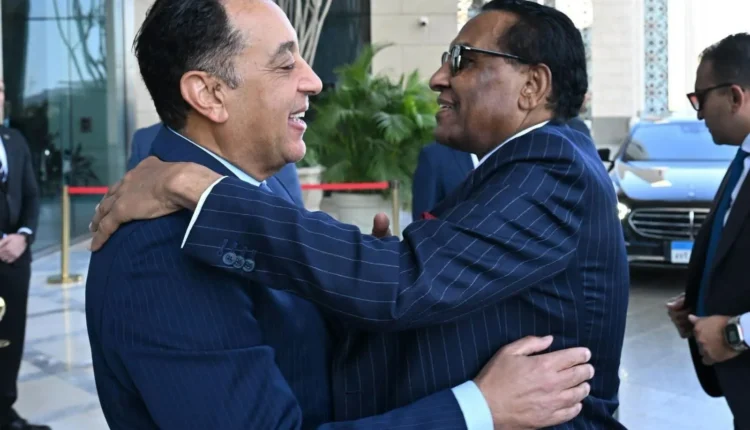
Sudanese Prime Minister Dr Kamil Idris’s visit to Cairo, and his meetings with Egyptian President Abdel Fattah el-Sisi and Prime Minister Dr Mostafa Madbouly, come at a particularly important juncture in Egyptian–Sudanese relations. Political, economic and security challenges are placing renewed demands on the two countries to strengthen coordination and take their bilateral relations to broader horizons of cooperation, particularly in light of developments in the Sudanese crisis and the post-war requirements of reconstruction, economic recovery and the restoration of stability.
Joint Statement
At the conclusion of the visit, Sudan and Egypt affirmed their determination to strengthen coordination and joint cooperation in support of Sudan’s stability, emphasising respect for its sovereignty, unity and territorial integrity, and the preservation of its national institutions. They rejected the establishment of any parallel entities, or recognition of such entities, and reaffirmed the close interconnection between the national security of the two countries.
The two sides condemned attacks on civilians, infrastructure, water facilities and electricity stations by drones launched from a neighbouring country. Egypt also reaffirmed its full support for Sudanese national efforts aimed at reconstruction. It expressed its readiness to contribute to rehabilitating infrastructure and the industrial and agricultural sectors, while welcoming the participation of Egyptian companies in reconstruction projects.
The two parties also agreed to enhance trade, investment and cooperation in the health and education sectors, facilitate the voluntary return of Sudanese nationals, and expedite the resolution of issues concerning detainees in both countries.
On water security, the two sides affirmed the interdependence of Egyptian and Sudanese water security, their adherence to their water rights under the 1959 Agreement, and their rejection of unilateral measures concerning the Grand Ethiopian Renaissance Dam. They called on Ethiopia to abandon its unilateral approach and return to cooperation in accordance with the principles of international law.
The statement also stressed that governance of the Red Sea is the exclusive responsibility of its littoral states, rejecting attempts to militarise the region or undermine the sovereignty of its countries.
At the conclusion of the talks, Idris invited his Egyptian counterpart, Mostafa Madbouly, to visit Sudan to strengthen cooperation and follow up on the outcomes of the discussions.
Reconstruction
During the presidential talks, President el-Sisi stressed the need to develop strategic partnerships between the two countries and strengthen economic cooperation based on mutual interests and productive projects. He affirmed Egypt’s full support for Sudan in launching the reconstruction phase and repairing the destruction caused by the war.
El-Sisi instructed that the voluntary return of Sudanese nationals be given priority, and that efforts be made to facilitate movement between the two countries. The meeting also discussed the impact of social media platforms and attempts to exploit them to undermine relations between the two peoples.
He reaffirmed the central importance of the strategic relations between the two countries and Egypt’s commitment to supporting Sudan’s unity, sovereignty and stability, and condemning any attempts to undermine its security or national institutions. He also emphasised Cairo’s efforts to promote a political solution to the crisis, end the war and alleviate humanitarian suffering.
He further instructed officials to take a favourable view of the circumstances of Sudanese prisoners and detainees in Egypt, including the possibility of their completing their sentences in Sudan.
Burhan’s Message
For his part, Idris affirmed Sudan’s commitment to developing its relations with Egypt, activating joint committees, and expanding areas of cooperation. He delivered a message from the Chairman of the Transitional Sovereignty Council, General Abdel Fattah al-Burhan, to President el-Sisi, stressing the special nature of the longstanding relations between the two countries and Sudan’s desire to continue working with Egypt to strengthen bilateral cooperation across various fields.
The message also emphasised the importance of Egypt’s support for Sudan’s efforts to regain its role within the African Union, and its backing for the anticipated Sudanese dialogue in Khartoum, in a manner that contributes to achieving national consensus while preserving the unity of the country and its institutions.
Economic Partnership
It is noteworthy that reconstruction in Sudan, support for its economy, the restoration of commercial and investment activity, and developments in the political and security situation featured prominently on the agenda. This reflects the special nature of the partnership between the two countries and the interconnectedness of their interests and shared future.
However, the visit goes beyond reaffirming the strength of the historic ties between Cairo and Khartoum. It also presents a practical test of the two countries’ ability to translate political understandings into an economic and developmental partnership, given the extensive destruction caused by the war in Sudan and the need to mobilise expertise and investment to rebuild what has been destroyed.
The talks also conveyed political and strategic messages concerning Sudan’s unity and national institutions, water security and Red Sea security, making Idris’s visit an important milestone in the relationship between the two countries. It goes beyond political coordination to explore practical mechanisms for cooperation in the coming period.
An Upcoming Meeting
Idris is expected to meet several Egyptian businessmen and investors in Cairo on Wednesday to discuss Sudan’s economic situation and invite them to participate in the country’s reconstruction.
However, the visit has raised questions among several Sudanese experts about the absence of economic-sector ministers from the Prime Minister’s accompanying delegation, particularly given that Idris himself had placed Sudan’s reconstruction and the exploration of economic cooperation between the two countries at the heart of his visit.
This raises questions about the delegation’s readiness to move beyond broad visions and general understandings to discuss economic and technical issues and identify priority projects.
Important Significance
Egyptian Ambassador to Sudan Yasser Sorour said that Idris’s visit to Cairo carried important political and strategic significance and reflected the two countries’ determination to strengthen bilateral relations and expand the horizons of joint cooperation.
He noted that the Sudanese Prime Minister’s meeting with President el-Sisi addressed developments in Sudan, the future of relations between the two countries, efforts to end the war, and preparations for the recovery and reconstruction phase.
Sorour told Sudanhorizon that Idris’s visit to his second homeland, Egypt, was part of an initiative to strengthen Egyptian–Sudanese cooperation and elevate relations to a broader level of political, economic, and developmental partnership.
He drew attention to the message Idris had conveyed from the Chairman of the Sovereignty Council, General Abdel Fattah al-Burhan, to President el-Sisi, which reaffirmed the special nature of the historic relations between Egypt and Sudan and Khartoum’s desire to continue coordination with Cairo and strengthen cooperation across all fields.
He added that President el-Sisi had emphasised during the meeting that Egyptian–Sudanese relations are strategic and fraternal, reaffirming Cairo’s supportive position on Sudan’s unity, sovereignty, stability and territorial integrity, and its rejection of any attempts to undermine Sudan’s security or national institutions.
He also stressed the continuation of Egypt’s efforts to achieve a political solution to the crisis, end the war and alleviate humanitarian suffering.
Three Tracks
Sorour went on to say that Sudan’s recovery and reconstruction had emerged as one of the main themes of the discussions, indicating that Cairo and Khartoum were looking ahead to the post-war phase.
Idris affirmed that Sudan was relying heavily on Egypt, its expertise, and the participation of Egyptian companies in reconstruction, particularly in infrastructure, energy, and transport.
He explained that this reflected Sudanese determination to move from humanitarian and political support to economic and productive partnership, enabling Egyptian companies to participate in projects to rebuild what the war had destroyed and giving economic relations between the two countries a more strategic dimension.
He noted that the talks had also addressed the Sudanese–Sudanese dialogue process. Idris had requested Egypt’s support for this process, stressing that the anticipated dialogue would be inclusive and national in character, with no one excluded.
Sorour said this point was particularly important in light of Cairo’s vision that the solution in Sudan should emerge through a Sudanese-led process that preserves state institutions and the country’s unity.
He also pointed out that the Prime Minister had requested Egypt’s support for Sudan’s efforts to regain its role and standing within the African Union, thereby strengthening its presence at both regional and international levels.
The humanitarian dimension had also featured prominently in the meeting. Idris renewed Sudan’s appreciation of Egypt, its leadership, and its people for the assistance extended to Sudanese nationals.
In this context, President el-Sisi instructed officials to take a favourable view of the circumstances of Sudanese prisoners and detainees in Egypt, including the possibility of their completing their sentences in Sudan, in accordance with the applicable rules and laws.
Sorour said the outcomes of the visit indicate Cairo and Khartoum are moving toward a broader framework for bilateral relations based on three parallel tracks: supporting the Sudanese state and its national institutions, promoting a political settlement to end the war, and making early preparations for recovery and reconstruction.
Important Timing
Egypt’s former Assistant Foreign Minister, Ambassador Hossam Issa, said the visit came at a particularly important time, both economically and strategically, amid rapidly evolving developments in Sudan and the challenges of the current phase, which require stronger coordination and cooperation between the two countries.
Issa, Egypt’s former ambassador to Khartoum, told Sudanhorizon that the Sudanese government had begun taking important steps towards reconstruction in liberated areas, particularly the capital, Khartoum.
He pointed to several meetings held with Egyptian companies to discuss their participation in reconstruction efforts, particularly the rebuilding of the Shambat and Halfaya bridges, which were destroyed by the militia during the war following its loss of control over the capital and its liberation by the Sudanese Armed Forces.
He added that reconstruction efforts also included rehabilitating hospitals, restoring essential services and developing infrastructure—areas in which Egyptian companies were expected to play a significant role.
The electricity interconnection project between the two countries was also continuing, with plans to increase its capacity from 70 megawatts to 300 megawatts, according to announcements by both countries’ electricity ministers.
He explained that the equipment required to increase the capacity of the electricity link was already in Sudan. Egypt had sent it as part of the assistance provided to the country. Still, the circumstances of the war had prevented the implementation of this important step, which Sudan urgently needed at the present stage, particularly given the militia’s targeting of electricity stations across the country.
The Principal Ally
Issa noted that the visit also came amid changes like the war and the expanding use of drones by the militia in an attempt to obstruct the advance of the armed forces in the Kordofan and Darfur regions, through the involvement of Ethiopia and several neighbouring countries, and the opening of new fronts in the Blue Nile region.
He stressed that these developments necessitated close coordination with Egypt, which he described as the principal ally of the legitimate government and the Sudanese Armed Forces.
He pointed out that discussions and coordination between the two countries were not confined to economic and security issues, but also extended to border-control measures and the regulation of the status of the Sudanese community in Egypt. These matters were being addressed at several levels, whether through diplomatic missions or reciprocal visits by officials from the two countries.
He considered the multiplicity of communication channels and reciprocal visits to reflect the continuity of Egyptian–Sudanese coordination, whether in economic cooperation, foreign policy, or strategic outlooks and assessments, amid the exceptionally sensitive current phase and the challenges it poses to Sudan’s future and stability.
The Golden Era
Journalist and political analyst Makki al-Maghrabi, for his part, observed that Sudan was Egypt’s closest neighbour, describing the two countries as effectively one.
Makki told Sudanhorizon that the visit brought to mind the days of Sudanese–Egyptian integration, when relations between the two countries were in their golden age.
He added that the visit rekindled those hopes, saying: “Perhaps adversity brings benefit”, and explained that the war, despite the enormous damage it had inflicted on the Sudanese people, might open a new chapter of cooperation between the two countries in reconstruction.
A New Opportunity
Ultimately, between the political messages conveyed by the visit, Egypt’s pledges to contribute to reconstruction, and Sudan’s drive to expand its economic partnership, Cairo and Khartoum appear to have an opportunity to reshape their relations on foundations more closely tied to shared productive and developmental interests.
The success of this visit will not be measured solely by the consensus it reflected on Sudan’s unity, security and stability, but by the extent to which that consensus can be translated into practical steps, including identifying reconstruction projects, activating joint committees, expanding investment and trade, and addressing the challenges facing the movement of people and capital between the two countries.
Shortlink: https://sudanhorizon.com/?p=20621