

State Minister of Finance Chairs First Meeting on Sudan’s Debt Relief Initiative
Khartoum – Sudanhorizon
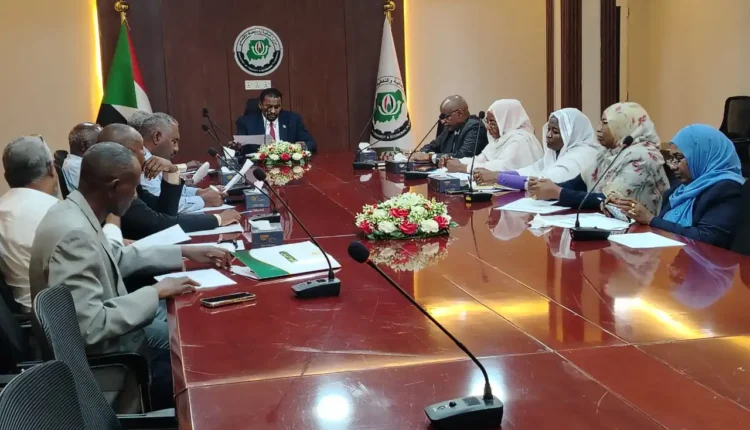
State Minister at the Ministry of Finance Mohamed Nour Abdel-Daim chaired the first meeting to follow up on progress under the Sudan Debt Relief Initiative, with the participation of directors-general, department directors and representatives of the Ministry of Finance, the Central Bank of Sudan, the Central Bureau of Statistics and the Taxation Chamber.
The meeting was held as part of efforts to coordinate national action to follow up on the implementation of the initiative’s requirements and strengthen institutional and technical communication with the International Monetary Fund (IMF).
The State Minister reviewed the debt relief initiative’s roadmap, which comprises four main phases. The first phase focuses on capacity-building and institutional development, aimed at strengthening the technical and institutional capabilities of economic and financial bodies and improving public financial management and administrative systems.
The second phase involves diagnosing the economic situation and providing policy advice. It aims to assess economic and financial conditions, identify imbalances, and recommend the policies and measures needed to address them.
The third phase focuses on establishing a track record of performance and maintaining a satisfactory record of policy implementation. This involves implementing and monitoring a set of agreed economic reforms and policies, and demonstrating the country’s ability to adhere to the economic programme and its performance benchmarks.
The fourth phase entails reaching a bilateral agreement between Sudan and the IMF to implement a programme financed through the Extended Credit Facility (ECF), paving the way for Sudan to complete the requirements for debt relief under the relevant international initiative.
Regarding the first phase, the State Minister said Sudan had made an estimated 80% of the required progress. He pointed to technical assistance and capacity-building programmes provided by the IMF in public financial management reforms, including the Treasury Single Account, budget preparation and tax administration.
He also noted that technical cooperation with the Fund was continuing through training programmes in Government Finance Statistics, in addition to programmes and technical assistance provided to the Central Bank of Sudan and the Central Bureau of Statistics. These efforts are intended to strengthen national capacities and improve the quality of economic and financial data and statistics.
The State Minister stressed the importance of holding regular coordination meetings, including monthly meetings with the IMF, to review progress, monitor implementation of the roadmap’s requirements, and submit periodic reports on achievements and challenges facing implementation.
He explained that the meeting represented an important step towards strengthening national coordination among the economic and financial institutions involved in Sudan’s debt relief process. It would also support the transition from receiving technical assistance and building institutional capacity to more advanced stages involving economic reform, demonstrating commitment to implementing agreed policies and programmes, and strengthening institutional and technical relations with the IMF.
He added that rebuilding trust and maintaining regular communication with the Fund would support Sudan’s efforts to fulfil the requirements of the debt relief initiative and create the necessary conditions to advance to its subsequent phases, ultimately leading to debt settlement and reducing the burden of debt on the national economy.
Shortlink: https://sudanhorizon.com/?p=20559