

UNICEF: Drones and Drought Compound Catastrophic Suffering of Children in Sudan
Sudanhorizon – Mohamed Othman Adam
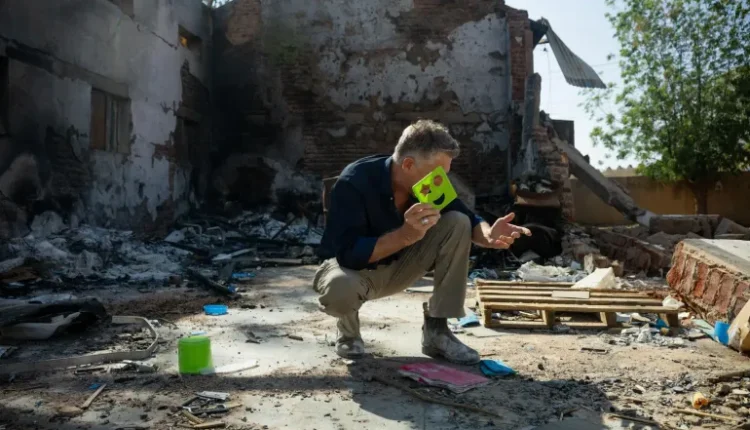
During a visit to the city of El-Obeid in North Kordofan State, James Elder, spokesperson for the United Nations Children’s Fund (UNICEF), assessed the damage caused by drone attacks—launched by the Rapid Support Forces (RSF) militia—on civilian infrastructure and services. This included the destruction of warehouses containing school supplies and educational materials provided by the United Nations for children in the region.
On Tuesday, the UN official released a detailed statement outlining the extent of the damage and the suffering endured by children in Sudan. He attributed this to two primary factors: drone strikes and the impact of the “El Niño” climate phenomenon, which threatens an imminent famine that would disproportionately affect the most vulnerable populations.
According to the statement, the militia’s drone strikes on El-Obeid destroyed over 292,000 textbooks and 40,000 review books for Arabic language and mathematics, alongside other educational materials intended for distribution to children.
Speaking at a press conference at the Palais des Nations in Geneva, James Elder stated that both human-made and natural factors have converged to exacerbate the catastrophic situation for civilians in Kordofan—particularly children. He expressed deep concern that drones and drought are striking the children of Sudan from two different directions, in an assault “unprecedented in the country’s history.” The UN official informed journalists that during the last week of October, not a single day passed without an armed drone striking a power station in Sudan; in total, 15 such facilities were targeted over the course of the month.
Meanwhile, the impact of the El Niño phenomenon—about which there have been global warnings—is already becoming apparent. With the grain-planting season for 2026–2027 largely concluded, any late-arriving rains will be unable to undo the damage, all while drone attacks continue.
“Drones and drought pose an imminent threat to children,” said Elder. “In Sudan, water systems rely on electricity; when a power station is attacked, water pumps and treatment plants cease to function. This forces families to turn to expensive and unsafe alternatives, leading to the spread of disease. We are once again seeing cholera outbreaks in hard-to-reach communities and among internally displaced families.”
UNICEF has also expressed concern regarding the threat to cold-storage facilities, which are essential for maintaining the efficacy of vaccines and medicines. At the same time, farmers are losing access to irrigation resources due to the failure of electric pumps and a severe fuel shortage. This has damaged crops and driven prices even higher, putting food out of reach for many families and fueling a deadly, vicious cycle. The statement notes that this crisis unfolds at a time when approximately 825,000 children under the age of five in Sudan are expected to suffer from severe acute malnutrition this year. It further reveals that two-thirds of child fatalities in the country this year have been caused by drones, which have extended the reach of the war into areas that were previously safe.
According to the statement, UNICEF and its partners—working in coordination with local communities—have treated hundreds of thousands of children for the most dangerous forms of malnutrition. They have also provided healthcare to over 2.5 million people, vaccinated millions of children against deadly diseases, and repaired water networks—equipping them with solar power to ensure a supply of clean water for approximately 8 million people. Additionally, they have helped millions of children return to school and provided protection and psychosocial support to 1.5 million children and their families.
UNICEF has called for an end to violence against children and attacks on civilian infrastructure. It has also urged for secure access across conflict lines, a halt to the influx of weapons, and the provision of urgent, sustainable funding to ensure the continued delivery of essential services.
Shortlink: https://sudanhorizon.com/?p=20077