

Sudanese CBS Director General of Policies: Restoring Banking Systems was the Biggest Challenge
Since the outbreak of war in April 2023, the Sudanese economy has been operating under exceptional and highly complex circumstances. Large sectors of production have ceased, public revenues have been directly and immediately impacted, the banking and financial infrastructure has been severely disrupted, and pressure on the national currency’s exchange rate has intensified.
Given these conditions and the need to balance supporting the state with maintaining the functioning of the economy, ensuring continued security, and reclaiming cities, towns, and regions, the Central Bank of Sudan remains obligated to maintain and guarantee the continuity of the banking system and payments, and to effectively manage monetary policy and the exchange rate.
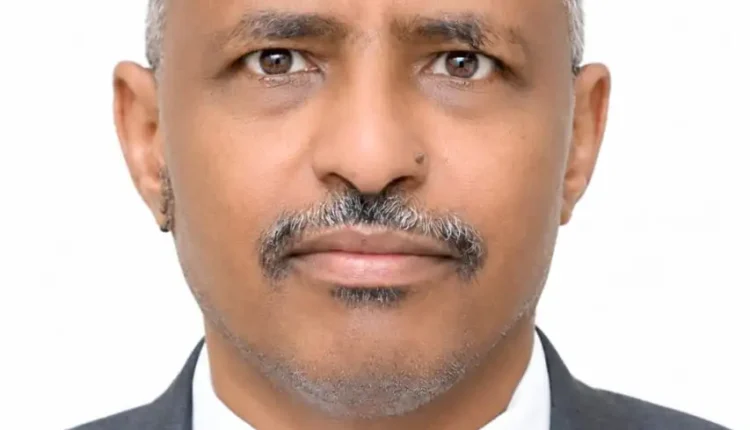
Sudanhorizon ” news website sat down with Badr Al-Din Hussein Jabrallah, the Director General of Policies, Research, and Statistics at the Central Bank of Sudan, to gain firsthand insight into the bank’s arrangements for banking recovery, restoring the national currency’s health among others. The following are excerpts from his remarks.
Interviewed by: Hala Hamza
– Mr Badr Al-Din, how would you describe the role of the Central Bank of Sudan (CBS) in light of the current situation? And what are the guiding principles of its policies?
– Severe economic crises and periods of uncertainty typically arise from three main drivers: sudden supply shocks (disruptions to supply chains) and demand shocks (a decline in consumer and investor confidence); external and geopolitical shocks (economic sanctions, wars, and unrest that impose restrictions and closures, altering investment destinations and/or complicating and hindering the ease of transactions); and financial crises, which often lead to the collapse of financial markets and the failure of banking institutions if a very rapid response is not forthcoming.
If we apply this to the conditions under which the Sudanese economy has been operating since April 2023, we can say that all the drivers of economic crises have remained active, their effects have converged, and they have been reflected in macroeconomic indicators, resulting in a sharp decline in public revenues and consequently a rise in the overall deficit. This has led to a decrease and slowdown in GDP growth rates, a rise in inflation rates, a deterioration in the exchange rate of the national currency, and a decline in consumer and investor confidence. Exceptional circumstances, by their very nature, require exceptional efforts and measures. Therefore, the tasks and responsibilities of the Central Bank of Sudan have grown and expanded. In addition to its traditional core functions of maintaining price stability, exchange rate stability, the integrity of the banking system, the continuity of banking services and payments, protecting depositors’ funds, and managing foreign reserves, it is now required to ensure the continued functioning of the state apparatus to support security operations, the uninterrupted supply of strategic goods, and the provision of essential services to citizens and displaced persons.
Given the circumstances, data, and complexities mentioned above, the Central Bank of Sudan faces complex economic dilemmas. Its traditional objectives (maintaining price stability and the value of the national currency) conflict with its exceptional responsibilities and obligations (financing the war effort, ensuring the continuity of the economy, and keeping the state functioning). This reality creates a cycle of conflicting pressures, the solutions to which can be detailed and analyzed as follows:-
First: Manifestations of conflict between objectives (the three-pronged dilemma). The crisis lies in the fact that achieving any one of these objectives comes directly at the expense of the others:
Financing versus price stability: The central bank finances the budget deficit by printing money (monetary financing) and/or facilitating government borrowing. This measure directly leads to runaway inflation, erosion of purchasing power, and devaluation of the local currency.
Defending the currency versus supporting growth: To maintain monetary stability by defending the currency and curbing inflation, the central bank is required to limit financing operations in general and direct government financing in particular.
However, this limitation of financing operations stifles economic growth, increases the cost of financing for the private sector, and hinders recovery. In such exceptional circumstances, the role of the central bank shifts from “achieving ideal stability” to “managing damage and minimizing losses” through available mechanisms. Therefore, the Central Bank of Sudan was compelled to realistically rearrange its policy priorities. The requirements for achieving the desired stability no longer preclude addressing other urgent tasks and requirements that the central bank is now obligated to undertake. For example, the Central Bank’s policy priorities for 2026 were ranked as follows: first, reforming the banking system, ensuring its continued operation, and strengthening payment systems; second, promoting financial inclusion; third, working to reduce inflation rates and maintain exchange rate stability; and fourth, improving the management of the national currency.
– What are the most prominent challenges that the outbreak of war has imposed on the economy and on the bank itself?
– At the economic level: Production and service sectors were disrupted, public revenues declined sharply as the budget lost a significant portion of its resources, and exports, imports, and supply chains were disrupted. At the bank and banking system level: Bank headquarters and branches were looted and vandalized in conflict zones, many branches were closed, and bank administrations relocated to safer states. Electronic payment and clearing systems were disrupted for a considerable period, and databases and transactions were damaged. The greatest challenge was maintaining banking services for private and government clients and finding urgent alternatives. Therefore, temporary measures and facilities were implemented for customers, payment systems were gradually restored, accounts were opened remotely, and branches were reopened in the safe states and the activation of remote work are crucial given the complexities of in-person work, which is limited to the minimum necessary to ensure the smooth operation and continuity of work.
– In your view, what are the main reasons for the decline in the value of the Sudanese pound?
– The average semi-annual volume of exports during the period June 2022 – June 2026 reached approximately $1.7 billion, while the average semi-annual volume of imports during the same period reached approximately $3.5 billion. Consequently, the semi-annual trade deficit during this period reached approximately $1.8 billion. The current account continued to register a deficit during the period (2022-2026), reaching $3.9 billion in 2022, approximately $2.1 billion in 2023, approximately $2.3 billion in 2024, and worsening in 2025 to reach approximately $5 billion. During the first half of 2026, the deficit reached approximately $3.2 billion. This led to a decline in exports and a rise in imports. Since June 2026, the exchange rate of the pound has been subjected to a rapid depreciation, resulting in several key factors, including:
Externally:
A supply-side shock due to the closure of the Strait of Hormuz and the rise in global fuel prices.
Limited access to external financing opportunities.
The continued impact of economic sanctions.
Limited correspondent banking relationships and access to banking facilities.
The war in the country has led to the shutdown of many productive sectors, reducing the flow of foreign currency from export proceeds and increasing the import bill.
The bank is working to manage the damage and minimize losses through available mechanisms.
The expansion of government borrowing from the central bank has exceeded safe limits for public liquidity. Increased demand is also a result of the needs of families and refugees abroad, coupled with a decline in remittances from expatriates. Besides the inherited structural imbalances in the Sudanese economy that have led to weak production, limited productivity growth, and increased costs and demand for foreign currency, these include weak transportation and storage infrastructure, high energy production costs, limited mechanization and technology in agricultural production processes, and a lack of planning to generate foreign currency through diversification of its sources (goods and services) and moving away from dependence on a single resource. Here, it is essential to manage precious and rare mineral resources effectively, considering them national resources that fall under the purview of the federal government. We must learn from the experience and lessons of oil exploration and extraction and how its resources were utilized.
– What are the most prominent measures and policies adopted by the bank and their results?
– The bank adopted several measures and policies, including working to ensure the continuity of banking operations, implementing temporary measures to facilitate transactions through banks, reopening branches in safe states, and enabling remote account opening. The government reformed payment systems by reactivating the Siraj system for instant gross settlements, expanding electronic services and banking applications, adopting standardized bank account numbers (BBAN/IBAN), restoring the electronic import/export system (IMEX) and linking it to the Baladna platform, and partially reinstating the national switching system.
It also implemented flexible exchange rate management with successive adjustments to foreign exchange controls, aiming to regulate the use of export proceeds, tighten gold purchase and export operations, establish a portfolio of strategic commodities to secure basic needs, and intervene directly to provide foreign currency for importing strategic goods.
The government also managed the national currency by replacing certain denominations, controlling cash flow and withdrawal limits, and finally, by issuing a decision to withdraw the 1, 2, 5, 10, 20, and 50 pound denominations, published in the Official Gazette on April 30, 2026, with a deadline of July 30, 2026. Replacement was to be exclusively through deposits into bank accounts at face value, while guaranteeing the rights of holders of these denominations in states with unstable banking systems. The bank also prioritized the soundness of the banking sector by implementing a comprehensive program to reform and restructure the banking system and non-bank financial institutions, culminating in the issuance of the Banking Regulation Law for 2026
It also focused on expanding financial inclusion and microfinance (with a minimum of 12% of its financing portfolio) and easing burdens on clients, while strengthening anti-money laundering and cybersecurity frameworks. Financing the purchase of solar energy systems for residential and agricultural projects was also facilitated.
The bank’s recovery plan emphasizes reducing direct cash financing and directing resources towards increasing production and productivity, as well as mobilizing foreign currency through official channels.
– What are the bank’s most notable achievements?
– Discussing successes amidst persistently high inflation and a deteriorating exchange rate—the traditional primary objectives of the Central Bank—requires considering the current state of the banking and financial sector (Central Bank, commercial banks, exchange companies, etc.) following the systematic destruction and looting of its headquarters in Khartoum at the outset of the war. This continued to affect branches in some states. Among the achievements are: the continued operation of the banking system and payment processing; the gradual return of branches and electronic services; and the safeguarding of depositors’ funds. This includes enabling individuals and institutions to access services; the continued execution of foreign transactions, including transfers and import/export operations; and contributing to ensuring the continued functioning of the state and supporting it in fulfilling its responsibilities. The return of all companies and institutions that support the implementation of the Central Bank’s policies to operation (Deposit Guarantee Fund, Sudanese Microfinance Guarantee Company, Sudanese Financial Services Company – Shahama, Electronic Banking Services Company (EBS), Financial Information Unit, Sudan Gold Refinery Company, etc.). Re-establishing communication with international and regional financial organizations and institutions and beginning to benefit from their technical assistance in capacity building, as well as consulting with them on the possibility of utilizing their expertise.
Restoring the production of monetary and financial statistical data and external sector data, as well as publishing periodicals including the annual report, the economic overview, the statistical summary of foreign trade, the economic bulletin, etc.
There are other successes that we indirectly referred to when discussing policy options under the current circumstances, which aim to minimize losses and damages due to the inability to achieve objectives because of conflicting ones. For example, efforts have been made to maintain the stability of the general price level. These efforts have contributed to slowing the rate of increase in the general price level, but it remains at an undesirable level, as the inflation rate reached 28.3% at the end of September 2026, compared to 68% at the end of December 2025. Efforts have also been made to curb the rapid depreciation of the national currency through direct and targeted injections. These efforts have contributed to providing many essential goods and slowing the rate of depreciation.
– How do you view the next phase?
– The continuation of the war poses a very significant challenge. However, with the expansion of safe areas, the chances of continued economic recovery increase. Consequently, the vision and policies of the Central Bank of Sudan are being formulated to shift towards restoring the effectiveness of policies that support monetary stability through monetary and fiscal discipline, reducing direct monetary financing by the Central Bank, and directing resources towards increasing production and productivity, especially for export. This also includes working to mobilize foreign resources through official channels by incentivizing exporters and Sudanese working abroad, and tightening control over gold to build sufficient reserves that support and maintain the stability of the national currency’s exchange rate. It is also essential to complete the reform and restructuring program for the banking sector, build modern and diversified payment systems, enhance cybersecurity, and focus on financing small and medium-sized enterprises, as outlined in the Central Bank of Sudan’s 2026-2030 strategic plan.
It is important to note that achieving the desired economic stability is not the sole responsibility of the central bank. Rather, it is achieved through the integration of monetary, banking, fiscal, and trade policies, coupled with the availability of security, while maintaining the central bank’s institutional and financial independence. This independence is not absolute, as some might imagine; the central bank remains an institution within the state’s institutional framework, operating according to established legislative and legal frameworks.
Shortlink: https://sudanhorizon.com/?p=20025