

South Sudan’s Elections and Us
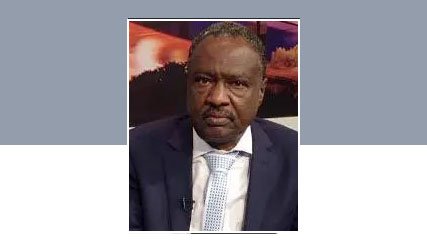
Rashid Abdul Rahim
The Sudanese state and its citizens share one characteristic: they deal with problems the day they arise, without knowing what they will do or what tomorrow may bring. Their approach is to live one day at a time – “today’s provision for today”. This is the source of many disappointments, not least – and most seriously – in the conduct of foreign relations, which are often driven by reactions rather than by a considered strategy.
Let us consider a current example: this is precisely how we are managing our relationship with South Sudan.
The South was once part of our country. It subsequently became independent, to the point that we later found ourselves complaining about some of its citizens’ participation in the war.
South Sudan will soon face a major challenge, and we should prepare by establishing a clear approach to dealing with it.
That challenge is the general election, for which the government has set the twenty-second of this month as the final date.
South Sudan is not in the best position to cope with the consequences that this process may bring.
The first risk posed by the elections is a possible crisis in the country’s leadership. President Salva Kiir Mayardit is now over 75 years old and, according to the article, is suffering from several illnesses and receiving treatment outside his country. His movements have slowed, and his address to the Russian President two days ago was cited as sufficient evidence of his condition. The author argues that the performance exposed members of his ministerial delegation, particularly his Foreign Minister, Ms Mandy Samaya Kambi.
The next crisis that Salva Kiir is likely to face – one of his own making – concerns his appointment of relatives and members of his family to important positions in the state, despite the availability of others who may be better qualified.
He appointed his eldest daughter, Adut Salva Kiir, as Senior Presidential Adviser. She is responsible for overseeing government development initiatives, coordinating international and humanitarian partnerships, and managing relief and social-support programmes for institutions, hospitals, and the education sector across the country.
He also appointed his son, Atem Salva Kiir, as head of the Presidential Guard, known as the Tiger Division, and another son, Tibek, as Assistant Executive Director in the Office of the President.
These appointments have attracted opposition and accusations against the President, and their impact is likely to be felt in the coming elections.
The greatest danger he will face, however, is the opposition and the strong competition he may encounter at the polls, particularly from those aligned with his historic rival, Riek Machar, whom he has kept in prison since last year.
The President of South Sudan will also face opposition from prominent figures who have made significant contributions to the state and the Sudan People’s Liberation Movement (SPLM), several of whom were close associates of John Garang.
Tribal affiliations will also play a role. Opposition is likely to begin among the Equatorians, whose land is home to the capital, Juba. They are led by General Thomas Cirillo, who believes that the elections will not be free and fair and has therefore indicated that he will oppose them if they go ahead.
Salva Kiir will also face opposition from veteran and senior SPLM figures, including Dr Lam Akol, Pagan Amum and Deng Alor.
The Sudanese government appears entirely oblivious to this important and potentially serious development, which could transform the situation in one of the region’s most important countries. In addition to the fact that some South Sudanese have participated in the war against us, we have longstanding ties with the South that require planning, attention and careful management. Chief among these are our economic interests. Before the war, Sudan exported more than 170 commodities to South Sudan, in addition to oil, which the South can export only through the Bashayer terminal on the Red Sea.
South Sudan has undergone a major transformation since the war ended. Contrary to what might have been expected, relations between the people of the South and those of the North have become warmer and friendlier. This is evident in support for Sudanese sports teams and appreciation of music from the North.
Since separation, interest in Juba Arabic has grown. Indeed, it has developed into a variety that is closer to the Arabic spoken widely in the North.
The Sudanese government appears unaware of these changes and developments, whether significant or potentially serious. The concern is that, in the future, it may find itself facing hostile South Sudanese leaders because it has failed to build friendships with parliamentarians or potential leaders who might favour good relations with Sudan rather than hostility.
Shortlink: https://sudanhorizon.com/?p=19810