

“Sumoud” and Its Rejection of Sudanese–Sudanese Dialogue: From Crisis Management to the Re-Founding of the State Through a Systems Approach (3 of 3)
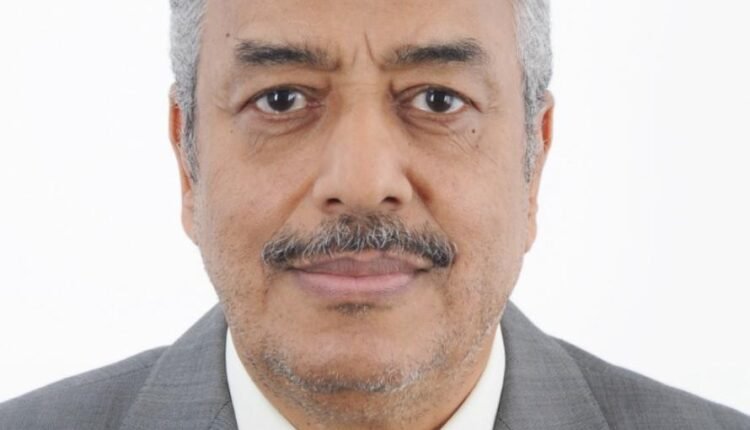
Dr Ismail Sati
The second part of our article concluded that foundational negotiations must go beyond temporary agreements on the distribution of power. They should be based on shared rules that manage differences, define institutional responsibilities, and lay the foundations for a genuine constitutional transition, while remaining committed to justice and accountability. These requirements, however, lead us to a deeper question: why do Sudan’s crises keep recurring, even after changes of government, the signing of agreements and the launch of political initiatives?
In my view, the answer lies neither solely in the mistakes of individuals and leaders nor in the failure of any particular initiative. Rather, it lies in the way we understand the problem and respond to it. When we treat war, the economy, identity, marginalisation, relations between the centre and the regions, and relations between civilians and the military as separate issues, we may address some symptoms of the crisis while leaving unchanged the relationships that reproduce it.
This is the central idea I put forward in my article published on Facebook on 29 August 2026, entitled On Sudanese–Sudanese Dialogue: what is required is not merely a dialogue plan, but an intellectual framework that helps Sudanese people understand the dysfunctional system of the state, identify the mechanisms that generate crises, and develop a clear theory of change, ultimately leading to a national compact that establishes shared rules for governing the state and managing differences.
Tenth: From Diagnosing Events to Diagnosing the System That Produces Crises
Political dialogue often begins by compiling a long list of issues requiring attention: war, the economy, marginalisation, identity, power, wealth, institutions, justice, and political culture. These issues are undoubtedly important, but listing them is not enough to understand the crisis.
Diagnosis identifies the problems we can see, whereas an explanatory model explains the relationships between them, how they affect one another, and how they may interact to generate and reproduce a crisis.
For example, an imbalance in the distribution of power may leave sections of the population feeling marginalised. This feeling may erode trust in the state, prompting some groups to seek protection or influence outside its institutions. As centres of power multiply, the state’s ability to monopolise the legitimate use of force and enforce the law weakens. The likelihood of violence increases, opportunities for investment and development decline, and poverty and marginalisation rise once again.
In this way, a vicious circle emerges in which each dysfunction reinforces the others. This circle cannot be broken by addressing each element in isolation, because reform in one area may not endure if the relationships that undermine it remain intact.
This is the difference between fragmented thinking and systems thinking. The former tends to divide reality into separate issues, whereas the latter seeks to understand interrelationships, cumulative effects and the cycles through which problems reproduce themselves.
The central question guiding the dialogue should therefore not merely be: what are the causes of the war in Sudan? It should also be: what has repeatedly made the Sudanese state incapable of managing political and social differences peacefully?
This question takes us from the history of events to the system that produces them. It does not absolve individuals and leaders of responsibility for their decisions. Instead, it places that responsibility in a broader context that helps us understand why mistakes recur and why holding individuals accountable or changing a government is sometimes insufficient to prevent a crisis from happening again.
Eleventh: From Addressing Separate Issues to Changing the Relationships Between the Components of the State
If we agree that Sudan’s crisis is systemic, organising dialogue around specialised tracks may help, but it must not become another way to fragment the problems.
There can, and indeed should, be political, military, security, economic and social tracks, alongside a track for transitional justice. Each field has its own characteristics, expertise and competent authorities. However, a clear principle must govern these arrangements: functional separation does not mean systemic separation.
Military reform affects the constitution, while the constitution determines the military institution’s nature and remit. The military economy affects the national economy; justice affects reconciliation; reconciliation affects local stability; and stability, in turn, affects investment and development. These tracks therefore cannot be treated as independent islands with no influence on one another.
In my previous article, I proposed establishing a National Integration Council or a Strategic Integration Mechanism, tasked with ensuring that the outcomes of the different tracks are consistent with one another and identifying conflicts between them before they are adopted. This mechanism would not make decisions on behalf of the specialised tracks, but would ensure they fit together within a single national vision.
For example, one track cannot agree on military reform if the constitutional track does not clearly define the military institution’s position and powers. Nor is it sufficient to agree on economic policies if institutional relationships that obstruct their implementation remain unaddressed, or if security arrangements make the stability required for development unattainable.
The success of dialogue should not be measured by the number of issues resolved, but by the extent to which its outcomes can work together as components of a single state system.
Twelfth: A Theory of Change — How Will Dialogue Lead to a Different State?
One of the most important proposals I made in my article On Sudanese–Sudanese Dialogue was that the process should include what might be called a “smart theory of change”: a clear account of how the proposed agreements will transform the reality of the state, rather than merely identifying the subjects the parties intend to discuss.
If the objective is to prevent the recurrence of war and crises, the links between proposed interventions and their anticipated results must be clearly explained.
The underlying hypothesis could, for example, be formulated as follows: if the rules governing the production and distribution of power are changed; state institutions are rebuilt on professional and legal foundations; relations between civilian authorities and military institutions are properly regulated; imbalances between the centre and the regions are addressed; equal citizenship is established; and permanent mechanisms for managing differences are created, then the likelihood of war and crises recurring will be substantially reduced.
This hypothesis must not remain a mere political declaration. It must be translated into specific commitments, clearly assigned responsibilities, timeframes, and measurable indicators through which progress can be assessed, obstacles identified, and necessary corrective action taken.
It is important here not to confuse agreement on objectives with the ability to achieve them. Political forces may agree on sound principles but fail to implement them if they lack capable institutions or if political and economic incentives continue to encourage obstruction of agreements.
Dialogue must therefore answer three interconnected questions:
What changes do we want to achieve in the structure of the state and the relationships between its constituent parts?
What institutional, political and economic mechanisms are expected to bring about these changes?
How will we know whether the changes have been achieved, and what will we do if the results show that our assumptions or procedures need to be reviewed?
In this sense, a smart theory of change is not an additional document sitting alongside the outcomes of dialogue. It links the crisis diagnosis, agreement on solutions, their implementation, and the assessment of their results.
Thirteenth: The National Compact Is at the Heart of Foundational Negotiations
I believe the concept of a national compact should be at the centre of foundational negotiations, not treated merely as one outcome of dialogue.
The real question is not simply how we can agree on a government, but what we, as Sudanese, can agree to bind ourselves to so that we can disagree without killing one another.
The national compact should establish the rules on which Sudanese people agree that their state must be founded, regardless of which party is in government or which alliance holds a majority at any particular time.
Among the foundational questions it should address are the following:
Who is a citizen, and what rights and duties arise from citizenship?
What is the nature of the state, and where does its legitimacy come from?
How should power be distributed between the centre and the regions, and what limits does each level’s authority have?
How should resources and wealth be managed fairly?
Who has the right to use force, and under what legal authority?
What should the army’s role in the state be, and how can its professionalism be safeguarded so that it does not become a partisan instrument?
How should power be transferred peacefully, and how should those who govern be held accountable?
How should the rights of individuals, minorities and different social groups be protected?
How should political and social disputes be managed when consensus proves impossible?
What should happen when institutions fail or their powers conflict?
Here, we must distinguish between the national compact and the constitution. The constitution regulates state institutions, their powers and the procedures governing their operation. The national compact, by contrast, defines the fundamental principles on which citizens agree the state should be founded and that should guide the drafting, interpretation, and development of the constitution.
This does not mean that the national compact replaces the constitution. Rather, it provides the frame of reference on which the constitution should rest. Negotiations should also address fundamental constitutional principles that no temporary political majority should be able to dismantle easily, such as equal citizenship, the rule of law, the peaceful transfer of power, judicial independence, political pluralism, human rights, and the state’s monopoly on the legitimate use of force.
Agreement on these principles does not mean all Sudanese will share the same political, economic, or social outlook. It means they will have common rules for managing their differences without letting disagreement become a threat to the state’s existence.
Fourteenth: Citizenship and the Rebuilding of National Trust
Citizenship must not remain a principle mentioned only in the preambles of constitutional documents. It should become the philosophy that organises the relationship between the state and society.
Citizenship addresses questions of identity, rights and duties. It establishes the basis for political representation, equitable access to services and opportunities, and the nature of the relationship between the individual and the state. In this way, it provides a common foundation for managing Sudan’s diversity, rather than letting identity and social or regional affiliations become instruments of competition for power or justifications for exclusion.
Equal citizenship, however, cannot be achieved through written provisions alone. It requires institutions that apply the law fairly, policies that distribute opportunities and services equitably, mechanisms to hold officials to account, and safeguards against political or social affiliation becoming a condition for obtaining rights.
Citizenship is closely linked to another equally important problem: the crisis of national trust.
Sudan’s crisis is not merely a crisis of institutions; it is also a crisis of trust. Citizens do not trust the state; the regions do not trust the centre; civilians do not trust the military, and the military does not trust politicians. Political forces do not trust one another, society does not trust the elites, and younger generations do not trust the political system as a whole.
This crisis cannot be resolved simply by calling for trust or signing a political declaration that urges people to trust one another. Trust is built when people see that the rules apply to everyone, that institutions fulfil their commitments, that rights do not change with changes of government, and that officials are held accountable.
For this reason, I have proposed making the rebuilding of national trust an independent strategic objective of the dialogue process, translated into measurable indicators that can be monitored. These might include levels of trust in institutions, fairness in access to services, the effectiveness of grievance mechanisms, compliance with the law, and citizens’ ability to participate and hold those in power accountable.
If the experiences that generate distrust do not change, calls for reconciliation will not be enough to rebuild trust sustainably.
Fifteenth: The System of Incentives and the State’s Institutional Capacity
Foundational negotiations must confront an important question frankly: why have previous dialogues and agreements failed? Not necessarily because all the ideas they contained were wrong, but because some actors may find that prolonging the crisis, maintaining exclusion or controlling resources offers them incentives that make a settlement less attractive than preserving the status quo.
Dialogue should therefore do more than determine what the state ought to do. It must also examine how the state’s institutions and rules can be designed so that peace, cooperation and compliance with the law become more advantageous than war, exclusion and the seizure of power. This is simultaneously a political, economic and institutional question. It requires examining the sources of influence, the rules governing resource distribution, oversight mechanisms, and the gains actors get from complying with or violating the rules.
If the system rewards those who obstruct institutions, or gives those who use force outside the law greater political influence, calls for cooperation will not be enough to change behaviour. If, on the other hand, the rules link power to responsibility, influence to accountability, and participation to compliance with the law, the prospects for institutional cooperation will improve.
Dialogue must also address the state’s institutional capacity. A state may have a sound constitution yet be unable to implement its provisions because its administration is weak, its finances are inadequate, corruption is widespread, or it cannot deliver services and enforce the law.
For this reason, building a state with strong institutional capacity must be a foundational objective, not merely an item in a government programme. This includes an efficient public administration, sustainable financial resources, oversight and accountability, institutional coordination, service delivery, and the implementation of agreed policies.
An agreement has little practical value if institutions cannot implement it. Likewise, a strategy is of little use if it does not identify the resources, responsibilities and capacities required to achieve its objectives.
Sixteenth: From Linear Dialogue to Continuous National Learning
One shortcoming we must avoid is designing the political process as a linear path that begins with dialogue and ends with a national compact, a constitution, and implementation, without clear mechanisms to review results and correct mistakes.
Sudan’s reality is too complex to be governed by a rigid, unchangeable sequence. Implementation may reveal problems that were not apparent during negotiations; new circumstances may emerge that require some assumptions to be reconsidered; and decisions taken in good faith may produce unintended consequences.
I have therefore proposed the concept of continuous national learning, which views state-building as an ongoing process of learning and correction rather than merely the preparation of a final document.
This process could involve listening to citizens, diagnosing problems, discussing their causes, testing appropriate solutions, reviewing the results and then refining agreements and policies in the light of experience.
Such reviews may return certain issues to the negotiating table or reveal the need to amend policies, procedures or even some institutional arrangements, in accordance with clear constitutional and legal rules.
Continuous learning does not mean that the state should become trapped in perpetual change or that its institutions should lose their stability. It means combining constancy in fundamental principles with the capacity to develop policies and methods, while maintaining institutional mechanisms to correct mistakes without political collapse or armed conflict.
A state capable of learning does not claim to be infallible. Instead, it builds the capacity to identify and correct mistakes before they become major crises.
Seventeenth: The Military Track Within the Framework of State-Building
In light of this approach, the military track should address more than the technical arrangements for integration, disarmament and reintegration. The more fundamental question is: what principles should govern the relationship between the state and armed force?
I believe the starting point should be agreement on a clear principle: a stable national state cannot be built while multiple centres of armed power operate outside the state and the law.
Once this principle has been agreed, discussions can turn to building a professional national army, establishing the state’s legitimate monopoly over the use of force, ensuring that the military institution is subject to constitutional and legal rules, preventing its politicisation or transformation into a partisan instrument, ensuring transparency in its economic activities, and defining the responsibilities of military leadership, oversight and accountability.
It is essential here to distinguish between protecting the military institution as a national institution and granting its leadership immunity from criticism or accountability. The state needs a capable, professional military institution, but it also needs clear rules governing its powers and its relationship with other institutions.
Similarly, security-sector reform must not become a vehicle for settling political scores or subordinating national institutions to a particular alliance’s interests. Instead, it must be grounded in state-building requirements, agreed rules, and clear professional, legal, and security considerations.
The objective is not simply to bring armed formations together under a single structure. It is to build a national system in which force is subject to the law, allegiance is owed to the state, and professional leadership is accountable for carrying out its duties within clearly defined areas of responsibility.
From the Struggle for Power to Negotiating the Foundations of the State
As I have stated previously, I do not support the concepts underpinning the current call for dialogue, nor do I believe that organising a meeting between political forces is sufficient to address Sudan’s crisis. I have proposed an alternative based on systems thinking and foundational negotiations, aimed at reaching agreement on the nation’s fundamental principles, establishing rules for managing differences, and building a national system capable of resolving crises rather than reproducing them.
At the same time, I disagree with Sumoud on positions that I consider unfair to state institutions, its approach to the role of the Armed Forces, and what I see as a tendency to impose a narrow political vision at the expense of other forces that should have the right to participate in determining the country’s future according to clear national criteria.
Nor do I believe the Sumoud alliance has a popular mandate that entitles it to monopolise the definition of a path to a solution or determine who deserves to participate. No political settlement should become a means of restoring particular forces to power or granting them a permanent governing privilege without returning to the people through free and fair elections.
In my assessment, the most realistic way out of the crisis is to separate military negotiations to end the war from foundational political negotiations to build the state. Next, the parties should agree on the principles of the national compact and the rules for managing differences, followed by defining a clear transitional period. During this period, freedoms should be restored, institutions and public services rebuilt, and the country prepared for free elections, while justice is pursued and all those proven responsible for war crimes and violations since 2023 are brought to trial.
These steps, however, will not achieve their purpose unless they are grounded in a systemic understanding of the crisis that connects the distribution of power, institution-building, citizenship, justice, trust, economic and political incentives, and the capacity to learn and make corrections. The task is not to address every issue in isolation, but to change the relationships that have caused crises to recur.
Sudan does not need consensus on a single account of the past, nor an agreement among political forces on who was most right at every stage. It needs agreement on common rules for the future: rules that prevent the monopolisation of power, guarantee the rule of law, preserve the country’s unity, and let Sudanese people choose who governs them.
The question I therefore put to Sumoud and its opponents, and to all forces claiming to speak on behalf of Sudan, is this:
Are you prepared to participate in foundational negotiations whose agenda and outcomes you do not monopolise, in which all parties are subject to agreed rules and commit themselves to the results even when those results conflict with your own political outlook or interests? Or is your acceptance of the political process conditional on its delivering the outcome you want for your own project?
Foundational negotiations are not tested merely by participation or by signing their outcomes. They are tested by the parties’ willingness to honour what they have agreed, even when the results do not serve their interests. A national compact is meaningless if each party reserves the right to accept its rules when they advance its objectives and reject or circumvent them when they conflict with its political outlook.
Participating in the construction of the state does not mean that every party gets what it wants. It means that everyone agrees to abide by common rules and seeks to change what they oppose through constitutional and peaceful means, rather than rebelling against the state or undermining its institutions whenever outcomes fail to match their preferences. A national compact derives its value not from signing it alone, but from the parties’ willingness to respect it and honour the obligations it entails.
This question applies to every party without exception. Political forces opposed to the army are not the only ones required to put forward alternatives; forces that support it are equally obliged to present a clear vision for the state’s future. Those calling for dialogue do not own the process, just as those rejecting it have no right to obstruct it indefinitely.
What Sudan needs is neither the victory of one alliance over another nor a return to political arrangements whose inadequacies have been demonstrated by experience. It needs a national system that accommodates diversity, manages differences, guarantees the peaceful transfer of power, holds those responsible for crimes accountable, protects state institutions from politicisation and capture, and can learn from its mistakes and adapt to changing circumstances.
The decisive question, therefore, is not who rejected dialogue and who called for it, but this: do we have the intellectual and political courage to move from the struggle for power to negotiations over the foundations of the state, and from managing recurring crises to building a national system that prevents them from being reproduced?
In my view, this is the real test facing Sumoud and all other Sudanese political forces. It is also the path that could give Sudan a chance to break the cycle of conflict and move toward a stable, just state capable of protecting its people and safeguarding their future.
Shortlink: https://sudanhorizon.com/?p=19401