

Sudan: External Support for the Militia Prolongs the Conflict
Vienna – Sudanhorizon
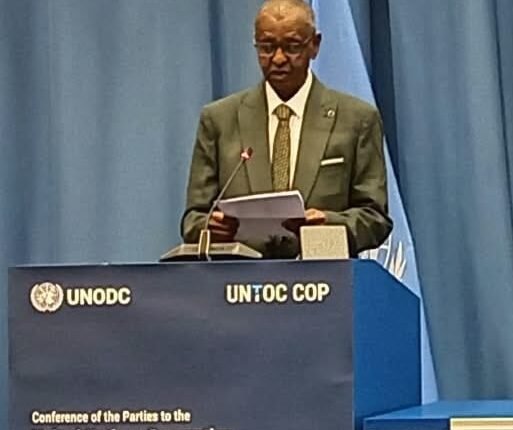
Osama Haroun Al-Sayed Al-Shabak, Head of the Public Prosecution, Chair of the Investigation and Inquiry Committee into violations by the rebellious Rapid Support Forces (RSF) militia, and head of the Sudanese delegation, delivered Sudan’s statement on Tuesday at the thirteenth session of the Conference of the Parties to the United Nations Convention against Transnational Organized Crime, currently being held in Vienna.
He affirmed that, despite the exceptional circumstances the country is enduring, Sudan continues to develop its legal and institutional framework to combat organized crime and related offenses, in line with the objectives of the Convention and its protocols. He outlined provisions within Sudanese criminal law that criminalize the establishment, management, and participation in organized criminal groups. He further noted the strengthening of penalties for related crimes—including human trafficking, migrant smuggling, cyber-fraud, and offenses affecting the environment and natural resources.
The Sudanese statement highlighted the growing link between armed conflict and organized crime, explaining that wars weaken state institutions while simultaneously creating an environment conducive to the expansion of human trafficking, migrant smuggling, and illicit drug trafficking—exacerbated by heightened security vulnerabilities and diminished border control. It warned that continued external support for the rebel militia contributes to prolonging the conflict and increases the risk of the emergence of transnational criminal networks, thereby threatening the security and stability of the region. The statement called for the inclusion of efforts to combat organized crime within the broader international agenda aimed at curbing the spillover of armed conflicts into neighboring countries.
Furthermore, it urged the international community to strengthen cooperation in supporting conflict-affected nations and building their institutional capacities. This includes developing mechanisms to track, seize, and recover the proceeds of crime, enhancing collaboration in the realm of international criminal justice, and integrating the risks of organized crime—within both conflict and post-conflict contexts—into peacebuilding, the rule of law, and crime prevention programs.
Sudan reaffirmed its commitment to cooperating with other states parties and the United Nations Office on Drugs and Crime (UNODC) to ensure the effective implementation of the convention and its protocols, and to strengthen the rule of law, ultimately contributing to the achievement of security, stability, and sustainable development.
Shortlink: https://sudanhorizon.com/?p=19265