

A Critical Review of Experience: Reflections on Sudan’s Democratic Crisis Through the Experience of the Unionist Gathering
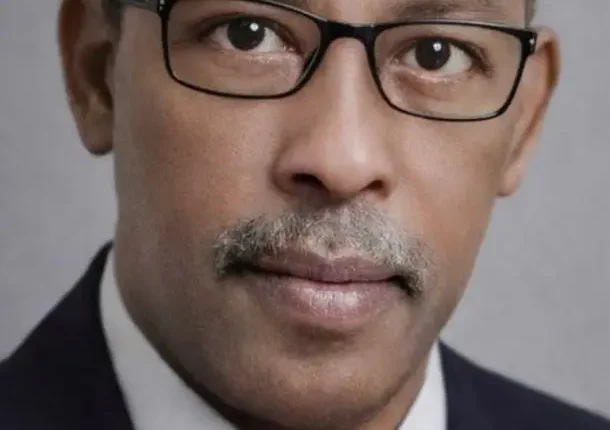
Qareeb Allah Al-Samani
Introduction: Why Are We Writing This Series?
This series does not seek to revive past organisational disputes, nor does it aim to settle political scores with comrades with whom we have disagreed. Instead, it seeks to review our party experience with honesty and courage, grounded in our conviction that diagnosing shortcomings in democratic practice is essential to reforming it.
Democracy has remained a national aspiration for generations of Sudanese who have made immense sacrifices to pursue it. Yet our repeated experiences confront us with a question we cannot afford to ignore: why does democracy continue to falter in Sudan, even when new opportunities arise?
We believe the answer lies not solely in military coups and foreign interference, serious as these are, but also in reassessing the political and civil forces that should nurture and safeguard democracy.
Sudan’s democratic crisis does not begin at the gates of the Republican Palace—the seat of power. It extends into the political parties themselves, their organisational cultures, their relationships with their constituencies, how their leaders are selected, how decisions are made, and how disagreements are managed.
For this reason, we begin with our experience in the Unionist Gathering, as part of Sudan’s experience of democratic party politics. We lived through its details, helped build its institutions, and witnessed both its achievements and the failures it encountered.
We do not claim that our experience captures all the crises facing Sudanese democracy, or that we alone have answers to why it has repeatedly faltered. Instead, we offer our account and open the door to discussion and investigation among party members and all those concerned about the future of democratic political activity.
In these reflections, we will distinguish between the events we experienced firsthand and the conclusions we have drawn. We will examine the reasons these shortcomings arose, rather than merely identifying those responsible.
The question is not simply who made a mistake, but why the mistake was possible in the first place, and how we can build institutions and safeguards that prevent its recurrence.
Throughout this series, we will address issues of institutional governance, delegation of authority and accountability; the relationship between political parties and alliances; the influence of power and personal leverage on party practice; the place of party members and the wider public in decision-making; and how organisations that advocate democracy can become environments in which dissent and disagreement are increasingly constrained.
We will also direct these same questions towards our own experience, because criticism that exempts those who offer it from self-examination loses an important part of its value.
Our ultimate aim is not merely to explain what happened within the Unionist Gathering, but to draw lessons that can help reform Sudanese political parties, return the public to the heart of political activity, and build democratic institutions capable of safeguarding the independence of national decision-making.
If we are unable to protect even a small democratic opportunity within a political party, how can we aspire to build a democratic state that accommodates the differences of an entire people?
Because we believe the mistakes of democracy cannot be remedied by abandoning it, placing the public under guardianship, or depriving people of their right to choose, but only by doing more democracy, we regard criticism, review, and accountability as means of correcting course, not reasons to abandon it.
Democracy is not an infallible undertaking. Its strength and capacity for renewal derive from its ability to acknowledge its mistakes and correct them through its institutions and the will of its people.
We must remedy democracy’s mistakes with more democracy, not by taking democracy away. This brings us to the question that we want these reflections to lead us towards:
How can we safeguard the next democratic transition so that we do not reproduce the same failures?
We write to learn from our experience and to open a space for reflection and reform, convinced that the democracy we want for Sudan must begin within our own political parties and draw its strength from their institutions and their constituencies.
To be continued…
Secretary-General of the Unionist Gathering – General Secretariat
Shortlink: https://sudanhorizon.com/?p=18880