

On “Tasees” and the New Sudan: A Response to Khalid Koodi
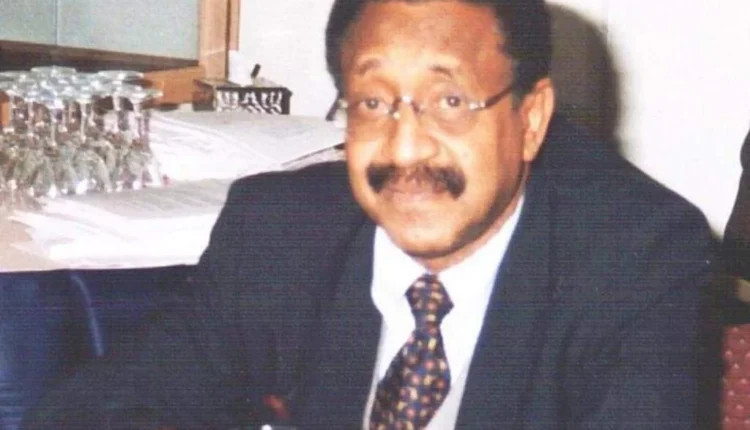
Al-Wathiq Kameir
I read Khalid Koodi’s response, “A Reading of Al-Wathiq Kameir’s Article on ‘Tasees’ and the Sudanese Dialogue”, with interest; it addresses my article, “‘Tasees’ and the Sudanese–Sudanese Dialogue: Between the Need for Inclusivity and the Risk of Legitimising Division”. I appreciate the seriousness with which he engaged with my text and his attempt to place our disagreement within a broader intellectual framework. Many of the issues he raised concerning the nature of the Sudanese state, citizenship, marginalisation and the relationship between the centre and the regions are, in their essence, not matters on which we disagree.
However, I believe his response conflates four distinct issues in several fundamental respects. First, the unity of the state with the preservation of the structure of the “Old Sudan” as it stands; second, engagement with a party that is an established de facto reality with recognition of a parallel authority created by war; third, the functional distinction between the political and military tracks with the exclusion of a political project or the denial of its right to express itself; and fourth, the distinction I drew in relation to the movements that signed the Juba Agreement with granting them permanent legitimacy or political immunity on the strength of a previous agreement.
In my view, these four conflations have led his response away from the specific question posed in my article towards a broader discussion of the “Old Sudan” and the “New Sudan”. They have also led him to attribute to me a position I did not express: that the aim should be to restore the pre-war state with its existing structure, institutions and historical shortcomings. My article posed a more specific question: how can an inclusive political process reconstruct the state without allowing military power and territorial control to become a source of governmental status or pre-existing political entitlements?
The disagreement is not between the “Old Sudan” and the “New Sudan”
I did not say the “Old Sudan” should be restored, nor did I present the structure of the Sudanese state since independence as a model to preserve or subject merely to cosmetic reform. On the contrary, I explicitly stated that political dialogue should pave the way for a broader constitutional dialogue addressing the nature of the state, the constitution, relations between the centre and the regions, citizenship, identity, religion and the state, justice, the distribution of power and wealth, and the establishment of a single national army. I also clearly called for reclaiming the concept of the “roots of the crisis” from the polarisation it suffered during the war, pointing out that the issues it encompasses predate both the Rapid Support Forces (RSF) and the April war itself.
To portray our disagreement as a confrontation between those who wish to preserve the “Old Sudan” and those who seek a “New Sudan” is therefore, in effect, to debate an argument that my article never advanced. The disagreement is not about whether the old Sudanese state needs profound change. It concerns how we reach a new state, who decides what form it should take, and whether weapons confer on their possessors a predetermined institutional role in deciding its future.
The unity of the state I refer to is neither a sanctification of its historical structure nor a defence of its centralisation or the privileges that developed within it. Preserving the political and geographical unity of the state differs fundamentally from preserving the political and social order that has historically governed it. It is entirely possible to rebuild the state radically without fragmenting it into parallel authorities that emerge during wartime.
Engagement is not the same as legitimacy
Khalid makes an important distinction between legitimacy, recognition, and de facto power, and I agree with him. Indeed, this distinction lies at the heart of my argument. Nowhere did I claim that the Port Sudan authorities enjoy democratic legitimacy, nor did I present them as having the right to confer legitimacy on others or withhold it from them. Similarly, engaging with existing state institutions does not mean treating the arrangements established after the 25 October coup as the ultimate democratic point of reference. Conversely, an existing authority’s lack of democratic legitimacy does not automatically confer legitimacy on another, parallel authority established during the war. It is logically and politically possible to reject a military coup and a parallel government at the same time.
This is not merely a theoretical proposition.
Nor does my argument invent a distinction between one “legitimate” authority and another “illegitimate” one. The African Union itself, which has consistently rejected unconstitutional changes of government in Sudan and called for the restoration of constitutional civilian rule, has also explicitly taken a position on the parallel “Tasees Government”. At its February 2026 summit, the African Union strongly condemned what it described as a “parallel government” established by the Tasees alliance, led by the RSF. It called on member states and the international community not to recognise any parallel government, while emphasising Sudan’s unity and territorial integrity and the preservation of state institutions. The African Union Commission later reiterated, while welcoming Sudanese–Sudanese dialogue, that the process should include various civilian, political, and societal forces and ultimately lead to a united Sudan governed by legitimate civilian institutions and a single national security structure.
This illustrates my point: refusing to grant absolute democratic legitimacy to an existing authority does not require recognising a parallel authority born of war. Equally, rejecting a parallel government does not mean excluding the civilian and political forces associated with it from an inclusive political process.
More importantly, I have never called for refusing to engage with the RSF. Quite the contrary. I stated that the war cannot end without negotiating with it, as a major military actor with weapons, forces, and territorial control. I therefore placed it firmly within the track concerned with a ceasefire, civilian protection, humanitarian assistance, withdrawal, security arrangements and the future of the armed forces.
There is, then, no disagreement between Khalid and me over the need to engage with the party that is an actual participant in the conflict.
The disagreement begins when Khalid shifts from arguing that it is necessary to engage with the RSF and “Tasees” as an existing political and military reality to the conclusion that the “Tasees Government” must be engaged with in its institutional capacity as a government representing a political project. But why must the second conclusion necessarily follow from the first? Negotiating with a party, or acknowledging its existence as a political and military reality, does not mean acknowledging its right to govern or accepting the governmental status it has assigned to itself.
This is, in fact, the very distinction Khalid himself insists must be maintained between engagement, recognition and legitimacy.
A political project does not confer governmental status
If the justification for recognising “Tasees” in its institutional capacity is that it embodies the project of the “New Sudan”, then the answer is straightforward: a political project, however compelling its ideas may be, does not automatically confer governmental status on those who espouse it.
Equal citizenship, justice, ending marginalisation, redistributing power and wealth, addressing relations between the centre and the regions, and reconsidering the relationship between religion and the state are not the intellectual or political property of any one alliance. These are national issues that predate “Tasees” by decades and have been advanced by various political forces and schools of thought, including the Sudan People’s Liberation Movement (SPLM) at different stages of its history.
Acceptance of these issues should therefore not be conditional on accepting the government proclaimed by “Tasees”. Equally, criticism of that government should not be equated with rejection of the New Sudan project.
If, on the other hand, institutional status is based on territorial control and military power, we return precisely to the problem raised in my article: the conversion of the outcomes of war into political and institutional entitlements.
Who decides which weapons are revolutionary and which defend privilege?
Khalid distinguishes between using weapons to protect old privileges and using them in the “struggle to change the historical structures that produced wars”. This is an idea worth discussing, but it cannot, in itself, serve as a basis for determining political legitimacy. Who decides whether a particular armed force is “revolutionary” while another is defending privilege? Every armed movement can describe itself as fighting for liberation, justice or the refoundation of the state, while portraying its opponent as the guardian of the old order.
If we let each party’s assessment of the justice of its cause determine its entitlement to bear arms and its political weight, we effectively grant those who carry weapons the right to determine their own legitimacy.
This question is particularly complex in the current war. Historically, the RSF did not emerge as a liberation movement fighting the central state or as a project for a New Sudan. It was established in 2013 within the very state structure that the Tasees discourse now accuses of producing marginalisation. It was used primarily in counter-insurgency campaigns in Darfur and other areas before its political and military roles and alliances subsequently changed. The fact that an armed force later joins an alliance espousing the language of the New Sudan does not automatically rewrite its history, nor does it turn the current war into a straightforward confrontation between a “revolution of the margins” and a “state of the centre”.
The distinction between civilian and military tracks is not a mechanical separation
Khalid describes my proposal as a mechanical separation between the civilian and military spheres. But that is not what my article says. I am advocating a functional distinction between the tracks while recognising their political interconnection, not erecting an impenetrable wall between them.
Indeed, I explicitly stated that civilian forces should not wait for the war to stop before engaging in politics, and that political dialogue can itself help end the war by narrowing the gap between military gains and political gains. I also acknowledged that armed parties may need clarity on the nature of the political process that will follow a ceasefire, and that the two tracks may intersect later.
However, there is a difference between interconnecting the tracks and merging them into a single negotiation.
A ceasefire, withdrawal, civilian protection, the future of the forces, integration and demobilisation, and security arrangements require the participation of those who possess weapons and can implement commitments. But determining the nature of the state, the constitution, citizenship, justice and the system of government should not become a privilege reserved for the parties to the war and their political allies.
This raises a crucial question: if military and political negotiations are combined into a single process led by military forces and their allies, will the war not have predetermined not only the parties to the ceasefire but also who holds the greatest weight in deciding the state’s future?
This is not an abstract issue. Sudan has experienced the Naivasha negotiations, in which ending a war was linked to a broad political settlement between two armed parties covering power, wealth, the constitution and security arrangements. That experience arose from particular historical circumstances that cannot automatically be transposed to the current war. The problem is not studying Naivasha or learning from it; the problem is letting the current war reproduce a formula in which whoever has the biggest gun secures the biggest seat at the table deciding the form of the state.
Who authorised the “Tasees Government” to represent the New Sudan?
Here comes what I consider the most important sentence in Khalid’s entire response. He writes: “Within this framework, the civilian Tasees Government represents the New Sudan project on the political track, while the relevant military forces negotiate the security and military issues.”
In my view, this statement reveals the point of disagreement more clearly than many pages of his response. The direct question is: who authorised the “Tasees Government” to represent the New Sudan project in the political process?
The New Sudan project did not originate with “Tasees”, nor is it the alliance’s organisational property. It has a long history and encompasses multiple currents and interpretations. Sudanese people themselves are free to accept some of its ideas, criticise others or develop them further. Why, then, should a government proclaimed during this war become the political representative of that project?
If the answer is that it includes the SPLM led by Abdelaziz al-Hilu and other forces that embrace this project, then those forces have every right to advance and defend their ideas within the political process. It does not, however, entitle the government established by a political-military alliance to monopolise representation of the project or enter the process in its capacity as a government.
Another equally important question follows: if the “Tasees Government” represents one side in political negotiations, who represents the other? Is it the “Port Sudan Government”? If the political track becomes a negotiation between the existing government and the “Tasees Government”, or between the army camp and its allies on one side and the RSF camp and its allies on the other, where does this leave Somoud? Where are the political forces that belong to neither camp? Where are the resistance committees, civilian and societal forces, professional bodies and independent voices?
At that point, the war would have done more than determine the two sides to the fighting: it would have redrawn Sudan’s political map and turned the entire political community into an appendage of two armed camps. This is one of the main reasons I am wary of turning recognition of the military reality into recognition of the political structures that it has produced.
What about the movements that signed the Juba Agreement?
Here, too, Khalid is debating a position that is no longer my argument. I am not saying that the Juba movements enjoy legitimacy because they are “older” than “Tasees”, nor that merely signing an agreement with the institutions of the old state grants them a permanent licence to participate in politics. I explicitly stated that the Juba Agreement and its arrangements are not immune from review and that a comprehensive national process may reconsider them. The basis for the distinction I propose is different.
These movements existed before the current war as political and military forces with declared programmes and demands concerning governance, peace, relations between the centre and the periphery, power and wealth. Some also participated in opposition alliances before the fall of the former regime.
More importantly, the underlying logic of the peace agreement, as it applies to them, is to transition from armed struggle to politics. The Juba Agreement stipulated integrating the signatory movements’ forces into the military establishment, with the ultimate objective of creating a single, professional national army into which other forces in Sudan would be integrated.
This process has not been fully implemented. Some of these movements have participated in the current war, and they are neither exempt from accountability for violations nor released from the obligation to complete security arrangements. Nevertheless, the agreement’s underlying principle is clear: to gradually end the relationship between armed force and political activity, rather than use weapons to establish a new political authority.
The distinction I am making, therefore, is not between an “old” organisation and a “new” one, nor between those recognised by the old state and those not recognised by it.
The difference lies in the direction of the relationship between arms and politics. Is it a movement from armed force towards civilian politics and a single national army? Or is it a shift from military control during wartime to establishing a parallel political and governmental authority, then demanding recognition?
This standard applies to everyone.
Voluntary unity and self-determination
Khalid also raises the question of voluntary unity and the right to self-determination. This is a legitimate constitutional and political issue, but it reinforces, rather than negates, the need for broad national dialogue.
If self-determination is to be proposed as a constitutional principle governing Sudan’s future, the questions are: who decides it? Within what constitutional framework? For which political or geographical units? And through what mechanisms and guarantees?
No armed force or political alliance can decide such matters unilaterally and then demand that others accept them as “supra-constitutional principles”.
Even the concept of “supra-constitutional principles” itself requires national agreement on what those principles are and where their binding authority comes from. Equal citizenship and fundamental rights may command broad consensus, but turning a particular political platform into a set of supra-constitutional principles before the constitutional process has even begun requires discussion, not unilateral proclamation.
Who has the authority to set the terms of dialogue?
Khalid asks: who gives those organising the dialogue the authority to determine the conditions under which others may participate?
It is a legitimate question. My answer is that no single party should possess that authority. Neither the preparatory committee, nor the Port Sudan Government, nor “Tasees”, nor the RSF, nor the army should have the exclusive right to set those terms.
That is why I spoke from the outset of preliminary consultations leading to rules agreed, as far as possible, on participation, safeguards, the agenda and the relationship between the different tracks.
But the fact that no party should monopolise the terms of participation does not mean that there should be no conditions at all. Every political process requires rules. The question is whether one camp imposes those rules or whether they emerge from a national consultative process.
Among the rules I consider essential is that bearing arms must not confer additional political rights, and that a parallel government must not be used as a route to obtaining a negotiating status unavailable to other civilian forces.
What kind of state do we want?
Ultimately, I do not believe our real disagreement is that Khalid wants to change the state while I want to preserve it as it is. This is a false dichotomy. For many years, including during my involvement in the experience of the SPLM itself, I have written about the New Sudan project, the crisis of the Sudanese state, the need to rebuild relations between the centre and the periphery, citizenship, justice and Sudan’s unity on new foundations.
It may be useful here to clarify, without turning this discussion into a personal memoir, that my engagement with the New Sudan is not that of an observer standing outside its intellectual and political experience. I was associated with the Sudan People’s Liberation Movement and worked closely with its late leader, Dr John Garang. Over the years, I wrote about the vision of the New Sudan and edited and presented a book on his vision for rebuilding the Sudanese state.
My disagreement today is therefore not with the New Sudan project itself, nor with the principles of citizenship, justice and state reconstruction that I have consistently defended. It is with the way this vision is being invoked to justify a political or governmental status that has emerged amid an ongoing war.
The question that concerns me today is different: can we build a New Sudan by means that reproduce one of Sudan’s oldest afflictions—that weapons become a route to power?
If the objective is a state founded on citizenship, weapons must not determine a citizen’s or organisation’s political weight. If the aim is to end historical privileges, we must not replace them with a new privilege derived from military control. And if the objective is to rebuild the state, that process should not begin with mutual recognition between authorities created by the war, followed by a demand that the rest of the Sudanese people join them.
Khalid’s concluding question—how do we prevent the reproduction of the state that created division and wars?—is one I fully recognise as important. But I would add another question of equal importance: how do we prevent the war itself from becoming the means of determining who has the right to refound the state?
In my view, this is the heart of our disagreement.
Sudan undoubtedly needs a profound reconstruction of its state and political compact, not a return to the pre-war order. But it also needs a national political process in which possessing weapons, controlling territory or establishing a government during wartime does not become a source of political entitlement unavailable to other Sudanese.
Political projects should be debated based on their ideas. The armed forces should negotiate over war and weapons. As for the legitimacy of the future state, neither camp should confer it upon itself. Ultimately, the Sudanese people themselves must confer that legitimacy.
Shortlink: https://sudanhorizon.com/?p=18885