

A Thousand Pounds Can Move Billions: How Small Transactions Create an Electronic Payments Market
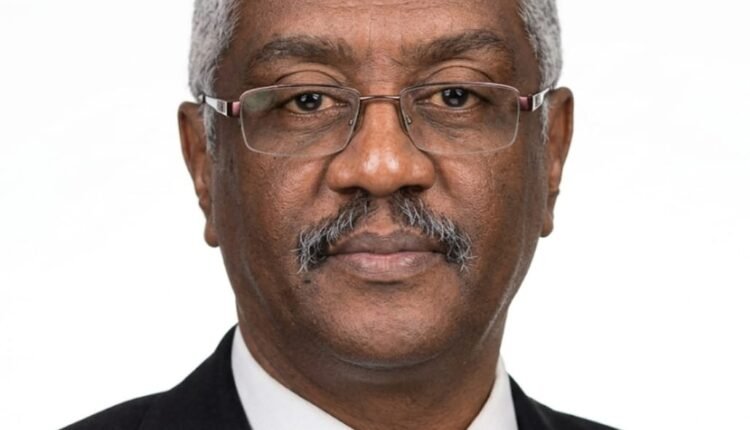
Noaman Yousif Mohammed
When we talk about the economy, we tend to focus on the big numbers: billions in deposits, financing, transfers and investment. But the real economy doesn’t run on billions alone. A significant part of it starts with a small transaction: a bus fare, a cup of tea, a kilogramme of vegetables, a bottle of milk, a meal at a restaurant, or a service provided by a workshop owner.
A small transaction may appear limited in value. Still, when repeated thousands of times every day, it becomes a market, revenue, data, and a flow of money whose effects can extend across many sectors. This means that the economic value of a transaction lies not only in its size, but also in how frequently it is repeated and the circulation of money it can generate.
The Bus Reveals the Size of the Market
Let us take a simple example of the economics of electronic payments. Suppose one bank branch is linked to an electronic payment service used by 100 buses, each with a capacity of 25 passengers, and each bus processes an average of 100 payments per day.
We are therefore looking at 10,000 payments a day through just 100 buses linked to a single branch. If the bank charges a fee of SDG 100 per transaction and the stamp duty is SDG 10, the direct revenues would be:
SDG 1 million a day for the bank from transaction fees.
SDG 100,000 a day for the state Treasury from stamp duty.
SDG 25 million a month for the bank, assuming 25 operating days.
SDG 2.5 million a month for the Treasury.
SDG 300 million a year for the bank.
SDG 30 million a year for the Treasury.
In other words, a simple activity involving just 100 buses could generate, under these assumptions, SDG 330 million a year in combined fees and stamp duty.
If a bank had 10 branches operating at the same rate, the figures would rise to about SDG 3 billion a year in transaction fees for the bank, and SDG 300 million for the Treasury in stamp duty.
This is not a major investment deal. It is simply a transport fare repeated thousands of times. But revenue is not the whole story.
If the fare in this example is SDG 1,000, the initial value of the payments would total about SDG 10 million a day, SDG 250 million a month, and SDG 3 billion a year across 100 buses linked to a single branch.
Across 10 branches, the value of the initial payments would reach SDG 30 billion a year.
This is where another value of electronic payments becomes apparent. Money that passes through the banking system can be converted into balances, accounts and repeated financial transactions, rather than remaining an invisible cash movement.
Of course, this does not mean that all of these amounts would become stable deposits. Rather, every payment creates the possibility of an account, a balance, a transfer, saving or a subsequent financial transaction. Electronic payments therefore become a means not merely of collecting money, but of bringing everyday economic activity into the financial system.
From the Fare to a Wider Circulation of Money
What matters more than the value of the initial transaction is what happens to the money afterwards:
The passenger pays SDG 1,000 for the bus journey.
The bus owner uses part of it for fuel, maintenance and wages.
The petrol station pays its supplier.
The supplier pays workers or purchases other goods.
The worker spends their income in the market.
If these transactions take place electronically, the same SDG 1,000 can move between several parties and generate several financial transactions. Money circulation therefore becomes more important than the initial transaction itself.
Thus, SDG 10 million in daily payments does not necessarily mean that the economy has moved only SDG 10 million, because money can circulate more than once, with each cycle generating new transactions.
This is why the spread of electronic payments does not merely increase the number of payments. It can also speed up how quickly economic activity becomes visible in the financial system and make that activity more measurable.
From the Movement of Money to Information
As more of these transactions enter the banking system, we gain a better record of economic activity. This helps us understand sales volume, the regularity of cash flows, seasonal patterns of activity, and spending and collection patterns.
Subject to appropriate data protection and privacy safeguards, this information can be valuable to financial institutions seeking to understand customers and small-business owners. The bank no longer sees only an account balance; it can also see recurring financial behaviour.
This is particularly important for small businesses that may not have comprehensive financial statements or sufficient collateral.
From a Transaction to a Financial History
The owner of a shop, workshop or small restaurant may have a genuine business but find it difficult to demonstrate this to a financial institution.
If their sales, payments and purchases begin to pass regularly through the financial system, they start building a financial history.
This history does not automatically entitle them to financing, but it provides additional information that can help assess repayment capacity and cash flows, alongside other credit criteria.
Here, financial technology can play a role beyond payments: from moving money to understanding and financing economic activity.
A Small Customer Is Not Necessarily a Small Customer
A bank may regard a customer holding SDG 1,000 or SDG 5,000 as less important than a customer with hundreds of millions of pounds.
But if the smaller customer carries out dozens of transactions each month and uses the account to receive payments, make payments, transfer money and save, the value of the relationship cannot be measured by the balance alone.
This requires banks to offer products suited to the small-scale economy, such as simple accounts, low-cost payments, collection facilities, and flexible savings, followed by appropriate financing when the business becomes eligible.
Different Economics for Small Transactions
The cost of servicing a transaction worth SDG 1,000 cannot be close to the cost of servicing a transaction worth millions of pounds.
Small transactions require a model based on low cost, high usage, speed, reliability and multiple channels.
If fees rise or the service becomes unavailable, users will return to cash. But if the service is simple and reliable, high usage volume can compensate for the low value of individual transactions.
This is where the real economics of electronic payments lies.
The Market Starts on the Street
Future competition should not be limited to which bank has the app with the most features.
The bigger questions are:
Who can become part of the everyday economic cycle?
Who can serve the tea seller?
Who can give the small trader a way to collect payments?
Who can make it easier for a bus driver to receive fares?
Who can turn daily payments into a financial history?
And who can subsequently provide savings, financing, insurance and other services?
This is the vast market that begins with small transactions.
We Do Not Need to Eliminate Cash
Electronic payments do not mean that cash will disappear.
Some sectors and areas will still need cash, and digital infrastructure, telecommunications, and electricity are not equally available to everyone.
The objective should not be to impose electronic payments, but to make them a practical, secure and low-cost option.
When paying SDG 1,000 electronically becomes easier than looking for cash, citizens will choose the service because it meets their needs.
Financial Inclusion May Start with SDG 1,000
It may begin with a bus fare.
Then the citizen opens a bank account.
They begin using it regularly.
Then they save.
Then they build a financial history.
Eventually, they may become eligible for an appropriate financial service.
Yes, this journey will not be the same for everyone, but it demonstrates that financial inclusion does not always begin with a large sum. It may begin with a small transaction that is repeated every day.
Billions Start with a Thousand
The point is not that SDG 1,000 is greater than SDG 1 billion. The equation is different: a billion may represent a single transaction, whereas SDG 1,000 may be the starting point for millions of transactions.
As we saw in the bus example, just 100 buses can generate SDG 3 billion in initial payments annually, SDG 300 million in bank fees, and SDG 30 million in stamp duty, based on the assumptions used.
With 10 branches, the value of the initial payments becomes SDG 30 billion, while fees rise to SDG 3 billion and stamp duty to SDG 300 million, before taking into account the additional transactions these funds could generate as the money circulates.
This is where the economic paradox lies: value is not only in the money paid, but also in the money that circulates, the transactions it generates, the information it leaves behind, and the financial relationships it builds.
Therefore, the future of electronic payments in Sudan should not be measured solely by the number of applications or transfers. It should also be measured by their ability to organise the daily circulation of money and bring the small-scale economy into the financial system.
The large market does not always begin with a billion. Sometimes, it begins with a thousand pounds.
Shortlink: https://sudanhorizon.com/?p=18692