

Sudan’s Private Sector Recovery Conference: A Broad Diagnosis of the Crisis, but Where Is the Rescue Plan?
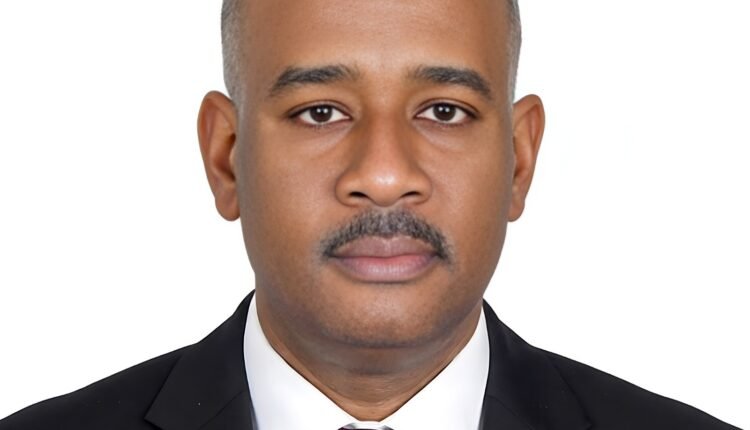
By Muhannad Awad Mahmoud
The Sudanese Private Sector Recovery Dialogue in Khartoum concluded with the announcement of a roadmap and the formation of a working group to follow up on its implementation. I welcome this step, as it brought together the government, private sector, farmers, banks and development partners to discuss problems affecting production, finance and markets. Yet one question stayed with me throughout the sessions: if we know what we want to build over the coming years, who will finance the rescue of the productive capacity that still exists today?
The conference did not lack a diagnosis of the crisis. Participants spoke about limited access to finance, rising energy and transport costs, factory shutdowns and difficulties getting products to market. The United Nations Development Programme (UNDP) also identified these issues in its preparations for the dialogue. The programme proposed tools to address them, including credit guarantees and blended finance—that is, using development grants or guarantees to encourage banks and investors to finance productive projects they consider high-risk. I therefore expected the discussion to go one step further: from listing our needs to presenting a clear financing mechanism to put before the programme and development partners.
During the food systems session, Dr Ali Madani, representing the Ministry of Agriculture and Irrigation, presented a paper addressing the impact of the war on agriculture, livestock production, supply chains and markets. It called for improved planning, information and early-warning systems, as well as the development of seeds, agricultural research and food processing.
It was right to view food as an interconnected system: once a crop is planted, it needs to be harvested, stored, transported, and brought to market. But I was also looking for a practical answer: which interventions need to begin before the next season, how much they will cost, and how they will be financed.
The Ministry of Industry then presented the damage suffered by factories and the resulting loss of workers and raw materials, as well as disruptions to power, services and transport. It called for rehabilitation, financing, access to inputs and a review of fees.
Here again, the scale of the problem was clear, while the mechanism for intervention remained less so. A factory that needs electricity and raw materials to resume production within weeks is different from one that requires equipment repairs or complete reconstruction. Each case has different costs, financing instruments, and timeframes.
From the private sector, Dr Khalid Al-Maqbool, Deputy Chairman of the Agriculture Chamber of the Sudanese Chambers of Commerce Union, presented a paper on developing the crop map, reducing waste, using agricultural residues for animal feed, processing and value addition, specialised transport, foreign markets, and solar energy.
The paper deserves credit for linking the different stages of production. Increasing output offers little benefit if it is lost in transit or cannot be processed because of power cuts.
However, parts of the paper seemed to me closer to a development vision for what we want our economy to become once it regains stability. That vision matters, but it needed a clear distinction between projects for the coming years and emergency measures that cannot be postponed.
Dr Khalid spoke about the cost of finance, stringent collateral requirements and delays in getting funds to producers. The question that deserved to be at the centre of the paper was: what mechanism can put finance in farmers’ hands before the season begins and help viable factories resume production now?
One female farmer summed up this gap in her remarks about harvesting. Machinery is not always available when crops mature, small-scale farmers cannot afford to purchase it individually, and every delay increases costs and losses. She proposed providing the machinery through rental services and training operators to use it.
This idea could become a financeable project: a known number of machines, identified beneficiary associations, a defined cost, a specific season, and measurable outcomes.
Farmers and small producers were among the conference’s positive aspects. They brought the day-to-day problems of production to the forum where policies are discussed.
By contrast, the representation of Sudanese companies in some sessions was less than I had hoped for from a conference bearing the name of the private sector. This was reflected in the direct business-to-business, or B2B, meetings. Delayed entry visas also prevented some international participants from arriving in time for the conference.
This problem should not be repeated. Commercial partnerships require both sides to be present, meetings to be arranged in advance, and follow-up on what they agree to after participants leave. Coverage of the closing session referred to investment intentions emerging from some of the meetings. It is important to know how many of these intentions will turn into contracts or projects.
Two days after the conference, I read a Sudan News Agency report about a meeting in New York between Foreign Minister Mohiuddin Salem and UNDP Administrator Alexander De Croo. The meeting discussed the outcomes of the Khartoum dialogue, and both sides stressed the importance of establishing a development fund for Sudan.
The report caught my attention because the idea of such a fund is central to what should have been discussed at a conference specifically dedicated to private-sector recovery.
This does not mean that a decision to establish the fund has been taken or that its financing has been secured. But it does show that the idea has been raised at the programme’s leadership level and within the Sudanese government.
And this is where my main observation about the conference lies.
It is natural for the Foreign Minister and the UNDP Administrator to discuss the broad direction of cooperation; that is part of their respective roles. But the fund’s design and practical requirements should have been developed by, and brought to them by, the relevant stakeholders: the Ministry of Finance, the Central Bank of Sudan, banks, the private sector, farmers and manufacturers.
The Khartoum sessions could have produced an initial proposal setting out why the fund is needed, who would finance it, how its resources would be managed, which projects it would start with, and what guarantees and results it would offer to partners.
The meeting in New York could then have become an opportunity to mobilise support for a project designed by Sudanese stakeholders around their own needs.
The conference exposed a gap in preparing projects that are ready for financing. Explaining the need for support in agriculture and industry is a necessary first step, but it does not by itself answer the questions financiers need addressed:
Where will the project be implemented? Who will benefit? How much will it cost? Who will manage it? What are the risks? And how will its results be measured?
Preparing proposals to this standard is not merely a matter of writing good grant applications. It is part of our ability to turn the interest of international institutions into financing that reaches producers.
For this reason, I propose that the first task of the team responsible for following up the roadmap should be to prepare a practical framework for an Economic Recovery Fund, with the participation of producers, banks and the relevant government bodies.
It could begin with three clear windows:
Restarting viable enterprises capable of resuming operations quickly;
Providing guarantees to encourage banks to finance agricultural seasons and small enterprises; and
Financing shared services, such as harvesting machinery, energy and storage.
The fund’s criteria, funding sources, and expected results should be made public.
The Khartoum dialogue brought the various stakeholders together and adopted a roadmap for the future. Now, relevant institutions need to present development partners with projects ready for financing and align their priorities with producers’ actual needs.
When financing arrives before the agricultural season, factories return to production, and crop losses in the field and along the road are reduced, we will have truly begun the recovery.
Shortlink: https://sudanhorizon.com/?p=18393