

From Cotton to Value and a Sudanese Brand: How Can We Rebuild a Competitive Textile Value Chain After the War? (4-4)
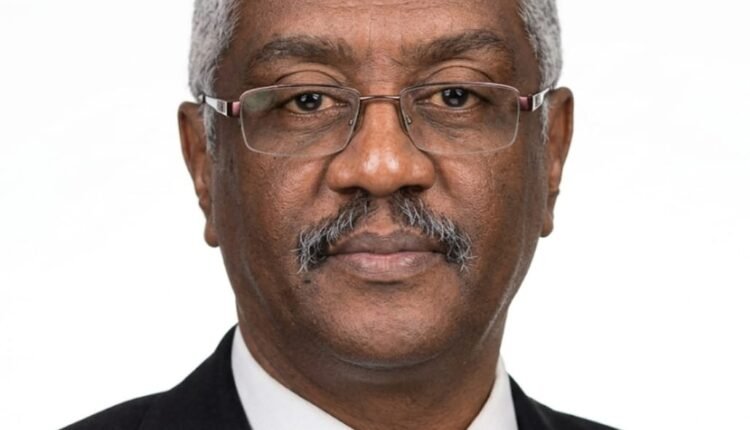
By Noaman Yousif Mohammed
In the first article of this series, we went back to a time when cotton was one of the pillars of the Sudanese economy. In the second, we asked where the added value had gone. In the third, we looked at the people, communities, and environment that grew around the industry. Now, however, the question is different: What do we do?
Should we restart the old factories as they were, or build a new industry that learns from the past without living in it? In my view, the answer is clear: the objective should not be to return Sudan’s textile industry to the past, but to move it into the future.
We Are Not Starting from Scratch
Sudan is not starting from nothing. We have a long history of cotton production, the experience of the Gezira Scheme, expertise in ginning, spinning, and weaving, factories that left behind assets and knowledge, skilled workers, technicians, and engineers, and a large domestic market.
But the right starting point after the war is not the question: What did we have? It is: What remains, what can be salvaged, and what would be better replaced now?
Reconstruction should therefore begin with a comprehensive technical and economic assessment of existing factories, determining the condition of buildings and machinery, production capacity and the cost of rehabilitation, and comparing this with the cost of establishing modern factories. Not every old factory is worth saving. Sometimes the best way to honour its history is to transform its site into the foundation for a new, more efficient plant.
From Individual Factories to an Integrated Value Chain
The historical problem was not always the absence of factories, but rather weak links between them. The new strategy should therefore not simply involve restarting individual production units, but building an integrated value chain that begins with cotton and extends through ginning, spinning, weaving, dyeing, garment manufacturing, design, marketing and exports.
Within this framework, the Gezira region could once again serve as a major base for the industry through an industrial cluster linking cotton-producing areas with ginneries, factories, training and quality-control centres, logistics services and finance.
Wad Madani, Al-Hasahisa, Al-Manaqil, Al-Fao and other areas could become specialised centres within this system, rather than each city and factory operating in isolation.
Making the Farmer a Partner in Value Creation
One of the most important changes required is to transform the farmer’s position within the value chain. A farmer who produces cotton should not see their economic relationship with the industry end at the ginnery gates.
Co-operatives and farmer-owned investment companies could hold stakes in certain stages of processing, enabling producers to earn income from both their crop and the value created through manufacturing.
In this way, the relationship would shift from a farmer selling a raw commodity to a producer participating in value creation.
The State Should Create the Enabling Environment, Not Run Every Factory
Rebuilding the industry does not mean returning to a model in which the state owns everything. The state’s most important role is to provide infrastructure, electricity, water and roads; establish legislation and standards; provide appropriate incentives; and create a conducive financing and investment environment.
Operation, management and investment, meanwhile, should allow greater scope for the private sector and partnerships. Investors can provide capital and management, farmers can share in the value created, workers can contribute their skills, and the state can provide an environment where all these stakeholders can work together.
Finance Must Follow the Value Chain
The textile industry does not require financing for machinery alone. It also needs working capital to purchase cotton and pay for wages, energy, transport and storage.
Banks should therefore look at the value chain as a single economic unit, rather than financing a factory in isolation from the farmer, ginnery, buyer and exporter.
The financing system could cover agricultural production, ginneries, factories, exports and small enterprises, linking finance to production contracts, cash flows and markets. This would reduce risk and strengthen the connection between finance and the real economy.
Technology Instead of Nostalgia for Old Machinery
The objective is not to restart every machine simply because it exists. The world has changed, and productivity, quality, energy consumption and water use have become critical factors in competitiveness.
Decisions on rehabilitation or replacement should therefore be based on clear economic calculations covering production costs, quality, energy, water, maintenance and competitiveness.
A modern factory should not be measured by the number of machines inside it, but by its ability to produce quality goods at competitive cost with the minimum possible waste.
We Do Not Want Just Sudanese Fabric… We Want a Sudanese Brand
This may be the most important point for the industry’s future. Sudan can produce fabric, but the highest value does not stop at the fabric. It emerges through design, quality, branding, marketing and distribution.
Here, Sudan possesses a cultural heritage that can be transformed into an economic asset: the Sudanese thobe, jallabiya, turban, embroidery, colours, patterns and traditional textiles.
These are not merely elements of heritage. Contemporary design can reinterpret them to appeal to Sudanese, African, Arab, and global consumers. At that point, we would no longer be selling only cotton, or even fabric; we would be selling a product that carries an identity. The product would move from commodity to brand.
Africa Could Be the Gateway
Sudan does not need to compete with the world’s largest textile producers from day one. It can begin with its closest advantage: the African market.
Geographical proximity, trade relations, expanding demand, and the growing need for clothing and textiles all allow the Sudanese industry to build a gradual regional presence.
This could begin with products where Sudan has realistic opportunities, such as basic clothing, school and work uniforms, household furnishings, and home textiles, before gradually expanding into more sophisticated products and wider markets.
Women and Young People Are Part of the New Factory
The future industry will not depend solely on large factories. Large plants can serve as centres for spinning, weaving, finishing, and quality control, while linking to a broad network of workshops, small enterprises, women’s co-operatives, designers, and artisans.
Microfinance can play an important role here. A clothing, embroidery or tailoring business may begin with a sewing machine, training, limited financing and an identified market, before gradually expanding within a larger production chain.
In this way, the textile industry can become a broad-based source of employment rather than simply providing a limited number of jobs inside large factories.
A New Industry Must Be Greener
If Sudan is going to rebuild its industrial sector, it would be unwise to reproduce the environmental problems of the past.
Water and energy efficiency, industrial wastewater treatment, reduced use of pesticides and chemicals, and waste recycling should be built into the new industry from the outset.
Environmental sustainability is no longer an issue separate from the economy; it has become part of the ability to access global markets.
The Greatest Investment Is in People
Machinery and buildings may be the most visible components of reconstruction, but the most important investment is in people.
We need to rebuild skills in spinning, weaving, dyeing, maintenance, quality control, production management, design, marketing and international trade.
Sudanese people who have worked in this industry inside and outside the country represent a pool of knowledge that should be brought back—not merely as a memory of the past, but as expertise to transfer to a new generation.
Machines can be purchased, but industrial knowledge cannot simply be imported ready-made.
We Need a New Measure of Success
In the past, the success of the cotton sector was measured by production volume, while the number of factories measured the success of the industrial sector.
In the future, we should measure something more important:
How much value does Sudan add to each tonne of cotton?
How many jobs does it create?
How much of the country’s imports does it replace?
How much foreign currency do its exports generate?
How much of this value returns to the farmer, worker and small enterprise?
These are the real measures of a successful industry.
From Raw Cotton to a Sudanese Brand
The objective is not for Sudan to stop exporting raw cotton overnight. Foreign markets matter, and exports are an essential part of the economy.
The aim, however, should be to gradually increase the share of value retained within Sudan before export.
Turning cotton into yarn creates added value. Fabric adds more. Garments add still more. A brand adds another layer of value.
This is how the path can shift from exporting a raw material to exporting a competitive Sudanese product.
From Cotton to the Future
The war has destroyed much, but it has also exposed the fragility of the old economic model. It has revealed the risks of dependence on raw materials, the weakness of industry, the vulnerability of supply chains, and the need for an economy that can produce what it needs while generating foreign currency.
For this reason, rebuilding the textile industry could model Sudan’s broader economic recovery, bringing together agriculture, industry, finance, trade, employment, entrepreneurship, and exports within a single value chain.
This series began with a question about the past: How did cotton shape Sudan’s economy?
It then moved to the question of loss: How did we lose our added value?
Then it asked about people: What did society lose when the industry was lost?
Today, it ends with the most important question: What can we build?
The answer is not a single factory, a stand-alone government project or an isolated investment. It is a national value chain that begins with the farmer and does not end at the factory; one that begins with cotton and does not stop at fabric, but extends to the finished product, the brand and the global market.
Perhaps the best way to honour the history of Sudan’s textile industry is not to try to replicate it, but to build upon it—to make the farmer a partner in value creation, the worker a skilled professional, the young person an entrepreneur, the woman a producer, the factory more efficient, the product higher in quality and the industry more environmentally responsible.
Sudan’s economic future will not begin simply by growing more. It will begin when we learn to manufacture more of what we grow, add greater value to what we export, and retain within Sudan a larger share of the wealth created by its land and the hands of its people.
And this is not merely the story of the textile industry. It is the story of the Sudan we want to build after the war.
Shortlink: https://sudanhorizon.com/?p=18373