

From Reconciliation Experiences to the Sudanese Context: Where Does the Key to Recovery Lie?
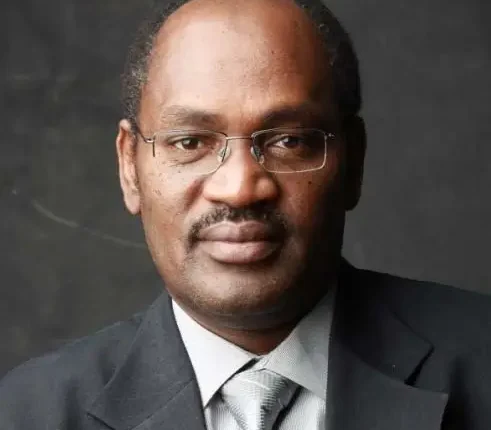
Ramadan Ahmed
People often speak of Rwanda and South Africa, alongside other similar cases, in the hope that they may guide Sudan as it searches for a way out of its current crisis. In this article, I will examine how applicable these experiences are to the Sudanese context, highlighting the fundamental differences to consider before contemplating any form of copying and pasting.
First: Leadership, Vision and the National Project
The most prominent common factor in South Africa’s and Rwanda’s experiences is political leadership with a clear vision for the future, coupled with a conception of the alternative it seeks to achieve.
In the Rwandan experience, Paul Kagame, as a political and military leader with a vision for the future, played a clear role in redirecting the country after the tragedy and gradually moving it from the wounds of the past toward a project of national reconstruction and economic development.
Of course, the Rwandan experience is not without its shortcomings and criticisms. What matters to us in this comparison, however, is the existence of leadership and a vision that established state institutions and mobilised people in a common direction.
The same, though with different details, is clearly evident in the South African experience, which is rich in lessons and insights. One of its most important strengths was the African National Congress (ANC) as a political movement with deep historical roots, founded in 1912 based on political representation across different constituencies. Thus, democratic practice within the party had already made considerable progress before the establishment of the apartheid system and continued, despite the exceptional circumstances, as part of the movement’s political formation.
In addition, the personality of the leader Nelson Mandela played a prominent role in consolidating an institutional culture, encouraging public participation and strengthening political discourse.
This brings us to an important point: successful experiences in overcoming deep-rooted crises have not relied solely on the desire to end conflict. They have also required political forces with a vision of what should follow the conflict, and the ability to translate that vision into a political and institutional project.
Second: The Nature of Social and Ethnic Divisions
Another equally important difference concerns the nature of the social and ethnic composition of these societies.
In Rwanda, the ethnic dimension of the conflict was relatively clear and defined. It was possible to distinguish between Hutu and Tutsi and, consequently, to address one of the fundamental roots of the conflict directly. Similarly, in South Africa, the differences between Black and white communities were clear and defined, making one of the principal dimensions of the conflict identifiable and amenable to treatment through a prolonged political and social process.
Sudan, however, presents a more complex picture.
If we apply these experiences to the Sudanese context, the first difference we encounter is the absence of historical leadership enjoying broad national consensus, alongside the fragility of the state’s institutional foundations and the absence of a stable constitutional framework within which a political transition can be organised.
General Abdel Fattah Al-Burhan, while we recognise the magnitude of the responsibility placed on his shoulders and pray that God grants him success in fulfilling it, came to the leadership position by circumstance rather than by any prior plan to assume it. In my view, the unplanned nature of his rise contributed to decisions and positions that caused considerable harm to the country, whether in relation to his dealings with the Forces of Freedom and Change and what I regard as their destructive project, or in assessing the dangers posed by the expansion of the Rapid Support Forces and their political and military ambitions.
Regardless of how these positions and their details are assessed, the conclusion that requires our attention is that the indicators before us suggest Sudan will emerge from the war without an agreed national political project and without political leadership with a clear and comprehensive vision of what the state should look like after the war.
As for the Sudanese state itself, one of its deepest problems is that the project of building a state based on citizenship and institutions has never been completed since independence. For decades, the state has suffered from an imbalance between the centre and the periphery, weak institutions, and the domination of political elites over public life. All of this has hindered the consolidation of the rule of law and equal citizenship.
Citizens have remained largely absent from the state’s policy-making.
The second difference concerns the demographic and social composition. In Sudan, it is difficult to draw clear ethnic boundaries of the kind found in some other African experiences. Over centuries, Sudanese society has experienced a considerable degree of social integration, which increased markedly in the second half of the twentieth century because of intermarriage, displacement, population mixing, cohabitation, and changing patterns of life in both rural and urban areas.
For this reason, it is difficult to identify large geographical areas inhabited exclusively by a single ethnic group, as can be found in some African countries such as Ethiopia, where certain nationalities are associated with regions possessing distinct linguistic, cultural and religious characteristics, to the extent that they can resemble a state within the state.
Nevertheless, clear ethnic boundaries are not a prerequisite for the existence of a powerful ethnic discourse. The Sudanese paradox is that this social integration has not prevented the rise of ethnic rhetoric. The absence of an overarching national project has also helped to keep particular identities strongly present in the political sphere.
Two principal factors emerge. The first is the political use of ethnic affiliations to secure political or economic gains. The second is the absence of a national project capable of accommodating diversity and transforming it from a source of competition and conflict into a source of strength and integration.
What Does Sudan Need?
The conclusion is that the scale of Sudan’s crisis and the depth of the wounds inflicted by the war do not mean that recovery is impossible. On the contrary, Sudan has social and cultural interconnectedness, as well as a shared history, that could provide a strong foundation for rebuilding the state and society.
National recovery in Sudan could, in fact, be faster and more sustainable than the magnitude of the crisis might suggest, provided that the elements still missing from the political landscape are put in place: leadership with a vision, a clear national project, and institutions capable of turning that vision into reality.
What is required is not simply leadership that manages the crisis from day to day, but political leadership that looks beyond the war and possesses a clear conception of the state Sudanese people want to build.
What is also required is an ambitious national project capable of articulating a sophisticated political discourse, placing common national interests at the forefront, recognising diversity without turning it into an instrument of division, uniting Sudanese people around their shared interests, raising their aspirations, inspiring hope and painting a clear picture of the desired future.
At its core, the problem is not Sudan’s diversity. It is the absence of a project capable of managing that diversity and directing it toward building a state in which everyone feels they are equal partners in the nation and its future.
Ultimately, the path to national recovery may be less complicated than we imagine: visionary leadership, an inclusive national project, a state built on institutions, and a people who see a shared future as an alternative to the conflicts of the past.
Shortlink: https://sudanhorizon.com/?p=18356