

PM Political Advisor: If Al-Burhan Runs Out of Weapons, He Will Still Have Surprising Alternatives
America’s Violations Vis-a-Vis Al-Burhan’s Popularity
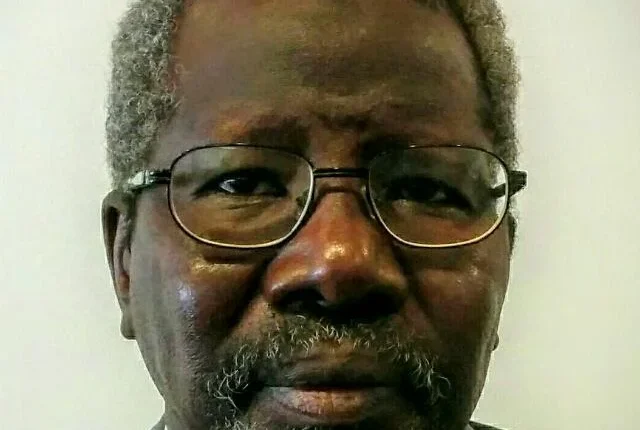
Dr Hassan Issa Al-Talib
The decision by the administration of US President Donald Trump to refuse an entry visa to Sudan’s President of the Transitional Sovereignty Council, General Abdel Fattah Al-Burhan, to attend the 81st session of the United Nations General Assembly, which convened on 18 September 2026, has raised growing questions, astonishment and bewilderment among local and international public opinion.
The United Nations announced that it was maintaining continuous contact with the US government through the Assistant Secretary-General. Its Secretary-General, António Guterres, expressed his deep concern over what he described as an unlawful and unjustified violation by the host country.
In doing so, America, the author argues, exposed its own alignment with the rebellion fighting Sudan’s constitutional national army and violating the rights of the Sudanese people, under the banner of the Rapid Support Forces militia. The author further describes the RSF as having been classified as a terrorist organisation by numerous countries and international human rights and humanitarian organisations since 15 April 2023.
It has been reported that the US objective in issuing the decision was to use it as leverage to compel President Al-Burhan to sign a truce agreement with the rebel militia, which, according to the author, is on the verge of collapse across the various theatres of operations. The apparent aim, he argues, is to halt the advance of the national army and supporting forces towards the liberation of the militia’s self-proclaimed capital in Nyala—a government that, he notes, has not been recognised by any state, whether in Africa or anywhere else in the world.
The reason for the international diplomatic community’s growing astonishment, the author argues, is America’s blatant disregard for the UN Charter and the violation by the Trump administration of the Headquarters Agreement, as well as its siding with what he describes as a rejected and outlawed militia.
Historical Precedents
In terms of precedent, America’s record of preventing heads of state and governments from participating in General Assembly meetings is not new, nor is it unprecedented in its dealings with member states.
According to the author, this objectionable practice dates back to the 1960s and the Cold War era. During the 15th session of the General Assembly in 1960, restrictions were imposed on Cuban President Fidel Castro’s movements. Members of his delegation were prevented from participating, and his movements outside the Manhattan area, where the United Nations is headquartered, were restricted.
In 1988, the United States refused to grant an entry visa to the late Yasser Arafat, Chairman of the Palestine Liberation Organisation. The General Assembly subsequently adopted a resolution, supported by a majority of member states, transferring all sessions to the UN’s alternative headquarters in Geneva.
Likewise, in 2013, the United States allegedly prevented Sudanese President Omar Al-Bashir and Venezuelan President Nicolás Maduro from attending. The author also refers to Maduro’s alleged abduction from his presidential residence in Caracas in January 2026 and his imprisonment in Brooklyn, New York.
At ministerial level, the US government prevented Iranian Foreign Minister Mohammad Javad Zarif from attending the 75th session of the General Assembly in 2020. It also prevented Russian Deputy Foreign Minister Alexander Alimov from participating in the current 81st session, despite Russia’s strong protest and rejection of the decision.
The United Nations and the United States government are bound by the 1947 Headquarters Agreement (SOMA).
Although, from the perspective of many Sudanese, the American decision to prevent General Al-Burhan from attending was intended to provide propaganda and logistical support to the rebel militia, serving as external reinforcement to revive what the author describes as the militia’s current psychological, morale and battlefield setbacks, he argues that the decision has instead helped increase the popularity of President Al-Burhan and the national army domestically, regionally and locally, while drawing the attention of countries around the world to what he regards as the injustice being inflicted upon the Sudanese people.
A Shift in Public Perception
The significance of this previously unforeseen development, the author argues, lies in the emergence of voices that had previously opposed the authorities and repeatedly described President Al-Burhan as America’s man in the region—particularly after his criticism of Islamists opposed to groups of activists supporting the militia, opponents of an Islamic constitution, and advocates of secularism within the rebel Tasis grouping.
The author also refers to anger over the detention of some members of the popular mobilisation forces, arguing that the latest episode has shown that such accusations against Al-Burhan were unfounded.
In light of current circumstances and the repercussions of the American decision, the author argues that domestic public opinion has become more united and more strongly consolidated than ever before, resulting in an overwhelming level of internal support, without any prior planning or coordination.
Establishing a National Crisis Group
Given what the author describes as this striking shift, he argues that the Transitional Sovereignty Council should seize the opportunity by establishing a national-level crisis group composed of national experts and specialists in foreign policy, economics, development and reconstruction.
This group would serve as a technical advisory team tasked with addressing the realities and repercussions of what the author regards as the unjust American decision, while developing a roadmap for the period following the Battle of Dignity, until legislative institutions are fully restored and the state’s institutional capacities are strengthened.
Challenging the US Decision through Diplomacy
From the standpoint of professional diplomacy and the protection of Sudan’s legitimate sovereign rights, and in accordance with what the author describes as purposeful diplomacy, Sudan’s Permanent Mission in New York should formally challenge the decision before the Committee on Relations with the Host Country (CORHC).
The author proposes basing the challenge on what he considers a flagrant violation of Article 105 of the UN Charter, which provides that the United Nations and representatives of its member states shall enjoy the privileges and immunities necessary for the independent exercise of their functions.
The Headquarters Agreement also requires the host country—the United States—to facilitate freedom of movement and access to UN headquarters. In particular, the author refers to Chapters 11 and 13, which, he argues, prohibit US authorities, as representatives of the host state, from imposing obstacles on the passage, entry or movement of persons officially invited to UN headquarters to participate in its work, particularly after they have been formally invited to attend, regardless of the host country’s bilateral relations with the state concerned.
The author further argues that the relevant precedents and previous General Assembly resolutions should be cited, particularly those condemning and rejecting restrictions on entry visas for heads of state and government and representatives of UN member states, and calling for their immediate and unconditional withdrawal.
According to the article, such positions have previously received the support of a majority of General Assembly members. If the host country fails to comply, alternative mechanisms should be explored to ensure participation, such as moving proceedings to the alternative headquarters in Geneva or delivering statements virtually by video, so member states’ voices can still be heard within the United Nations.
The Broader US Record
Although precedent suggests that the Trump administration may not respond to such decisions, the author points to what he describes as its growing and repeated record of violations of international law and the UN Charter.
He cites, among other examples, the alleged attack on Iran and a violation of Article 2(4) of the Charter, which prohibits the threat or use of force against the territorial integrity or political independence of states without a decision by the Security Council.
He also refers to what he describes as the abduction of Venezuelan President Nicolás Maduro, the provision of lethal weapons to Israel that, in his view, were used in the commission of genocide, crimes against humanity and war crimes in Gaza, and the Trump administration’s designation of the prosecutor and judges of the International Criminal Court (ICC) as criminals barred from entering US territory, following the ICC prosecutor’s accusations against Benjamin Netanyahu concerning genocide, war crimes and crimes against humanity.
The Importance of Documenting the Episode
Despite all these reservations, the author argues that documenting this episode is both necessary and useful for recording Sudan’s diplomatic history and tracing the trajectory of its bilateral relations with the United States and their periodic fluctuations—from the governments of Abdullah Khalil during the transitional period, and the government of General Ibrahim Abboud, to the two governments of Sadiq Al-Mahdi in 1965 and 1986, and the periods of government under Jaafar Nimeiri and Omar Al-Bashir in 1969 and 1989 respectively.
Accordingly, the author argues that the current authorities, represented by the Transitional Sovereignty Council, must, without delay, hesitation or procrastination, prepare a comprehensive roadmap for future dealings with the US government and establish a strategic vision for those relations.
Such a strategy, he concludes, should safeguard the country’s vital interests, protect its gains and resources, preserve its political independence and the sovereignty of its people, uphold its territorial integrity, and shield Sudan from pitfalls and harmful political impulses.
Shortlink: https://sudanhorizon.com/?p=18320