

President Al-Burhan: Turn the Visa into a Message
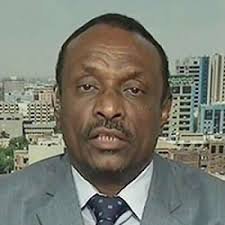
Al-Mosalami Al-Bashir Al-Kabbashi
As the political atmosphere in Khartoum prepared for President of the Transitional Sovereignty Council General Abdel Fattah Al-Burhan to travel to New York to address the United Nations General Assembly, reports emerged that Washington had refused to grant Al-Burhan an entry visa, reportedly making the visa conditional on Sudan agreeing to a 90-day truce with the Rapid Support Forces (RSF), to be followed by a political process leading to a settlement.
This is the same initiative that the United States had previously put forward through the Quad, which Sudan rejected. The disagreement centred on a fundamental issue: Sudan demanded that the RSF withdraw from all the positions it had occupied after 15 April 2023, the day the war in Sudan broke out, whereas the United States insisted on the RSF withdrawing from “territories” without specifying which locations or areas were meant.
Sudan rejected the US position on President Al-Burhan’s visa. It lodged a complaint with the United Nations, arguing that visas for representatives of UN member states are not simply a matter left to the host country’s discretion, given its obligations to the international organisation.
The UN Secretary-General expressed grave concern over the US position and called on Washington to reverse its decision.
In my view, the decision opens up two battles: the first with Sudan and the second with the United Nations.
As for the battle with the United Nations, it reflects a flaw in the international system that, in the view of many, has become vulnerable to the political influence of the state hosting the organisation’s headquarters, which uses it to advance its agendas and wage its political battles. That, however, is not the subject of this article.
The problem with Sudan is the issue under discussion. It is entirely predictable, based on a pattern that has become an established feature of the US administration’s understanding of the war in Sudan with the RSF. This pattern overlaps, to varying degrees, with the positions of European countries and the United Arab Emirates.
This pattern is evident in the fact that whenever the Sudanese Armed Forces make advances on the battlefield, pressure on Sudan intensifies, as though there were a race between political pressure and developments on the ground. The concern appears to be that military advances could create a new political reality that would weaken the RSF’s position at the negotiating table that the United States is seeking to establish. Such pressure accelerates whenever Washington sees a rapid and substantial deterioration in the RSF’s battlefield performance.
Anyone following events can recall the succession of pressure tactics:
1 — Political pressure through the Quad and the quintet, as well as several meetings held in various capitals.
2 — The imposition of economic and other sanctions on Sudanese officials and institutions supporting the army.
3 — Pressure at the UN Security Council to extend Resolution 1591, which imposes an arms embargo on Darfur, to the whole of Sudan, potentially restricting the Sudanese Armed Forces’ movements and their ability to continue military operations.
4 — Pressure through allegations that the Sudanese Armed Forces have used chemical weapons.
5 — And now, pressure to make General Al-Burhan’s entry visa to the United States conditional upon agreement to a 90-day truce—an arrangement that the Sudanese government had previously rejected under the terms presented to it.
Sudan is not expected to negotiate over such a trade-off and, of course, cannot accept it, for the following reasons:
First: As a matter of principle, President Al-Burhan is not travelling to the United States as a tourist. He represents his country, a member of the United Nations General Assembly, and no one has the right to turn his attendance into a tool for managing a political dispute over a truce and its terms.
Second: Sudan is a sovereign state and cannot bargain or trade away its sovereign rights in exchange for a visit that is, in the first place, part of a state’s exercise of its international rights and fulfilment of its international obligations.
Third: Al-Burhan’s inability to personally discharge his sovereign and constitutional responsibilities before the General Assembly does not eliminate Sudan’s voice there. The Foreign Minister and Sudan’s mission to the United Nations remain. Consequently, the Sudanese president’s address should not become an entry point for a bargain that, in essence, violates the principle of independent Sudanese decision-making.
The question, then, is: What consequences would follow from rejecting the trade-off?
I believe Al-Burhan has an opportunity to turn the crisis into a political gain by announcing that he refuses to travel in exchange for an American-backed truce. In this case, not travelling would turn a diplomatic setback into a carefully targeted political message: the idea of trading our diplomatic and sovereign right for acceptance of a truce whose terms we do not agree with is rejected from the outset.
This could be summed up in a single sentence, through a statement to a media organisation with significant reach:
“I will not go to New York to pay for my attendance by accepting a truce whose terms I do not agree with.”
He could then follow with a statement instructing that military operations in the field continue to bring the rebellion under the authority of the state.
What will happen tomorrow?
America will continue its pressure and may adopt new forms of it. But Sudan will have shifted the issue from the question, “Will Al-Burhan go to New York?”, to a larger question: Can the right of a head of state to address the General Assembly be used to extract a political concession from him?
Washington will ultimately recall a principle attributed to the father of American diplomacy, Henry Kissinger:
“When diplomacy fails to alter the behaviour of the parties, the balance of power becomes the decisive factor; and when the balance of power changes, diplomacy returns to negotiate the new reality.”
And the new reality is what the Sudanese army is creating on the ground.
The battle is now not merely over the truce, but over who reaches the negotiating table first: political pressure or the reality created on the battlefield.
Shortlink: https://sudanhorizon.com/?p=18310