

The United Nations and the Need to Think Outside the Box
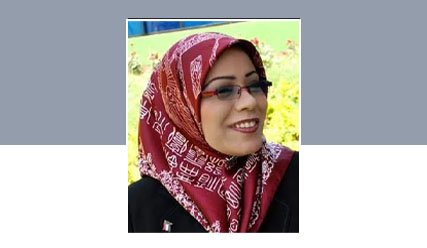
Dr Inas Muhammad Ahmed
On 24 October every year, the international community celebrates United Nations Day—the organisation established by the victorious powers of the Second World War to succeed the League of Nations. Its central purpose was to protect the world from another global war and safeguard international peace and security. The United Nations Charter was drafted on this basis and consists of 19 chapters and 111 articles setting out the purposes and principles of the United Nations.
In the event of a threat to international peace, Chapter VII grants the United Nations Security Council the authority to impose sanctions and adopt international measures of varying severity, extending to the use of military force.
In reality, however, the world has suffered civil wars, international conflicts, the occupation of states’ territories, the spread of famine, poverty and epidemics, economic collapse, human-rights violations, the perpetration of horrific international crimes, environmental deterioration and global warming—without these issues being addressed seriously or effectively. This has led to further economic and political deterioration in many countries, aggravated irregular migration, and increased the number of refugees and internally displaced persons around the world fleeing painful realities and an uncertain fate.
Unfortunately, the United Nations has been unable to keep pace with developments in world affairs. Observers find that the Security Council, the World Bank and the International Monetary Fund, despite all their influence and power within the global system, have been unable to confront many international issues, leaving them without effective solutions.
This leaves us with the central question: can the United Nations Charter—in its current form—save future generations from the horrors of wars and conflicts, economic deterioration and environmental degradation?
The Charter was proclaimed in San Francisco on 26 June 1945 and granted veto power as a privilege to only five countries, excluding the rest of the world. Yet Article 109 of the United Nations Charter states:
“A general conference of the Members of the United Nations for the purpose of reviewing the present Charter may be held at a date and place to be fixed by a two-thirds vote of the members of the General Assembly and by a vote of any nine members of the Security Council. Each member of the United Nations shall have one vote in the conference.”
This provision clearly allowed for the Charter to be amended through a review conference within ten years. Today, approximately 81 years have passed, yet the international will to convene such a conference has not materialised. A golden opportunity was lost—one through which the countries of the world could have amended the Charter and limited the use of the veto. But this did not happen.
For this reason, a group of countries—including Romania, India, Germany, Brazil and South Africa—jointly called for the spirit of Article 109 of the United Nations Charter to be revived through a review conference to address imbalances in the organisation’s structure.
Historically, the archives of international law record that the Charter underwent limited and specific amendments in 1963, 1965 and 1973, primarily aimed at increasing the membership of the Security Council and the Economic and Social Council.
The most important were the amendments adopted by the United Nations General Assembly on 17 December 1963, which entered into force in 1965. They included significant provisions, including Article 23, which expanded the number of non-permanent members of the Security Council from six to ten, bringing the Council’s total membership to 15 instead of 11.
Article 27, concerning voting in the Security Council, was also amended. It required the votes of nine members instead of seven out of the 15 members. Article 61, which addressed the membership of the Economic and Social Council, was also amended.
Amending the Charter is extremely difficult, as it requires ratification by two-thirds of the United Nations’ member states, including all permanent members of the Security Council—the holders of veto power.
Since 1945, the world has experienced numerous events, wars and geopolitical changes that make a serious and effective review of the United Nations Charter more necessary than ever. Most United Nations members agree that reform is needed. Since the fall of the Berlin Wall in 1989, the global system has been passing through a critical transitional phase, characterised by conflicting and contradictory trends involving globalisation, nationalism and liberalism; the emergence of new economic policies and free-trade systems; increased movement of people across international borders; the overt emergence of international crimes; irregular migration; the massive flow of information resulting from advances in communications technology; progress in weapons manufacturing; and states’ ambitions to acquire the resources of other countries—even through aggression motivated by the pursuit of those resources.
Everyone recognises the importance of reform, but engagement with it varies. Some countries seek to reform and restructure the United Nations in ways that serve the public interest and achieve justice and development. States with veto power, however, have responded without enthusiasm, since they would lose a privilege they have enjoyed for 81 years and continue to defend.
This static impasse has led some Western countries to seek influence over the administration of organisations operating under the United Nations, affecting the distribution of funds used to finance the UN’s operational activities. This gives them considerable influence over development-aid priorities and indirectly intrudes on the organisation’s reform agenda.
In 1973, international pressure emerged to reform the international economic system and address decision-making within the World Bank and the International Monetary Fund. In 1974, the United Nations General Assembly began reviewing the Charter, focusing primarily on equitable representation in the Security Council and limiting the use of the veto. In 1992, the Security Council proposed amendments, but member states failed to reach agreement, and they never came into effect.
The core of the call for amendment, however, arose from the United Nations’ weak record in resolving conflicts and stopping wars. This issue has been, and remains, one of the organisation’s greatest dilemmas.
The examples are numerous. They include the continuing Palestinian question, which has persisted since 1948, accompanied by increasing suffering and worsening crises for the Palestinian people; the United Nations’ inability to prevent the Soviet invasion of Afghanistan in 1979; the Balkan War between 1992 and 1995; the United States’ occupation of Iraq in 2003; and the world’s passive observation of the genocide in Rwanda in 1994. They also include the Russia–Ukraine war in 2022, the current war between the United States and Iran, the civil war in Yemen since 2014, the war in Sudan since 2023, and many other international and civil conflicts.
The reform efforts may have failed for many reasons, including the following:
The inability to reform the Security Council, because its permanent members refuse reforms that would deprive them of their veto power, which functions as a powerful tool for advancing their international interests.
The rejection by the principal financial contributors to the United Nations, the World Bank and the International Monetary Fund of attempts to reduce their role in decision-making, which would affect development-aid priorities.
The emergence of international groupings and alliances, such as the Non-Aligned Movement (NAM) and the Group of 77 (G77), as well as new economic groupings and alliances. These may be even more consequential than political alliances, including BRICS, ASEAN, the Shanghai Cooperation Organisation and others. Their members believe these groupings serve their interests more effectively while also exerting significant long-term economic and political influence.
By contrast, an influential academic current among international-law scholars argues that the United Nations cannot be reformed as long as the influence of non-governmental organisations continues to expand. These organisations formulate international plans, strategies and agendas, particularly in the economic and social fields. Alongside this, the growing role of private funding in United Nations activities—largely dependent on voluntary contributions—means the organisation may operate in accordance with its donors’ interests and objectives. This weakens confidence in the United Nations’ neutrality and professionalism and consequently diminishes its international standing.
Until change for the better actually takes place—while taking account of the political, economic and social transformations that have occurred in the contemporary world and ensuring a fair distribution of representation among member states—our commitment to respecting the United Nations, its agencies, international charters and international law remains a practical necessity.
That commitment, however, does not prevent us from thinking outside the provisions and institutional boundaries of the United Nations.
Shortlink: https://sudanhorizon.com/?p=18115