

Are You a Racist?
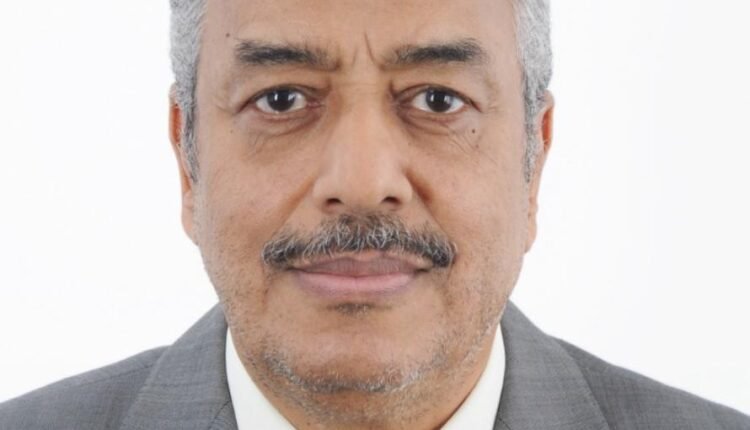
Dr Ismail Sati
The title may seem provocative, and perhaps even unfair, if addressed to an Arab who knows Sudanese people, lives among them and treats them as brothers. But the question here is not about the relationship between an Arab and an individual Sudanese person. It concerns how Sudan and the Sudanese are treated and perceived when the relationship becomes one involving states, interests, policies, the media and culture.
Here, a striking paradox emerges: a Sudanese person among his Arab brothers may encounter no racism in his daily life, while Sudan, in its relations with certain Arab countries, may face forms of discrimination, condescension and unequal treatment—at the media, political, economic and cultural levels. This deserves to be said frankly.
An issue precedes all of this, because it relates to the most important question: Who are we?
We are Sudanese people who grew up in Sudan, in a society whose language and culture are Arab, and in which diverse historical, geographical and civilisational components have blended. We have carried an Arab identity, just as our fathers and grandfathers did. We did not choose this identity in a referendum, nor did a political party grant it to us, nor did we import it from outside Sudan. It is part of our history, consciousness, culture, language and social formation.
It is therefore strange that some people now seek to persuade Sudanese people that their Arab identity is not genuine, that it is a historical illusion, or that it was imposed upon them—and that they must abandon it to become “truly Sudanese”.
A Sudanese person has every right to be African and Arab at the same time. Indeed, this distinctiveness is one of Sudan’s most important characteristics. Our Africanness does not cancel our Arab identity, and our Arab identity does not cancel our Africanness.
The problem begins when talk of Africa turns into a project to uproot Arab identity from Sudan, as though pride in our Africanness can be achieved only by disavowing our Arabness. This is something that, even if some of us accept it, cannot be imposed upon others.
The question that ought to be asked frankly is this: Why do some people try to strip Sudanese people of their Arab identity by force? Why are they asked to redefine themselves according to another conception, with their Arab identity sometimes becoming a matter for accusation—as though being Arab necessarily means arrogance or the denial of Africa?
This confuses different things. To be Arab does not mean being superior to others. To be African does not mean being in opposition to Arabs. And to be Sudanese does not mean disavowing any component of one’s identity. Identities do not need to wage war against one another. A Sudanese person can be Sudanese, African and Arab at the same time, without having to apologise for any of these identities.
It is natural to take pride in Sudan, its culture and national character, and to seek a concept that can bring all Sudanese together. But there is a considerable difference between “Sudanism” as an inclusive national identity and its occasional use in a manner that belittles Arab identity or seeks to replace it.
If Sudanism means that we are all Sudanese, regardless of our origins, regions and constituent communities, and that Sudan is our shared homeland, then there is no problem with it. But if it comes to mean that we must abandon our Arab identity in order to be genuinely Sudanese, then we must take a stand.
Sudanism does not need to destroy Arab identity to survive. Patriotism does not require erasing identity. Attempts to erase the identity of part of society in the name of national identity may produce the opposite of what is intended, deepening division rather than strengthening unity.
The paradox is that a Sudanese person may travel to an Arab country and be treated in daily life as a brother, friend or colleague, only to return to discussions about Sudan and find someone saying that his Arab identity is the problem.
How, then, can a Sudanese person be Arab in the course of his everyday life, only for his Arabness to become subject to doubt when his national identity is discussed?
We do not ask anyone to grant us our Arab identity, just as we do not ask anyone to recognise our Africanness. We simply reject the idea that anyone should come along and decide who we are.
From identity, we move to the media, where Sudan is reduced in some Arab media narratives to war, poverty, famine and displacement. When an entire country is reduced to its crisis, its true character disappears, as do its history, culture and potential. The Sudanese person also disappears—the human being who is not merely a victim.
We do not ask the media to conceal Sudan’s tragedy. We ask only that it should not make that tragedy Sudan’s identity. Just as every Arab country has the right to have its history, civilisation and culture presented alongside its crises, Sudan has the right to be seen in the same way.
As for politics, the matter is even clearer. Sudan is not merely a humanitarian crisis in need of aid. It is a sovereign state whose people have the right to determine their own future. It is not simply a space over which regional and international powers compete for their interests.
We understand that states have interests, but we ask: Is Sudan’s interest equally present in the calculations of those who deal with it? Is the Sudanese person viewed as a partner, or as someone who can be influenced whenever interests require it? Is the will of the Sudanese people respected to the same extent that we demand respect for the will of other peoples?
These are legitimate questions, and raising them should not be regarded as hostility towards anyone.
Sudan is not a country poor in resources. Its greatest paradox is that it possesses resources sufficient to make it one of the economically important countries, while its people have continued to suffer from poverty and deterioration.
Its land, water, agriculture, livestock, gold, geographical position and access to the Red Sea all make Sudan a country of considerable strategic and economic value. But the question is this: Have Sudanese people always been the primary beneficiaries of their country’s wealth? Are economic relations with Sudan based on genuine partnership, or do they sometimes exploit its weakness and need?
No one rejects Arab investment in Sudan. Sudan needs genuine investment. But investment is one thing; turning a state’s weakness into an opportunity to dominate its resources is quite another.
Then comes culture, where the problem may be more subtle. Sudan has a rich and ancient culture, with its own literature, art, music, heritage and history. Yet it does not always occupy the place it deserves in the Arab cultural landscape, as though Arab peripheries surrounded an Arab cultural centre, and as though Sudan were required to prove its Arabness repeatedly, while others were not required to prove theirs.
Here, we say clearly: We are not guests in Arab culture. We did not arrive as outsiders, and we do not need a certificate of belonging. We are part of its history and culture, while also possessing a Sudanese and African distinctiveness of which we are proud.
It is important to make clear that this article is not a call for hostility towards Arabs, a rejection of Arab relations, or a denial of what many Arab peoples have provided to Sudanese people. On the contrary, we speak because we see ourselves as part of this Arab space. Genuine brotherhood does not mean remaining silent about wrongdoing. It means being able to say to our brother, “You are mistaken,” and to say to anyone who wrongs us, “You have exceeded the bounds of brotherhood.”
Perhaps the problem is not that Arabs look down on Sudanese people—an assertion that is certainly untrue—but that it may lie deeper than that. It may be found in an unequal view of Sudan as a country, in the application of different standards when that country is concerned, and in attempts by certain parties to regard Sudanese people as less Arab than others, or to require them to abandon an authentic part of their identity in order to be accepted within a new conception of Sudan.
At this point, the question becomes: Are you a racist?
Is racism confined to hating a person because of his race? Or can it also mean looking at his homeland, people and identity from a position of superiority, and deciding for him who he is and what he is entitled to take pride in?
We do not ask anyone to grant us an identity, nor do we ask anyone to choose our Arabness or Africanness for us. We are Sudanese, African and Arab. These are not contradictions, but components of an identity shaped by history. No one has the right to take any part of that identity away from us.
If you have the right to choose your identity, why should I not have the right to define myself as I see myself?
Here, the question—“Are you a racist?”—becomes a matter for serious consideration.
Shortlink: https://sudanhorizon.com/?p=17959