

The Defence Minister’s Committee… Can Weeding Out the Companies Remedy the Consequences of Economic Blundering?
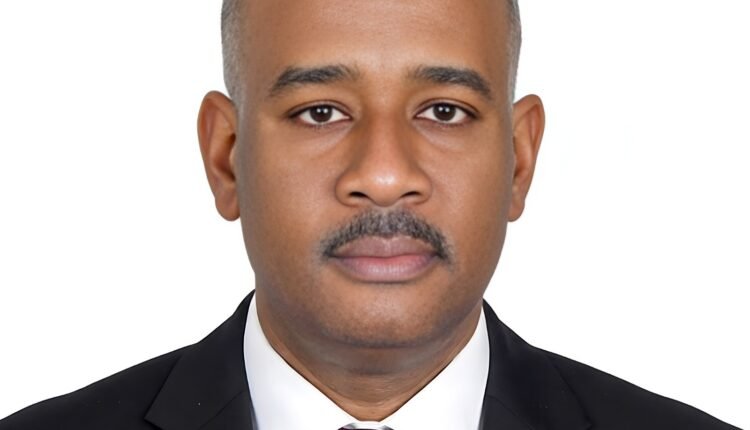
Muhannad Awad Mahmoud
Whenever the government fails to manage an economic issue, it looks for a culprit outside its own walls: currency traders, exporters, importers, and now companies and business names, as though the economy had been functioning perfectly well until companies came along and ruined it!
No one defends a fictitious company, someone who manipulates export proceeds, or a gold smuggler. Anyone proven to have violated the law should be held accountable, whether they are a small trader, a major company, a government institution, or a company affiliated with a security or military establishment. But turning the entire private sector into a suspect, and substituting security campaigns and deregistration decisions for economic reform, is not a remedy. It is merely an attempt to hang official failure on companies.
The government of Professor Kamil Idris has formed a committee, chaired by Defence Minister Lieutenant General Hassan Daoud Kabroun, to address violations relating to foreign exchange, imports and exports, export proceeds, and gold smuggling. It also said it will review company and business name records and strike off those that fail to meet the required conditions.
But did the Sudanese pound collapse because there were too many commercial registrations, or because the state has no stable economic policy, insufficient production, uncompetitive exports, and no effective control over its own resources?
Before opening companies’ books, the government should open its own institutions’ books.
It would be more appropriate for the government to question the former Governor of the Central Bank of Sudan about the decision to prohibit financing for crop exports for two consecutive seasons—a decision that deprived Sudan of substantial foreign-exchange earnings and harmed production, trade, and exports. Solar-energy inputs were also denied financing at a time when energy had become the greatest challenge facing agriculture and production. Security campaigns do not protect currency; production, exports, and foreign-exchange inflows do.
Let those responsible for gold also be asked: how could Sudan announce production of more than 70 tonnes during 2025, while official channels recorded only around 12.5 tonnes of exports? In other words, official exports amounted to no more than about 18 per cent of the declared production. So where did the rest go? Who bought it? Through which channels did it leave the country? And who is protecting the networks behind it?
This is not a violation by some paper company; it is a haemorrhage of billions of dollars. It should have been the starting point for any serious committee established to protect the economy.
The committee also has every right to question the current Governor of the Central Bank of Sudan about the experiment of injecting 400 million dirhams into the banking sector to finance imports. At the time, it was announced that the dirham was valued at 1,200 Sudanese pounds. Was that really the appropriate rate at the time? Who received that money? According to what criteria was it distributed? Which goods were financed? And did that support translate into lower prices for consumers?
Let the government question the Minister of Industry and Trade about the indicative export prices, which are sometimes set above international prices, rendering Sudanese goods uncompetitive and depriving the country of millions of dollars.
Let it also question her about the decision to ban the importation of dozens of goods on the grounds of protecting the Sudanese pound. The goods were banned, smuggling expanded, the state lost customs revenues, prices rose, and the pound continued to decline. If the policy failed, why does the government lack the courage to correct it?
Ask the Minister of Agriculture: where is the map identifying what we should grow, where we should grow it, and which markets we should produce for? Why does financing arrive only after the agricultural season is already under way? And how can the exchange rate stabilise when agriculture—the country’s greatest potential source of wealth—is being managed without planning or early financing?
Ask the Minister of Finance about the levies and fees that accumulate on a commodity from the moment it leaves the place of production until it reaches the port, until the cost of exporting it becomes higher than its international market price. How can you demand that exporters repatriate their export proceeds while making the act of exporting itself economically unviable?
And before criminalising the private sector, government companies and companies belonging to security and military establishments—which control substantial segments of exports and imports and compete with the private sector from unequal positions—must also be reviewed. Are all of them subject to taxes, customs duties and public auditing? Will the same rules for review and deregistration apply to them?
The committee should also transparently investigate reports about entities that purchase Sudanese gum arabic smuggled into South Sudan, process it in Juba, and then export it through the port of Mombasa, transferring millions of dollars to finance this trade. In this way, other countries’ economies benefit while Sudan loses both its produce and its revenues, and the Sudanese pound continues its downward spiral.
If this is true, we face an absurd paradox: money is transferred abroad to buy a smuggled Sudanese resource and export it under other countries’ names, while the government blocks exporters operating through official channels.
The problem is not the number of companies and business names. The problem is economic confusion, the failure to diagnose the crisis correctly, and inadequate understanding of the market. The problem lies in a central bank that treats symptoms rather than causes; a Ministry of Trade that obstructs exports; a Ministry of Finance that relies on levies; agriculture without a strategic map; and gold whose revenues largely fail to enter the national economy.
As for Defence Minister Lieutenant General Hassan Kabroun, I say to him frankly: resign as chairman of this committee—not because the economy has nothing to do with national security, but because your place now is at the helm of the country’s military campaign, not standing at the funeral of a sea created by economic confusion.
The army is the citizen’s hope for protecting the state, and its victories are the positive news Sudanese people are waiting to hear. Do not allow a committee that began with a flawed diagnosis to place black marks on the record of the institution to which you belong.
And if the Defence Minister must have a role, let it be in the task that no one else can perform: securing gold-producing areas, deploying forces along the routes used to smuggle it, and dismantling the networks that drain the country’s resources and finance the war. Economists should formulate economic policies, while decision-makers must bear responsibility for their decisions.
The private sector is not above accountability, but neither is it a scapegoat for the government’s failures. Hold violators accountable based on evidence and law—but start with those who have obstructed production and exports, burdened the economy with levies, and allowed gold to flow out of the country.
The crisis does not require weeding out companies alone; it requires a careful, measured review of the institutions responsible for managing the economy. When diagnosis is flawed and policies are in disarray, the economy cannot be repaired by striking names off registers. It can only be repaired by correcting decisions and holding those who made them accountable.
Shortlink: https://sudanhorizon.com/?p=17679