

The Khartoum Stock Exchange: From Resuming Trading to Leading the Post-War Economy
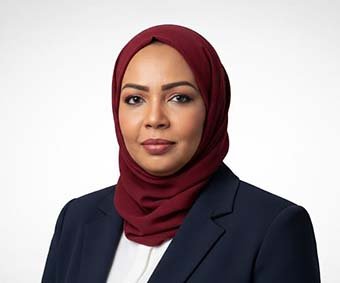
Dr Marwa Fouad Qabani
Resuming trading on the Khartoum Stock Exchange from the capital is not merely a return to the trading screen after a war-enforced suspension. It marks the start of a new phase in which the Exchange is expected to become an engine of economic recovery and reconstruction.
Sudan’s post-war economy will need more than bank financing. It will require a strong capital market capable of mobilising savings, attracting investment, and financing companies and productive projects. This is where the Khartoum Stock Exchange matters: as a bridge between savers and those seeking capital for productive ventures.
However, its success should not be measured solely by daily trading volumes, but by the Exchange’s ability to develop its operations and products and broaden its investor base.
The digitalisation of the Exchange should be among its foremost priorities. This should include online account opening, digital verification of investors’ identities, linking investment accounts to bank accounts, and developing modern trading platforms that allow investors to monitor their portfolios and execute orders with ease and security.
The country should also expand institutional investment, investment funds, and professionally managed portfolios. This would make it possible to pool small savings and channel them into projects with a tangible economic impact, while designing investment products specifically targeting Sudanese nationals abroad and converting part of their savings into productive investments within Sudan.
It is also important to consider introducing margin trading as an instrument to stimulate market activity, but only within a stringent regulatory framework that clearly defines financing and margin ratios, collateral requirements, and eligible securities, while ensuring investor protection and market stability.
Brokerage firms, for their part, need to move away from a model centred primarily on executing transactions towards a more sophisticated model based on portfolio management, investment advisory services, financial research, risk management and digital services.
At the same time, the Exchange needs to strengthen disclosure and corporate governance and improve the quality of information available to investors, because trust is the true capital of any securities market. Programmes should also be established to prepare and qualify Sudanese companies—particularly private-sector companies and promising enterprises—for listing and accessing finance through the market.
Another important recommendation is to develop new financial products, encourage the listing of companies in productive sectors, and explore establishing specialised funds focused on agriculture, energy, infrastructure, and small and medium-sized enterprises. In this way, the capital market can become a direct partner in rebuilding the economy.
Sudan is facing a historic opportunity to rebuild its financial institutions on a more modern footing. The objective, therefore, should not simply be to restore the Khartoum Stock Exchange to what it was before the war, but to build a new market that is deeper, more digital, more transparent and better equipped to compete.
The next phase requires a national strategy to develop Sudan’s capital market, involving regulatory authorities, the Ministry of Finance, the Khartoum Stock Exchange, banks, brokerage firms, the private sector, and financial-technology companies.
Resuming trading is only the beginning. The real challenge is to transform the Khartoum Stock Exchange into a platform for financing production, reconstruction and investment.
If the Exchange succeeds, it will be more than a mirror reflecting the state of the Sudanese economy. It could become one of the engines driving its growth and recovery, and helping to build its new economic model.
Strategic Planning and Digital Transformation Expert
Shortlink: https://sudanhorizon.com/?p=17648