

Sudanese–Sudanese Dialogue: From Creating the Conducive Environment to Building National Reconciliation
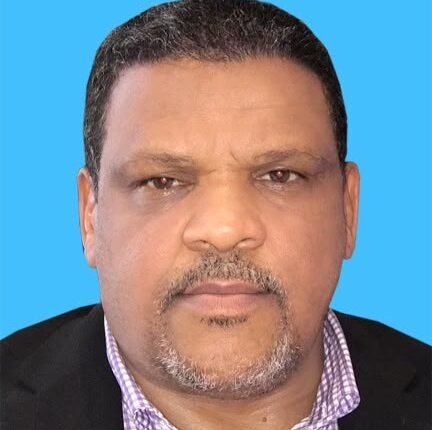
Adel Al-Rifai Abulhassan
Launching a Sudanese–Sudanese dialogue process represents a historic opportunity for Sudan, not only to end the war, but also to open a new chapter in the country’s history.
Before discussing the agenda and the issues at hand, however, there is something deeper: a historic responsibility.
This is not a passing political moment. Participants will be held accountable for it before Sudan today, before future generations, and before history. Everyone should therefore enter this moment first and foremost as Sudanese, putting aside partisan, ideological and political calculations, with Sudan’s interests serving as the highest point of reference.
Sudan must prevail. This spirit should govern the dialogue and determine its ability to produce genuine consensus.
First: A Dialogue That Represents Sudan
One of the most important foundations for this phase is that the dialogue’s base must extend beyond the political elite and reflect Sudan in all its diversity—across its groups, generations, sectors, regions, and political orientations.
Alongside political and civil forces, young people and women, native administrations, professionals and academics, the private sector, civil society, and representatives of the regions and local communities should all have a meaningful place in the process.
Those affected by the war should also have a direct presence, including internally displaced people and refugees, the families of those killed, the families of the wounded, people with disabilities, and those who have lost their homes, property or livelihoods.
These people are not merely victims of the war; they are genuine partners in building peace and shaping the future.
For this reason, the method of selecting participants is no less important than the subjects discussed. It should be based on clear, balanced criteria that account for political, social, geographical, professional, and generational diversity, while accommodating different perspectives and areas of expertise. The table should therefore reflect Sudan as broadly as possible.
The dialogue we want is not the dialogue of a committee, a political party or a particular current. It is Sudan’s dialogue.
Second: Addressing the Roots of the Crisis and Building Reconciliation
The dialogue should not stop at the question: How do we end the war? It should also open the door to the more important question: Why did the war break out in the first place, and why have crises and wars continued to recur in Sudan?
This raises questions about the state and its institutions, the management of diversity, relations between the centre and the regions, the rule of law, justice, security and defence, balanced development, the distribution of resources, reconstruction, and the investment of the country’s resources.
National and community reconciliation should also form an integral part of the process. The war has left wounds, grievances and divisions that require attention in order to rebuild trust, coexistence and social cohesion.
The dialogue should listen directly to those who experienced the war and paid its price, while clearly distinguishing political disagreement from individual criminal responsibility. Political positions should have a place within the dialogue, whereas individual crimes must be subject to the law.
Third: Putting the Fundamental Issues on the Table
There may be many issues, but they can be prioritised, while those requiring specialised treatment can be referred to dedicated tracks or specialist committees.
The important thing is not to address one part of the crisis while leaving its other dimensions unresolved, only for them to return in the future. The war should be a moment of comprehensive reflection in which we put the fundamental issues on the table and address them rationally and through consensus, so that we do not emerge from one war only to find ourselves facing another crisis.
We do not want to emerge from the war into a temporary truce. We want to emerge from it into a new phase.
A Message to the Preparatory Committee and Those Who Selected It
At this stage, the committee’s responsibility is to lay the foundations that will enable Sudanese people to reach genuine consensus among themselves.
This is why broad participation, diversity, balanced selection, openness to different perspectives and genuine engagement with society are so important.
What is required is an open mind that allows Sudanese people to forge their own consensus, with the process of selecting participants and managing the dialogue kept free from clique politics and partisanship, and without favouring one tendency over another.
This opportunity is greater than any group, party or political current. Its responsibility requires the table to reflect Sudan itself.
The spirit of those engaged in the dialogue produces its outcomes, not the other way around. The more detached participants are from personal grievances, the more capable they are of rising above bitterness and placing Sudan’s interests first, the greater the prospects that the dialogue will produce genuine consensus upon which Sudanese people can build a new phase.
A Message to Decision-Makers: Seize the Moment
If the dialogue succeeds in creating a spirit of consensus, tolerance, reconciliation and putting the national interest first, that spirit should not disappear once the sessions end or recommendations are issued.
If Sudanese people and decision-makers conclude that the circumstances and timing are right, this spirit could be harnessed for a broader step: developing a comprehensive national vision and strategy for Sudan extending over 30 to 50 years, with the idea emerging from the consensus generated by the dialogue. The details of its preparation and the mechanisms for implementing it could be developed at a later stage.
This would not be a government programme or a party project. Rather, it would be a long-term national vision defining Sudan’s direction in state and institutional building; development and the economy; education and healthcare; agriculture and livestock; industry, mining, and energy; infrastructure; resource investment; and other foundations of national advancement.
The objective is to prevent the country from having to start from scratch with every crisis or political change, and to turn the consensus the dialogue may generate into a national agreement on Sudan’s future.
Sudanese people have seen the cost of the alternative.
That is why this moment deserves to be seized with determination and firm conviction: put the issues on the table, prioritise them, address them rationally and through consensus, and then build on that consensus to create a state and society that are more cohesive, stable and capable of rising again.
Sudan first, second and third.
If Sudanese people make the most of this opportunity, this war, despite all its tragedies, may become the turning point from which Sudan emerges more cohesive, more conscious of the causes of its crises, and better equipped to build its future.
Shortlink: https://sudanhorizon.com/?p=17549