

The Duty to Honour the Former Commander-in-Chief
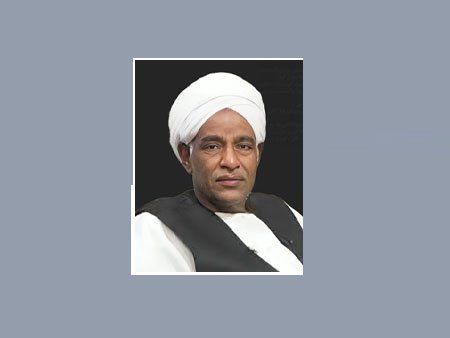
Mahjoub Fadl Badri
At the Sudanese Army’s celebration marking the seventy-second anniversary of the Sudanisation of the post of Commander-in-Chief—which began when Lieutenant General Ahmed Mohamed Al-Jaali assumed command of the Sudanese Army from the British colonial commander, Askouns, on 14 August 1954—attention was drawn to the succession of commanders who followed him: Lieutenant General Ibrahim Abboud; Lieutenant General Al-Khawad Mohamed Ahmed; Major General Jaafar Nimeiri; Major General Khalid Hassan Abbas; Air Vice-Marshal Awad Khalafallah; Lieutenant General Abdel Majid Hamid Khalil; Field Marshal Jaafar Nimeiri; Field Marshal Abdel Rahman Swar Al-Dahab; Lieutenant General Taj al-Din Abdullah Fadl; Lieutenant General Fawzi Ahmed al-Fadil; Vice Admiral Fathi Ahmed Ali; Field Marshal Omar Hassan Ahmed al-Bashir; Lieutenant General Awad Ibn Auf; and Lieutenant General Abdel Fattah al-Burhan, who remains in office to this day.
It should be noted that Field Marshal Jaafar Nimeiri held the post of Commander-in-Chief on four separate occasions, amounting to a total of ten years, while Lieutenant General Awad Ibn Auf held the position for a single day—indeed, not even the full hours of that day!
All these commanders have passed away, except Field Marshal Omar Hassan Ahmed al-Bashir, who commanded the army for approximately thirty years—making him, perhaps, the Sudanese who has worn khaki for longer than anyone else. He is the former Commander-in-Chief and the only surviving witness to this chapter of the army’s history. The brief tenure of Lieutenant General Awad Ibn Auf—may God grant him a long life—is not counted, since he did not complete even the full hours of the single day during which he held the post of Commander-in-Chief.
I had hoped that those responsible for organising the army’s celebrations marking the anniversary of the Sudanisation of the post of Commander-in-Chief—which the Sudanese Armed Forces have adopted as their anniversary—would include among the official events a tribute to the former Commander-in-Chief and the only one still alive.
He spent nearly half of the period being commemorated—thirty of the seventy-two years since the Sudanisation of the post—as Commander-in-Chief under Field Marshal Omar al-Bashir.
Honouring him does not mean bestowing titles upon him, for he lacks none, nor does it mean granting him a financial reward.
Nor should the tribute be merely symbolic, such as naming a military base, college or academy after him. Rather, it should take the form of his release. If not through a pardon, then at least on medical grounds. He is now more than eighty years old. He suffers from several age-related illnesses, while remaining, in the author’s words, the only political detainee—at a time when former Janjaweed leaders who have renounced their past involvement in crimes and atrocities are enjoying presidential pardons.
Honouring former presidents has precedent. Field Marshal al-Bashir himself did so when he honoured Field Marshal Jaafar Nimeiri. The National Assembly also approved a decision to honour its former speakers by granting them vehicles and salaries equivalent to their entitlements. Likewise, former Chief Justice Mawlana Jalal al-Din Mohamed Osman issued a decision granting all former Chief Justices their full privileges as though they were still in active service.
This reminds me that I was once a member of the Higher Committee for the Holy Qur’an Festival, held that year in Gezira State. I proposed inviting Field Marshal Nimeiri to attend the festival for several reasons. First, he established the tradition of holding a Holy Qur’an Festival. Second, he was a son of Wad Madani, where the festival was to be held. Third, it was a national occasion that could have provided the state with a legitimate opportunity to end Field Marshal Nimeiri’s exile in Cairo.
At the time, however, the committee did not adopt my proposal.
Field Marshal Omar al-Bashir subsequently fulfilled the duty that his position required towards the former President and Commander-in-Chief. I bear witness before God that he addressed Nimeiri as “Mr President”, out of respect for his person and loyalty to the former Commander-in-Chief.
Likewise, after the National Salvation Revolution succeeded in taking power, the Chairman of the Revolutionary Command Council himself went to the Guest House, where the former Commander-in-Chief and the entire former military leadership were being detained. He greeted them, sought to reassure them and ordered their release less than a week after their arrest.
Field Marshal al-Bashir will not ask for a pardon. He was the man who refused to submit grounds for a reduction of his sentence in what the author describes as a fabricated case against him. He is the one who said: “I will not beg for clemency when I was the Commander-in-Chief of the Army.” He was also the man who assumed full responsibility, with pride and dignity, in the case concerning the 1989 coup.
Nor have I lost hope that Lieutenant General Abdel Fattah al-Burhan will act in accordance with his living conscience, his military honour and his duty towards the former Commander-in-Chief of the Sudanese Armed Forces by ordering his release.
This is particularly so because, while in power, he said:
“We shall revive the tradition and hand over power when the music plays, because this is the army; and then every monkey will climb its own mountain.”
By a fortunate coincidence, Your Excellency Lieutenant General al-Burhan, you were the one who conveyed to Field Marshal al-Bashir the decision announcing the change of power. I shall not remind you of his acceptance of that development, nor of his advice to you. Advice is a trust—and one entrusted with it bears responsibility for it.
There is little doubt that the Sudanese people would welcome such an anticipated decision, God willing.
I can almost imagine Field Marshal al-Bashir in his place of detention, following the army’s celebrations of its seventy-second anniversary and repeating the words of the Iraqi poet Mohammed Mahdi al-Jawahiri:
Nothing remains within me for pain to extort;
Enough of lonely terrors, sorrow and old age.
I have no sorrow left sufficient for calamities,
Nor enough strength for wounds that cry out in blood.
And when its burning embers overwhelm the free man,
Silence is the best thing upon which a mouth may close.
“And Allah is predominant over His affair, but most of the people do not know.”
Shortlink: https://sudanhorizon.com/?p=17409