

Dialogue Has Its Appointed Time, As Al-Burhan Struggles With Defining the End of the War
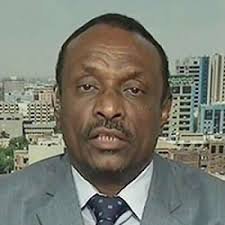
Al-Musallami Al-Bashir Al-Kabbashi
In his address marking the 72nd anniversary of the Sudanese Armed Forces, General Abdel Fattah Al-Burhan, Commander-in-Chief of the Armed Forces and Chairman of the Transitional Sovereignty Council, said that he had responded to an initiative by an “independent Sudanese group” which had presented its vision for serving as a national mechanism to facilitate a comprehensive Sudanese dialogue aimed at achieving broad national consensus and placing the country on a path towards stability. He added that the state had responded to the group’s requests by guaranteeing the dialogue, facilitating participation, and ensuring participants’ safety.
However, this announcement came after leaks preceding the speech had already ignited widespread debate over the anticipated dialogue, particularly after the Sumoud forces issued a statement rejecting a dialogue whose invitation had originally come from General Al-Burhan himself, before evolving in its latest form into an initiative by an independent national group, according to his speech.
Nevertheless, Sumoud maintained its rejection of the new initiative. Khalid Omar, one of its leaders, described it as “a manoeuvre concocted in the National Congress Party’s kitchen”. This reveals the widening gulf between the two sides and shows that their disagreement is too deep to resolve merely by trying to bring their positions closer together.
At its core, the issue is not a disagreement over who calls for dialogue and who rejects it, nor even over where it should take place or who should participate. Rather, it is a disagreement over the function of the dialogue, who will possess legitimacy after the war ends, and the nature of the state that will emerge from this war.
Everyone calls for an end to the war. But the deeper question is: what does “ending the war” actually mean?
The phrase is the same, but the two sides define it in entirely different ways. “Ending the war” does not mean the same thing to the army as it does to Sumoud. Each understands the phrase in light of the objectives and outcomes it seeks to achieve. General Al-Burhan sees dialogue as a consequence of the war, whereas Sumoud sees it as a means of ending it.
Ending the War: Two Different Definitions
For Al-Burhan, the war ends when the rebellion ceases to exist as a military force seeking to impose its will through arms. This explains the clear sequence of steps he has set out: rebel forces must withdraw from the cities and positions they control; their members must then be assembled in designated camps; and the cases of those among them who have not committed crimes may subsequently be considered.
This sequence is not merely a procedural detail. At its core, it constitutes a political definition of what it means for the war to end. Under this conception, the state cannot be said to have ended the war for as long as there remains an armed force operating parallel to it or outside its authority. The principle of the state’s monopoly over arms therefore becomes not merely a security rule, but one of the fundamental definitions of the state itself.
The opposing vision, advanced by Sumoud, regards the war as an armed conflict rather than simply a military rebellion that must be eliminated. In other words, it sees the war as a struggle over the future of political power, the structure of the army and the nature of the state itself. On this point, its position is entirely consistent with the views of the Rapid Support Forces (RSF). The two sides agreed on these same principles in Addis Ababa on 10 January 2024, in the agreement signed by rebel commander Mohamed Hamdan Dagalo and Sumoud chairman Abdalla Hamdok, whose coalition was then known as Taqaddum. A number of its prominent figures attended, including Mohamed Hassan Al-Ta’ishi, now Prime Minister of the Tasis Government in Nyala, the RSF’s capital.
According to this conception, therefore, the solution is not the surrender of one side, but a settlement between the parties to the conflict, followed by a restructuring of the political and military order.
Sumoud consequently proposes a different sequence: first, ending the war; then a humanitarian truce; followed by security arrangements; then a comprehensive political process; and finally the rebuilding of the military establishment and the state. Ultimately, this would restore the course of the December Revolution and resume the model of government that existed before the measures of 25 October 2021.
The deeper political meaning of this approach is that the force which entered the war does not simply disappear when the ceasefire takes effect. Rather, it is transformed from a fighting force into a participant in the new political and security architecture. In other words, under this logic, whoever entered the war by armed force should emerge with political and military weight, so their military presence is converted into political and security arrangements and their military strength into political capital.
Here, the concept of “no victor and no vanquished” becomes more than a slogan for ending the war. In practical terms, it means preventing either side from converting military superiority into an exclusive right to shape the future state. Instead, both sides’ military strength becomes a political bargaining chip, allowing politics to produce what arms could not.
This reveals the fundamental clash between the two sides’ approaches and objectives. They disagree not merely over the dialogue, but over what the dialogue is supposed to produce in the first place.
A Struggle Over Post-War Legitimacy
Looking more closely, the real question becomes: who has the right to define when the war has ended?
Whichever side succeeds in imposing its definition of the end of the war will inevitably come closer to gaining the right to shape the phase that follows.
If the army’s definition prevails, ending the war means eliminating the armed force operating parallel to the state, restoring the state’s monopoly over arms, and only then arranging the political order after the conflict has ended.
If Sumoud’s definition prevails, however, ending the war means reaching a political and security settlement that does not necessarily eliminate the balance of power created by the war. Instead, it transfers it from the battlefield to the negotiating table.
The struggle, therefore, is not only over who controls territory. It is also about when power moves from the battlefield into politics, and how war outcomes are converted into political legitimacy.
The Calculations of Sumoud and the Army
To assess the direction of these competing calculations, we can examine the relative strengths of Sumoud and the army, which today represents the state’s principal centre of gravity, alongside the political and social forces supporting it.
Sumoud’s first source of political capital is the legacy of the December 2018 Revolution, which brought down President Omar Al-Bashir’s government in April 2019 and led to the establishment of a transitional authority based on a partnership between the Forces of Freedom and Change (FFC) — of whose subsequent realignments Sumoud is the latest manifestation — and the military component, before the coup of 25 October 2021 brought that arrangement to an end.
The legitimacy derived from the revolution subsequently eroded, however, because of poor executive performance during the transitional period and, later, because of the civilian forces’ position on the war that erupted on 15 April 2023. In particular, broad sections of Sudanese society perceived them as having failed to condemn violations committed by the RSF against civilians, including killings, looting, rape and violations of human dignity. Following these developments, some components of the revolutionary movement, such as the Ghadiboon group, joined the fighting on the army’s side.
This political capital was further eroded by a position that appeared to provide the RSF with a political lifeline, while betting on its ability to withstand military pressure long enough to preserve a bargaining chip at the negotiating table.
The RSF, however, is currently facing growing fragility and deterioration on the battlefield, alongside declining capacity for mobilisation and recruitment and an eroding war-fighting base. Its inability to achieve major military breakthroughs also weakens its capacity to generate new leverage in any future negotiations with the army.
Sumoud’s principal remaining bet is therefore on international and regional support. This represents important political capital, but it is also highly volatile, governed by calculations of interest, shifts in the balance of power and changing realities on the ground.
The army, by contrast, clearly holds the military and political initiative to a greater extent than it did during earlier stages of the conflict. Over the past six months, it has transformed operational stagnation into battlefield momentum, making significant advances and recapturing strategic towns and localities in North Kordofan, including Bara and Jabra Al-Sheikh. It has also extended its operational depth westwards towards the outskirts of Sodari and largely neutralised RSF supply routes running from North Darfur towards Kordofan.
These developments do not necessarily mean that the war has been decided. They do, however, mean that the balance of power the parties would bring to any future negotiations is no longer the same as it was several months ago.
The “Independent Group”: Where Does Its Legitimacy Come From?
The dialogue in its new form, announced by Al-Burhan and entrusted to an independent committee which he said had itself initiated the proposal, has raised a cloud of political controversy and generated more questions than answers, despite Sumoud’s rejection of it. The first concerns the independent group itself.
If the state has responded to its requests and provided guarantees for holding the dialogue, facilitating participation and protecting those taking part, then who established this group? What is the source of its mandate? What are the limits of that mandate? And from where does it derive the right to determine who represents the Sudanese people, who is entitled to participate and who should be excluded?
These questions lead directly to the issue of legitimacy. Independence does not necessarily amount to a mandate, and a mandate does not arise merely from declaring oneself independent.
If the group is genuinely independent and properly mandated, does it have the authority to determine the participants, the dialogue’s agenda, its location and timing, and to manage the process through to its conclusions?
If so, the question becomes: who authorised it to decide who has the right to participate in a dialogue about Sudan’s future?
This, perhaps unintentionally, opens the door to forces that some believe should be excluded, including the National Congress Party, particularly since Al-Burhan’s latest speech did not repeat his earlier explicit statement excluding it.
That omission may have been deliberate. Transferring responsibility for determining participation to an independent group enables Al-Burhan to say: “I have excluded no one; it is the Sudanese themselves who will determine who participates.”
But if the group is genuinely independent, it would be difficult for it to comply with a predetermined desire to exclude a particular party. If it did, it would risk undermining the very pillars on which its credibility rests: independence, freedom of judgement, and mandate.
If, on the other hand, it has no mandate in the first place, the original question returns: who gave it the authority to decide who represents Sudan?
A Possible Way Forward
One possible way out of this dilemma would be for the group to shift from a committee tasked with managing the dialogue to one tasked with establishing the conditions for dialogue.
Its role at this stage would therefore be to consult the various Sudanese forces, identify the obstacles to dialogue, and build agreement around participation criteria, the rules governing the process, its agenda and its guarantees, rather than moving immediately to manage a dialogue whose nature and participants have not yet been agreed.
Identifying the difficulties confronting dialogue among Sudanese people, patiently untangling its complications, and clearing pathways toward understanding before positions harden into confrontation is itself a national role someone needs to undertake.
Al-Burhan’s Political Gain
For General Al-Burhan, this step may provide an important avenue through which to seek greater international understanding of his position.
He can now present himself as having publicly adopted a positive position towards dialogue while not being a party to it, but rather the sponsor and facilitator of an independent Sudanese dialogue. He can offer those exerting pressure on him a simple — and perhaps uncomfortable — narrative:
“I am calling on Sudanese people to hold dialogue inside Sudan, and I am providing everything its organisers request to create the necessary political, legal and security environment, yet they continue to reject it.”
This represents an important shift in Al-Burhan’s political discourse, even if it does not, in itself, result in the dialogue actually taking place.
The Problem Is Not the Dialogue — It Is Its Timing
I believe, however, that the deeper reason the proposed Sudanese dialogue may fail is not necessarily that those it seeks to engage reject dialogue itself, but its timing.
In Islamic jurisprudence, prayer cannot be performed before its appointed time. Time in politics resembles time in music: if the rhythm is out of measure, the melody loses its harmony and becomes discordant.
Political dialogue, too, has its appointed time.
The war is still raging, and the immediate challenge confronting the principal centre of gravity of the state — the army and the forces supporting it politically and on the battlefield — is to win that war, not to be distracted from it by attempts at dialogue whose conditions have not yet matured.
When those conditions do mature, the requirements of dialogue will become clear — and its caller will summon the parties to the table.
Shortlink: https://sudanhorizon.com/?p=17067