

When Mediation Becomes the Management of Failure: What Is Happening Behind the Doors of Wilton Park?
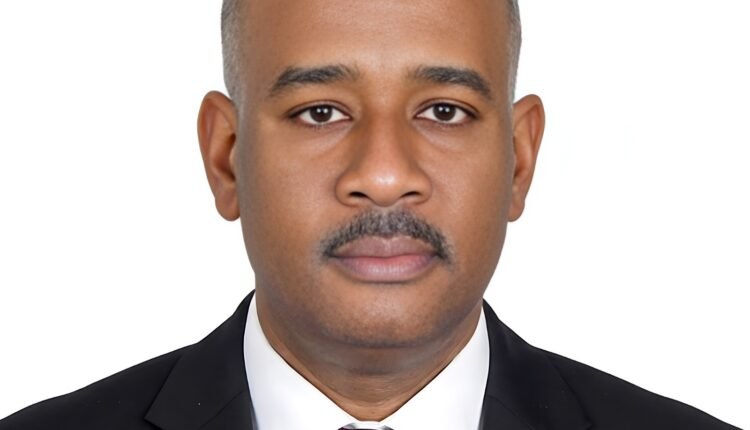
Muhannad Awad Mahmoud
In my previous article, I argued that the failure of international initiatives in Sudan was not due to a shortage of mediators, meetings, or resources, but to a fundamental misdiagnosis of the crisis itself. Those initiatives treated Sudan as though it were facing a political transition crisis and a power struggle. In contrast, the core problem is a crisis of statehood involving the unity of institutions, the rule of law, and the state’s monopoly over the use of force—the foundations without which no political system can function.
The recent Wilton Park meeting in Britain raises this question once again, not because of the organising body itself, but because of the nature of the discussion and the order of priorities on which it was based.
Following the meeting, Wilton Park clarified that the gathering was neither a political negotiation nor a mediation platform. It was not intended to draft a new constitution or determine the future system of government in Sudan. Rather, it was described as a technical dialogue among Sudanese and international academics and experts who discussed issues such as federalism, decentralisation, resource sharing, and political representation. Professor Al-Wathig Kameir also emphasised that participants attended in their personal capacities and did not represent governments, political parties, or armed groups.
These clarifications are important and should be acknowledged, because serious criticism must be based on facts rather than assumptions. Yet they do not answer the more important question: do such dialogues begin with the correct diagnosis of the Sudanese crisis?
The issue here concerns the selection criteria more than the individuals themselves. The meeting included figures associated with political projects that emerged during the war, including Nasredeen Abdelbari, who is linked to the Tasis Alliance, while there was no official representation from the Sudanese state.
The objection is not to any individual’s right to participate in an intellectual dialogue. Rather, it concerns the political messages this form of representation may convey when the discussion concerns the future of the state itself.
It may be argued that all participants attended in their personal capacities and that the meeting was not a negotiation between the parties to the conflict. Procedurally, that is correct. However, personal participation does not always remove the political significance of selection, because many political processes begin with informal discussions before developing into more formal initiatives.
The real debate should therefore concern the selection criteria and the balance among participants, rather than the individuals themselves.
Wilton Park is also not an independent academic institution in the conventional sense. It is an executive agency of the British Foreign, Commonwealth and Development Office that brings together officials, experts, and policymakers to discuss international issues. This does not mean that everything discussed there represents British policy, but it does mean that the selection of topics and participants cannot be regarded as purely organisational.
Even so, the central objection does not concern the organising institution or the names of those involved. It concerns the nature of the questions being asked.
Federalism, decentralisation, resource-sharing, and political representation are all fundamental issues in any serious constitutional process. No stable state can be built without addressing them. The question, however, is whether they constitute the correct starting point.
Sudan today is not merely confronting a disagreement over the form of government. It is facing a crisis concerning the very existence of the state. There is an internationally recognised government and formal state institutions, while a rebellious armed force imposes a de facto authority. State institutions are divided, weapons remain beyond the state’s legitimate control, and the country’s borders remain open to flows of arms, funding, and fighters.
Under such circumstances, the logical questions are these: which state will implement any constitutional or political arrangements that may be agreed? Who will guarantee compliance with them? Who will possess the monopoly over the use of force needed to protect the new constitutional order?
Discussing federalism or power-sharing before answering these questions is like agreeing on a house’s design before ensuring there is a foundation capable of supporting it. The problem is not the shape of the building, but the absence of the base upon which it must stand.
The essence of the crisis therefore lies not in federalism or decentralisation, but in the ordering of priorities. State-building must precede the construction of a system of government, not follow it.
The organisers of such meetings may argue that technical dialogue is not intended to make decisions or impose solutions, but simply to exchange ideas and draw upon comparative experience. This argument has merit. Sudan does indeed need serious discussions about its future and should benefit from the experiences of other countries.
Yet the value of any dialogue is measured not only by the subjects it addresses, but also by the timing of those subjects and the order in which they are considered.
Sudan’s experience in recent years has shown that most international initiatives began with the same question: How should Sudan be governed? The question that must come before it has remained absent: How can the Sudanese state be restored?
The Jeddah process focused on ceasefires and humanitarian issues—that is, on managing the consequences of the war rather than addressing its political and security causes. Other initiatives concentrated on reorganising civilian authority before resolving security arrangements and unifying the military establishment.
Today, the discussion has moved towards federalism, resource-sharing, and political representation, while the foundational question remains unanswered: how can the state first be restored and its institutions reunited?
This is not intended to diminish the importance of federalism, constitutional reform, or the redistribution of power and wealth. All of these are indispensable to building a stable Sudan. But the sequence of priorities is the heart of the matter.
The logical starting point for any political process is to end the war through clearly defined arrangements, restore state institutions, extend state sovereignty throughout the national territory, and re-establish the state’s exclusive and legitimate monopoly on the use of force. Only then should a comprehensive Sudanese dialogue begin, allowing the people freely to determine the form of the state and its system of government.
Reversing this sequence has repeatedly reproduced the crisis rather than resolved it.
The 2019 Constitutional Document provides a clear example. It established a political framework for managing the transitional period, but security arrangements and the creation of a unified military institution were never completed. One of the principal causes of instability therefore remained in place until the conflict eventually erupted.
The point is not that the Constitutional Document was wrong in its objectives, but that the political structure was constructed before the security and institutional foundations intended to protect it were complete.
The objection to the Wilton Park meeting is therefore not an objection to dialogue, nor to examining federalism or decentralisation. It is an objection to beginning the discussion on the upper floor while the foundations themselves remain contested.
Describing the meeting as a “technical dialogue” does not remove its political effect. Many ideas that begin within policy institutes later develop into policy papers and, eventually, into negotiation initiatives. The selection of topics and participants therefore remains a legitimate part of the public debate over Sudan’s future.
Sudanese citizens are also entitled to demand greater transparency, including clarification of the criteria used to select participants and the publication of general summaries of the discussions. Such steps would reduce speculation and strengthen public confidence in these meetings.
The international process has become highly capable of producing meetings, but not equally capable of producing results. The names of initiatives change, and new papers are written, yet the same assumptions are repeated without a serious reassessment of the starting point.
The Wilton Park meeting should not be evaluated solely on the participants’ names or the statements issued afterwards, but rather according to the question it addressed.
Even if we accept that it was neither a negotiation nor a mediation platform, the central issue remains unchanged: does the path towards peace and stability begin with redesigning the system of government, or with rebuilding the state?
Sudan does not need more initiatives as much as it needs a reconsideration of the assumptions on which those initiatives have been based. The problem has never been a shortage of mediators or meetings, but a failure to establish the correct order of priorities.
Before asking how Sudan should be governed, we must answer the question that comes first: how can the Sudanese state be restored, its institutions reunited, and its legitimate monopoly over the use of force re-established?
Only then will discussions about the constitution, federalism, and the distribution of power and wealth become capable of practical implementation, rather than remaining theoretical visions confronted by the reality of a state still searching for its unity.
State-building must precede the construction of a system of government, just as securing the foundations must precede building the roof.
Unless this flaw in the starting point is corrected, initiatives will continue to change their titles while the crisis moves within the same circle. Mediation, however well-intentioned, will then cease to be an instrument for building peace and become a means of managing failure instead.
Shortlink: https://sudanhorizon.com/?p=16361