

Sudan and the Allegation of Using Chemical Weapons
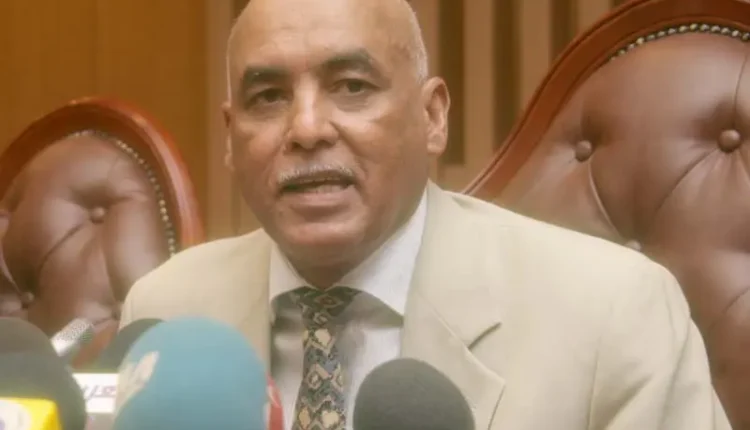
By Ambassador Omar Dahab
(Former Permanent Representative of Sudan to the United Nations)
Sudanhorizon republishes this article by Ambassador Omar Dahab, which was originally published on Wednesday by Independent Arabia.
Sudan’s obligations, as a State Party since 1999 to the 1993 Chemical Weapons Convention (CWC), are owed to the Organisation for the Prohibition of Chemical Weapons (OPCW), which was established under the provisions of that international treaty.
The OPCW is the body responsible for examining allegations made against any State Party regarding the use of chemical weapons listed in the Convention’s three annexed schedules, including chlorine gas, which the U.S. administration accused the Sudanese Armed Forces of using in the ongoing war being waged inside Sudan with weapons, funding, propaganda, and mercenaries.
In the 1990s, Baroness Cox, head of the British Christian Solidarity organization, accused the Sudanese army of using chemical weapons in southern Sudan. That allegation was subsequently disproved by two academic institutions—one in the United States and another in a Scandinavian country—both specializing in chemistry, and the claim quickly faded away.
Later, in 1998, the Clinton administration accused Sudan of producing chemical substances prohibited under the same international convention. It then launched Tomahawk missile strikes against the Al-Shifa Pharmaceutical Factory, alleging that it was manufacturing those substances. The missiles were fired from a U.S. warship in the Red Sea. The American allegations were later shown to be unfounded, and the Clinton administration found itself defending and justifying the attack after the factory’s owner filed a compensation lawsuit against the U.S. government before American courts.
In 2018, Amnesty International UK accused the Sudanese army of using chemical weapons in Central Darfur. According to the author, the objective was to obstruct the implementation of a UN Security Council decision declaring that the internal conflict in Darfur had ended and setting a timetable for the withdrawal of the African Union-United Nations Hybrid Operation in Darfur (UNAMID) by June 2020.
It is worth noting, by way of observation, that the same effort to prevent UNAMID’s withdrawal continued through various means until 2020. After those attempts failed, they ultimately succeeded in replacing UNAMID with the United Nations Integrated Transition Assistance Mission in Sudan (UNITAMS), headed by Volker Perthes, pursuant to a letter signed by Sudan’s then-resigned Prime Minister Dr. Abdalla Hamdok and sent to the UN Security Council and the UN Secretary-General in October 2020. According to the author, the letter was transmitted in English exactly as drafted externally.
As has often been the case, allegations lacking evidence and bypassing the institutions and mechanisms established under binding international agreements are overlooked whenever Sudan is involved in a dispute, conflict, or crisis. There are numerous examples, too many to enumerate, of countries disregarding international law, international institutions, and established practice whenever Sudan is concerned.
The fundamental question is whether states, along with affiliated civil society institutions and organizations, uphold even the minimum standards of impartiality and rely on them as the basis for their decisions, or whether political interests shape and distort the facts.
This issue carries profound moral implications because the victims of manipulated narratives are innocent civilians around the world, as well as states whose very existence may be threatened.
Regarding Sudan, the author argues that, alongside what he describes as an existential war, foreign interventions conducted under the banner of mediation bear responsibility for the failure of the 2005 Comprehensive Peace Agreement for Southern Sudan, which did not bring lasting peace; the 2006 Abuja Peace Agreement for Darfur, which likewise failed to secure peace; and the 2011 Doha Document for Peace in Darfur, which, despite having achieved 86 percent implementation according to the International Follow-up Committee’s report, was undermined by specific external actors before ultimately collapsing after the events of April 2019.
In this context, the author draws attention to a study prepared by the International Institute for Democracy and Electoral Assistance (International IDEA) in Stockholm, which stated: “External mediators in conflicts are invariably driven by their own interests and become spoilers.”
Within this framework, the author argues, accusations against Sudan’s national army continue with consistency, ranging from allegations of deliberately targeting civilians through airstrikes—aimed, in his view, at neutralizing the Air Force—to accusations of using chemical weapons. Meanwhile, mediators, he says, overlook the principles of international law that recognize the exclusive responsibility of national armed forces to defend their people and preserve the unity and territorial integrity of the state.
Instead, he contends, they portray outlawed militias accused of committing genocide, operating in full view of the international community, and the state’s armed forces as merely two equal parties engaged in conflict. According to the author, Sudan is uniquely subjected to this characterization.
The repeated accusations that Sudan has used chemical weapons, accompanied by what the author describes as fabricated evidence, parallel earlier accusations that Sudan committed genocide in Darfur between 2005 and 2008. Although the UN International Commission of Inquiry concluded that the Sudanese army had not committed genocide in Darfur, the matter was nevertheless referred to the International Criminal Court. The author alleges that judges in the ICC’s Pre-Trial Chamber disregarded the facts, noting that some lacked formal legal qualifications or judicial experience, and reached a predetermined conclusion that Sudan had committed genocide.
The author further argues that, despite developments in Sudan over the past four years, the same court has continued to delay making a determination regarding allegations that the Rapid Support Forces committed genocide in El Geneina, West Darfur, in 2023. He contends that the events there constitute a clear example of genocide, comparable to Srebrenica and Rwanda.
The world, the author concludes, is no longer a safe place because it is no longer a just one.
Originally published by Independent Arabia.
Shortlink: https://sudanhorizon.com/?p=15992