

Ismail Faruqi and the Islamisation of Knowledge
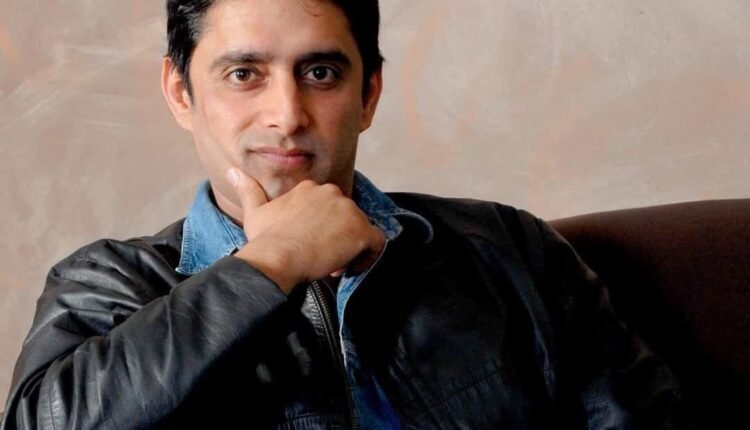
By Salim Mohamed Badat **
Who is Ismail Faruqi?
Ismail Raji al-Faruqi (1921–1986) was a Palestinian-American Islamic scholar, philosopher, and visionary thinker, widely recognized for his pioneering work in integrating Islamic thought with modern intellectual frameworks.
He held advanced degrees in philosophy, comparative religion, and Islamic studies, and served as a professor at Temple University in the United States. Faruqi was a prolific scholar, lecturer, and advocate for the intellectual revival of Muslim societies through a proper understanding of Islam’s role in all aspects of human knowledge.
His work has influenced generations of Islamic thinkers seeking to harmonize faith and reason, revelation and human experience.
The Concept of Islamisation of Knowledge
At the heart of Faruqi’s intellectual project was the idea of the Islamisation of knowledge. He argued that knowledge should not be divided into “religious” and “secular” categories, as some modern or colonial-era frameworks have attempted.
For Faruqi, all knowledge, whether mathematics, physics, engineering, economics, or sociology, exists under the dominion of God (Allah), and therefore has a spiritual and ethical dimension.
Islam does not recognize a compartmentalized view of knowledge because God is present everywhere: in theology, in nature, in human society, and in the sciences.
The Quran itself emphasizes the universality of knowledge: “And He taught Adam the names, all of them.” (Quran 2:31)
This passage reflects that knowledge, in all its forms, is part of the divine order and the human responsibility to explore and understand creation.
To say that a branch of knowledge is “not religious” is to ignore the pervasive presence of God in every aspect of existence. God is not confined to ritual or theology; He exists in mathematics, in the sciences, in engineering, and in human discovery. Thus, beneficial knowledge is inherently part of faith and part of the Islamic worldview.
The Problem with Compartmentalising Knowledge
Unfortunately, certain schools of Islamic thought have historically frowned upon secular knowledge. This division often stems from experiences during colonialism and the post-Ottoman period, when Western sciences and intellectual methods were associated with the domination and cultural intrusion of colonial powers.
Many scholars rejected these sciences wholesale, seeing them as threats to Islamic theology. But in doing so, they “threw the baby out with the bathwater,” discarding not only harmful or ethically problematic ideas, but also vast fields of knowledge that Islam itself had pioneered.
Consider mathematics, algebra, astronomy, medicine, optics, and architecture: these were areas where Islamic civilisation led the world centuries before the European Renaissance.
Rejecting modern sciences outright ignores Islam’s historic contributions and stifles the intellectual and ethical application of contemporary knowledge in Muslim societies.
Beneficial Knowledge and Faith
Faruqi made an important distinction: knowledge must be assessed based on its benefits and harms. Beneficial knowledge, whether derived from revelation or human discovery, is part of fulfilling the divine trust and purpose of human life.
Non beneficial or harmful knowledge, which contradicts ethical principles, must be avoided. But beneficial secular knowledge is an extension of faith; it equips Muslims to engage with the world responsibly, contribute to societal development, and understand the order of God’s creation more deeply.
Why Faruqi’s Work Matters Today.
In the 21st century, Muslim communities face challenges in education, innovation, and intellectual engagement with the global world. Reintroducing Faruqi’s ideas is critical for fostering an integrated worldview that respects both tradition and modernity, revelation and reason, ethics and science.
The Islamisation of knowledge encourages Muslims not only to reclaim their intellectual heritage but also to participate in shaping knowledge globally while remaining rooted in faith.
I am deeply grateful to my dear friend and elder , brother Ebrahim Jadwat, for introducing me to Faruqi’s work and his vision of the Islamisation of knowledge.
Faruqi’s scholarship reminds us that Islam is not only a religion of rituals but a comprehensive framework that encompasses all human understanding and all the knowledge necessary to navigate life in accordance with God’s will.
** Salim Mohamed Badat
Wrier exploring the intersection of faith, politics and justice
Shortlink: https://sudanhorizon.com/?p=15746