

Abdullah Al-Azraq: An Ember from the Braziers of Fire
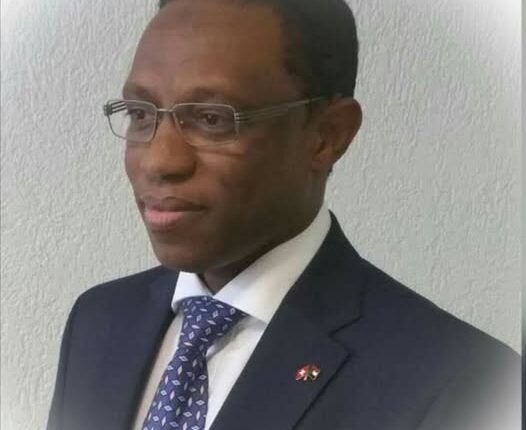
Ambassador Khalid Musa Dafalla
It was a troubled night. The faces of the dead passed before me like clouds, as I drifted between sleep and wakefulness, until I realised that it was a dream from the realm of signs, where the ascents of the spirit contend with the remnants of clay. Then came the devastating news of your death.
For someone like you, letters would stand upright, and rhymes would bow. You were patient and steadfast as illness sank into every pore of your body, until you went to God piece by piece.
You came into this world by divine measure, clothed in the legacy of the Al-Majdhoub family: knowledge, tolerance, literature and poetry. The homes of the Al-Azraq family in Gedaref were a flame from the fire of the Majadhib, towards which hearts were drawn in search of knowledge and Qur’an.
You could have become a sheikh wrapped in a white robe, moving through the ranks of learning and the Qur’anic school. Or you could have become a merchant with bulging pockets, hoarding money and swearing oaths in the Gedaref market, harvesting sesame and singing to it in a cracked voice.
But you chose the harder path.
The Ministry of Energy was your first stop, as an economist. Then came the period of study and training for your master’s degree in New York and Wisconsin in the United States. Until then, you were occupied with education and arranging family life. Then that magical arrow pierced your heart: the concerns of society and public service. You answered the call and returned to Sudan, joining the diplomatic service.
It was not your destiny to walk in the shadows, closing files, switching off the office light, carrying watermelons and newspapers at half past two in the afternoon, seeking rest at home with your family. Your restless soul, yearning for distinction and determined to defend the homeland, hovered like a bee with its hum and fragrant nectar.
You strained your mind, exhausted your body, submitted proposals, wrote papers and joined countless committees, while Sudan was under siege and hardship. You did not search the regulations for the crumbs of service—leave allowances or committee per diems. You stood firmly for what was right and held fast to the most demanding obligations. That was an unusual manner for someone of your diplomatic rank and grade.
Whispers moved through the corridors of the Ministry about that short, eloquent man who burned with activity and descended like a flood in the strength of his positions. When salaries were like the pecking of a frightened bird, he would stretch out his hands and say: let each of you take what is enough for him.
He was the Hatim of his age in generosity, spending with his right hand what his left did not know. Many of his financial entitlements were spent on the poor and on workers, without him ever asking about them.
Who would believe that when he returned from London, he was still paying instalments to the Real Estate Bank for the construction of his house? This was not due to poverty but to a habit of generosity that consumed all savings. He continued to slaughter young camels for every guest and visitor.
He also refused to take the privileges of the rank of Undersecretary, although the law entitled him to own the car he used. He left it where it was and went home.
Even stranger, he would pay overtime incentives to those working with him in the Arab Affairs Department from his own pocket when the regulations failed to cover them. He simply would not stop working, no matter how much effort or money it cost him.
I was a young diplomat in the Information Department, and he was its second-ranking official. I found him preoccupied with drafting the concept for the Solidarity Fund. He then convinced the Ministry’s leadership of the idea, although they initially required a formula of equal distribution among all categories, with no distinction between ambassador and guard. But he persuaded them to adopt deductions proportional to grades in the interest of justice.
When some refused to participate in the deductions, including well-known figures, he obtained an order from the Ministry’s leadership making participation compulsory for all, except secondees from other ministries.
The Solidarity Fund remains a continuing charity for the soul of Abdullah Al-Azraq. It relieved the distressed, protected the vulnerable, lifted the fallen, repaid debts and planted smiles on the faces of the sick, in a creative spirit of mutual support. It played its role during times of asylum, exile and displacement.
The late Abdullah Al-Azraq left an indelible mark wherever he served: Nairobi, Washington, Beijing, Sofia and London. The leaders of the Sudan People’s Liberation Movement in Nairobi during the Southern war remember his rare humanitarian spirit in providing consular services to their families, helping the weak among them and solving their problems. That helped change the stereotypical image of the wicked, treacherous mundukuru. Those qualities contributed to deepening personal relationships that later played a role during the implementation of the Comprehensive Peace Agreement.
His most prominent activity was in London, where his human friendships flourished across borders. He was the poet of the Council of Arab Ambassadors; they would request poems from him on various occasions, and they would emerge pure, graceful and flawless.
Despite the health troubles that appeared early in his life, his giving did not weaken and his literary creativity did not dry up. It continued to leaf out on the tree of life with something new each time.
He fought many battles for what he believed was right, yet never once fought for himself. He was also precise and strict in evaluating the work of those under his supervision, offering them sincere advice on what they needed to improve. This brought him murmurs and perhaps enmities. At times he was in the heart of tumult and battle; at other times he was joyful and content. But he never retreated. He used to say: I want their heads to rise above the Pleiades—for their sake, not mine.
That was a school with a history in the Ministry of Foreign Affairs, whose godfather was the former Undersecretary Mohamed Osman Yassin, along with Khalifa Abbas, and whose gatekeeper was Ambassador Awad Al-Karim Fadlallah. Despite his professional strictness, he was a spirit of noble humanity and an overflowing river of virtues and generosity.
He described himself best in his poem Ka’bat Al-Madyoum, written in praise of His Highness Sheikh Tamim bin Hamad Al Thani, Emir of the State of Qatar:
O my two companions, I am honoured and dignified,
Proud am I, and difficult to lead.
At times you see me in struggle and turmoil,
And at times I drive the swift horses, joyful and content.
At times you see me in shade and blessing,
Laughing with Salma and the radiant beauties.
I was never one to flatter men,
Nor was I ever lowly; you know my standing.
When his relationship with one minister was strained, his car plunged from the top of Shambat Bridge down towards the Nile bank, breaking his hand. That minister visited him in hospital, asking about his unjustified hostility and the articles he had written against him. Between bandages and groans of pain, Al-Azraq said to him: the hand with which I write has been broken, but my tongue remains free and sharp.
That honesty in taking positions later led the same minister, after many years and after their friendship had deepened into brotherhood, to stand among those prepared to donate a kidney to Abdullah Al-Azraq.
Anyone contemplating the full life of the late Abdullah Al-Azraq cannot properly understand him without stopping at his family inheritance from the Al-Majdhoub and Al-Azraq families in knowledge, Qur’an and poetry, as well as the human, professional, poetic and literary dimensions of his personality. He was an intellectual, a writer and a poet.
Ambassador Abdullah Al-Azraq was not a wandering poet in the valley of genius, writing for the rustling of trees, the sunrise or the soft cheek. Nor did he write poetry to earn a living or seek favour. He did not satirise or praise out of personal ties. He did all of that for a position and a purpose.
He wrote with the edge of a knife, as the poet Abdel Basit Sabdarat said, or for an existential position, as Mohamed Abdel-Hai put it.
His poem praising Al-Naha, which became famous among people, was not love poetry as some claimed, nor romantic verse as poet and ambassador Mohamed Al-Tayeb Gismallah said. It was a ceremonial position required by the reception of the Foreign Minister of Mauritania, offered in the form most beloved to the people of Chinguetti: poetry and rhyme.
The story is that the late ambassador, then the Director of the Arab Department at the Ministry of Foreign Affairs, met with his counterpart from the Mauritanian Foreign Ministry during preparations for the visit. The visiting guest, himself a poet, told him that he would recite a poem in praise of Sudan. Al-Azraq suggested that each of them write one hemistich of the same line. The poem came out as people later heard it.
Al-Azraq acted according to the wisdom of the Arabs: receive people with what they love. And the people of Mauritania love poetry. Despite the valuable material gifts presented to Minister Al-Naha, she insisted on decorating the salon of her home in Nouakchott with lines from Al-Azraq’s poem because they would endure through the ages.
Al-Azraq was a master poet, unmatched in the crafting of rhyme. He often showed me his poems before publication, and I testify that he refrained from publishing many satirical poems written spontaneously in response to a situation or to an intruder or pretender. Had he published some of them, people would have carried them far and wide.
Despite his fierce anger in satire, he would quickly return and prefer wisdom over openly speaking evil. I once read a satirical poem against a journalist who had inflated himself in peacock feathers. Al-Azraq refused to publish it. Had he done so, that little pretender—using Mohamed Al-Mahdi Al-Majdhoub’s expression—would have abandoned journalism and writing altogether.
The late Al-Azraq was also prolific in praise and pride. He did not praise out of hypocrisy, reputation-seeking, desire for gold, or fear of the sword. Rather, he was stirred by existential or aesthetic moments, producing poetry that delighted the ear.
If you wish to stand before the splendour of his expression, read this line:
A subtle breeze of longing urges on my mounts,
And from solemn poetry I drive my rhymes forward.
I noticed that he did not debase poetry or ride it like a donkey, as in light verse, nor did he cheapen his themes by writing on trivial, fleeting matters. He wrote from position, culture and the expression of his existential stance through unfolding events and renewed decrees. In his rhyme, you find the influence of Al-Mutanabbi in the strength of style and pride in self. His soul therefore inclined towards the most powerful of poetry. He sought virility and grandeur, and they came to him obediently, within the reach of his gift, from which he selected pearls, emeralds and raw gold, discarding all else as refuse.
As for Al-Azraq the intellectual and writer, this is evident in his unique series on Westerners who embraced Islam. I had long urged him to edit, refine and expand it into a published book. It would have found acceptance, circulation and wide readership.
There is also his series of autobiographical memoirs on the history of his professional service in the Ministry of Foreign Affairs, for which he developed a distinctive method. They departed from the impulses of conventional autobiography, in which the individual becomes the centre of events. His style differed from those who preceded him, whose memoirs have honoured our libraries. Indeed, the soundness of his method surpassed that followed by former Egyptian Foreign Minister Amr Moussa in his two-volume memoir Kitabiyya, covering his time at the Foreign Ministry and the Arab League, documented with the help of journalist Khaled Abu Bakr, who interviewed participants in the events and included their accounts, with notes and commentary.
Ambassador Al-Azraq’s memoirs derived their methodological uniqueness from their focus on facts, the context of events and chronological and thematic links, more than on magnifying his own role in shaping events.
There is also his book The Manufacture of Savagery, about ISIS, in which he took up the pen of the investigative researcher, examining its origins, development, challenges and prospects. He predicted its decline. When the book was published, I wrote an article saying that Al-Azraq had removed the cloak of poetry and put on a coat of iron. He wrote that book from his sickbed after a kidney transplant in Istanbul, rising wearily from the white bed to write despite doctors’ instructions to rest. The book was published on Amazon and translated into English.
The late Ambassador Abdullah Al-Azraq also engaged in written debates with a number of intellectuals and thinkers. He did not act from personal motives, but from a dialectical position. Observers may have noted that he was outspoken in his views. Consider his written exchange with the late Ambassador Dr Hassan Abdin, in which he said:
“My experience as Undersecretary of the Foreign Ministry taught me that responsibility does not end upon leaving office. The secrets available to the Undersecretary and the knowledge he acquires of the conditions of his subordinates multiply this responsibility and extend part of it until he meets his Lord.”
Al-Azraq fought debates and battles, the most famous of which took place on London-based television channels. When asked about the source of his information, he said: the dung points to the camel.
He also fought a media battle with the UNAMID mission. He held a press conference in which he said that UN forces imported smoked fish and fled from any confrontation, leaving their weapons and fuel tankers as spoils for rebel forces at the time. That was a position no one else dared to state.
But his sword broke in what became known as the massacre of promotions at the Foreign Ministry in 2015. That was a responsibility borne by those below him in experience and without clear knowledge, during his period of treatment and recovery. When I asked him why he accepted responsibility for decisions in which he had not participated, he said: “Because I am part of the leadership team, and I must bear responsibility for its decisions even if I did not take part in them.”
Regardless of whether his position was correct, it reflected his character by his courage and endurance in bearing responsibility.
Despite his distance from the Ministry’s corridors, he continued to advise those who came after him, in writing and by telephone. He warned a senior official that his dismissal order was on the table once he implemented the Empowerment Removal Committee’s decisions, and that he should take the correct position in history. The man proved right, although that official denied it. He ended up as those dismissed by the Empowerment Removal Committee did.
He was magnanimous when one of his students at the Ministry of Foreign Affairs refused to issue him a consular certificate for an ordinary family procedure at a consulate. He neither complained nor frowned.
As for Abdullah Al-Azraq the father and head of the family, that is another story. He poured out his fatherhood and affection on his family as one who feared no scarcity of feeling. He had a philosophy in this regard: a father is not merely responsible for spending money, but for giving his children and daughters constant, unconditional tenderness. The late Imam Al-Sadiq Al-Mahdi used to say that the foundation of the family is faith and tenderness.
Abdullah Al-Azraq lived his life truthfully. He was generous and loyal, a noble human being and a remarkable, powerful poet. He quarrelled honestly and befriended with nobility and faithfulness. His heart was white, and his knife was red.
O Allah, Your servant Abdullah Al-Azraq has come to You empty-handed except for pure love for You and for Your trustworthy Messenger Muhammad, peace and blessings be upon him. He gave to his family and his homeland, holding nothing back. He gave his life, his youth and his health for God and the homeland as much as he was able.
O Allah, receive him with a beautiful acceptance, and make Paradise his abode among the truthful and the martyrs; and excellent are those as companions. O Allah, pour patience upon his sons, daughters and family.
Indeed, we belong to Allah, and to Him we shall return.
Today, 7 July, marks one year since the passing of Ambassador Abdullah Al-Azraq.
Shortlink: https://sudanhorizon.com/?p=15656