

A Whisper in the Ear
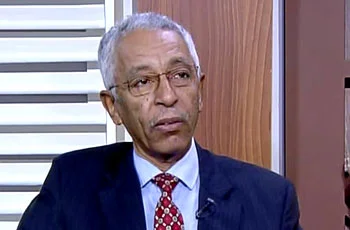
Dr Al-Khidr Haroun
Holding fast to hope and seeking comfort in optimism—especially when surrounded by setbacks, hardship and relentless death—is one of the necessities of life in a world that the Creator Himself described as one of toil and struggle. Enduring hardship with patience and resilience is the path of the wise and the victorious.
This is not the optimism of the idle dreamer, who wishes without working and deceives himself with hollow aspirations, nor the empty slogans amplified by echoing voices, or the words that merely fill newspapers or flash across the screens of smartphones and computers. Even if all of these were combined, they would never defeat invading armies that kill, burn and violate. As the old saying goes, “The sword is more truthful than letters in telling the news.”
Dark clouds gathered over Sudan almost immediately after independence—and indeed even before it. In August 1955, the massacres of Nzara, Maridi and Torit claimed the lives of innocent civilians. I still remember hearing, as a child too young even to attend Qur’anic school, about a place called “the South”. From that day onwards, the very name became associated with fear and death.
The years passed, and the 1960s arrived amid the optimism that accompanied the liberation of much of the developing world. Africa, too, was swept up in this spirit, and we sang with Mango Zambesi: “Mango, say: let no one ever divide us.”
Yet our elders failed to examine critically the poisonous legacy of the Closed Districts Ordinance. Had its venom disappeared with the departure of colonial rule, or had it remained embedded, waiting patiently to undermine Sudan?
The poisonous serpent answered through actions rather than words. The Anyanya rebellion emerged, accompanied by the Israeli Mossad, carrying out attacks against innocent civilians much as the Janjaweed militia has done in more recent times. Sudanese blood flowed from both sides, reopening a wound that has never truly healed.
The October Revolution of 1964 brought fresh hope under its famous slogan: “The solution to the Southern problem lies in solving the Northern problem.” The promise was to replace authoritarianism with democracy.
The revolutionary government appointed, for the first time, a Southerner—Clement Mboro—as Minister of the Interior, marking the beginning of what many hoped would become a new chapter of national reconciliation and unity.
But the poisonous colonial legacy remained, waiting for another opportunity.
That opportunity came when Mboro’s aircraft was delayed, and rumours spread that it had crashed. Southern residents in Khartoum erupted in anger and attacked fellow Sudanese from the North. At the same time, retaliatory violence soon followed. History remembers those events as Black Sunday, and once again Sudanese blood was spilt.
The colonial design had achieved its purpose once more.
This time, however, political leaders attempted to confront the underlying problem seriously. In March 1965 they convened the Round Table Conference to establish a fair constitutional relationship between North and South within a united Sudan.
Representatives from across the political spectrum participated, including leaders of the Southern rebellion in exile—Azboni Mondiri, William Deng, SANU and the Southern Front—who were guaranteed safe passage to attend.
Yet the conference’s recommendations remained little more than ink on paper, circulating endlessly through party offices until military rule returned on 25 May 1969 under Jaafar Nimeiri.
Ironically, Nimeiri’s government later implemented many of the Round Table Conference’s proposals through the Addis Ababa Agreement of 1972, as documented by the late Mansour Khalid. The 1973 Constitution granted Southern Sudan regional autonomy, with its own parliament and government, and peace prevailed for a decade.
The distinguished Southern statesman Abel Alier later observed that although the arrangement fell short of federalism, it was nevertheless sufficient to preserve Sudan’s unity.
Yet the old colonial blueprint was not finished.
Internal disagreements among Southern communities soon emerged. The application of simple majority rule effectively concentrated power within the Dinka community, leaving many Equatorian groups—who had themselves led the Anyanya rebellion—feeling marginalised.
Nimeiri responded by dividing the South into three regions, and rebellion resumed under Kerubino Kuanyin, followed later by John Garang de Mabior.
At the time, Ethiopia’s Marxist Derg regime was fighting Eritrean separatists. Consequently, Garang avoided openly advocating Southern secession and instead adopted a Marxist-Leninist manifesto calling not for Southern independence but for the transformation of all Sudan under the banner of scientific socialism.
This attracted many Sudanese left-wing intellectuals to his movement, even though many of its rank-and-file fighters remained committed primarily to Southern independence.
When global communism collapsed, and the Derg regime fell, Garang returned to the old colonial narrative: that the South needed liberation from domination by an Arab Muslim North associated with the historical slave trade.
Western circles that had originally crafted that narrative readily embraced it. Figures such as Baroness Caroline Cox, John Eibner, the Holocaust Centre, Rev. Franklin Graham, the Norwegian Church Aid, and even, according to allegations at the time, elements linked to the International Committee of the Red Cross and Médecins Sans Frontières, became associated with various forms of engagement supporting Garang’s movement.
One cannot fail to notice, the author argues, the continuity of coordinated international pressure directed against Sudan.
When General Nimeiri’s government eventually fell, Sudan’s political left celebrated what it believed would be the birth of a “New Sudan”. Yet Garang refused to participate, dismissing the popular uprising as merely “May Two”—a continuation of the previous regime under another guise.
For, according to this interpretation, the objective had never been a stable and united Sudan.
The Closed Districts legacy had never sought to create a genuinely integrated Sudanese nation.
Evidence for this, the author argues, can be found in the writings of John Spencer Trimingham, a British missionary associated with the Church Missionary Society (CMS). Trimingham reportedly acknowledged that had the colonial authorities not prohibited Arabic-language education in Southern Sudan following the Rejaf Conference of 1928, Islam would likely have spread much further.
He also noted that the markets of Wau and Malakal had once resembled those of northern Sudan but had come to resemble Ugandan towns under colonial administration. Likewise, western Bahr el Ghazal, once moving steadily towards Islam through commercial interaction with northern traders, had been deliberately insulated through missionary activity and the removal of those traders.
According to the author, the true purpose of the Closed Districts policy was not to preserve local cultures but to sever natural social and cultural interaction between North and South while replacing it with colonial cultural influence.
Years later, while living abroad, we met young Sudanese army officers who had been sent overseas for training. At that time, the Sudan People’s Liberation Army had overrun Kurmuk and Qeissan, creating widespread anxiety throughout northern Sudan.
Supporters of the rebellion openly warned residents of Khartoum that they would soon be expelled to Egypt or the Arabian Peninsula and that their homes would be confiscated.
When asked whether Khartoum might actually fall, one young officer broke down in tears.
“It will never happen,” he said. “And if it does, it will only happen over our dead bodies.”
When the Government of National Salvation reached a ceasefire with Garang in 2003, Garang reportedly feared that the Sudanese Armed Forces might later renew their campaign in the South. According to the International Crisis Group’s October 2003 report, he therefore encouraged the opening of a new front in Darfur.
A senior United States State Department official later acknowledged Garang’s involvement, while adding that Washington had discouraged him.
Thus, the author argues, dormant tensions in Darfur were reignited under the slogan that ethnic identity should take precedence over religion. The government fell into the trap, conflict erupted, and after Garang’s death another Black Sunday unfolded in Khartoum, deepening mistrust and ultimately contributing to South Sudan’s secession.
In recent years, many of these same patterns have reappeared in Khartoum, in the author’s view. Fear has intensified, violence has multiplied, and blood has flowed once again.
Dark clouds gather once more, while the future remains uncertain.
Expressions such as “Sudan is merely a geographical expression” and remarks made in 2006 at the Brookings Institution by Robert Zoellick, then United States Deputy Secretary of State, concerning the alleged marginalisation of Sudan’s peripheries by the political centre in Khartoum, should not be dismissed as casual observations, the author argues.
The warning is clear.
If the Sudanese Armed Forces and the forces fighting alongside them were to be defeated, the consequences would be catastrophic. They represent, in this view, the backbone of the state and its survival.
Support them with vigilance and discernment—but not with blind loyalty.
Question them. Hold them accountable. Ensure that they remain on the right course. After all, revelation ended with the Prophet Muhammad ﷺ, who himself continually consulted his companions, saying: “Advise me, O people.”
Struggle for participation and transparency in order to preserve your country.
Understand, however, that the road to democracy will be costly. Forces far beyond Sudan have, according to the author, consistently worked to prevent genuine democratic development throughout the region.
At the same time, citizens have every right to ask difficult questions of both the government and the military leadership:
Why has victory taken so long?
Why are important decisions taken without explanations that cannot reasonably be considered military or diplomatic secrets?
Why do ordinary people face increasing hunger and economic hardship?
Why does insecurity continue in many cities?
Why do abuses by some armed personnel continue?
Why does the national currency continue to lose value?
Why have many supposedly friendly nations adopted hesitant or ineffective positions at the United Nations Security Council, while only Russia has openly pledged support?
Why, moreover, have some senior Sudanese officials remained silent about Abu Dhabi, which the author regards as the principal external source of support for the Rapid Support Forces?
Would sustained diplomatic efforts focused on this issue have shortened the war?
These are legitimate questions.
They are part of every citizen’s duty towards the nation and every citizen’s right to know.
But while asking all these questions, the author concludes, each of us must also ask ourselves another:
What have I personally done to preserve Sudan?
Have I taken up arms?
Have I equipped those who defend the country?
Have I helped feed the victims of war, supported community kitchens, contributed to public awareness, offered medical care, or done whatever lay within my means?
Sudan, he argues, will survive only if every citizen contributes what they can.
Through perseverance—and more perseverance—the land will endure, together with its dignity and honour.
The evidence stands before us.
Rise before it is too late.
If we remain steadfast, hold firmly to our land, and show our willingness to sacrifice for it without fear of threats or intimidation, then, the author believes, Sudan will yet recover.
Shortlink: https://sudanhorizon.com/?p=15507