

Greed for Sudan
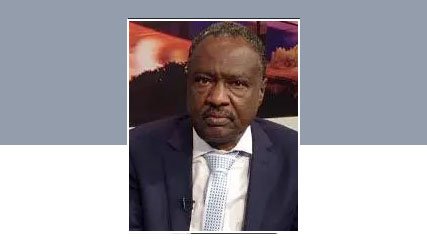
Rashid Abdel Rahim
The United States is a major power, not a country lacking the capacity to obtain the most precise and sensitive intelligence it seeks on nations and organisations worldwide. It possesses immense technological, financial and human resources, together with an extensive diplomatic and intelligence presence—both direct and indirect—globally. It also maintains a large diplomatic and security mission at its embassy in Khartoum, while numerous foreign intelligence and security agencies operate in Sudan. Many of these agencies have no objection—and may even be pleased—to share the information they possess with the American Embassy in our country.
Sudanese people are renowned for their hospitality and openness towards foreigners. While this is an admirable national characteristic, it can also be harmful, particularly when people volunteer information without caution or due regard for its potential consequences.
The American Embassy’s mission is socially active and deeply embedded within local communities. It organises Ramadan iftars both on the streets and at the embassy itself, accepts invitations, and extends invitations to many Sudanese during Ramadan and throughout the rest of the year.
The day before yesterday, the United States accused Sudan of using chemical weapons, despite presenting no evidence whatsoever. Nor has it relied upon any recognised legal or academic body that investigated the matter and reached such a conclusion. Its authorities did not commission any credible institution to examine the allegations, conduct a proper inquiry, and provide an informed basis for taking such a serious decision.
Furthermore, neither this decision nor any similar finding has been issued by the relevant international organisations responsible for monitoring and combating the production and use of chemical weapons.
In making these allegations, the United States has repeated the same approach it adopted in the case of the Al-Shifa pharmaceutical factory—committing what the author views as a grave act without any legal or legitimate foundation.
According to this perspective, the bombing of the Al-Shifa factory served the interests of those opposing the Sudanese government at the time. Likewise, the current decision is portrayed as serving the ambitions of the Rapid Support Forces (RSF), particularly in light of their successive military setbacks and failure to achieve the objectives expected of them, alongside other states seeking the defeat of the Sudanese Armed Forces and the weakening of Sudan’s government. Meanwhile, El Obeid has remained resilient, while El Geneina is described as wavering under pressure from attacks by the Sudanese Armed Forces and their allies.
Yesterday, President Trump’s Senior Adviser on Arab and African Affairs, Massad Boulos, stated that he was prepared to travel immediately to Khartoum to negotiate a ceasefire. Previously, however, American diplomats had consistently refused even to discuss travelling to Port Sudan. In 2024, the then US Special Envoy, Tom Perriello, requested that General Abdel Fattah al-Burhan travel to Port Sudan Airport to meet him. Unsurprisingly, the meeting never took place, as no one in Sudan was prepared to engage with what was widely regarded as such an unreasonable proposal.
The author argues that Boulos has shown no hesitation in completely reversing his country’s previous position whenever doing so might benefit the RSF. Not only has he declared his willingness to make a visit for which no invitation had been issued, but he has, in the author’s view, demeaned the office he occupies—assuming it is indeed an office deserving of respect rather than one created specifically for him.
Today, the RSF is retreating in Kordofan and Darfur. It is suffering repeated defeats, losing field commanders, military equipment and hundreds of fighters every day. El Obeid remains steadfast, while El Geneina is said to be buckling under attacks by Sudanese Armed Forces and allied units. In these circumstances, the RSF urgently needs external assistance capable of halting, or at least delaying, this military momentum.
From the author’s perspective, the most effective means of achieving what the rebellion seeks is through negotiations or a ceasefire that would deliver the desired outcomes. Such an arrangement, the author argues, would leave Sudan facing one of two scenarios: either a government effectively controlled by the rebellion but directed remotely by Massad Boulos, or a government led by the Sudanese Armed Forces in which Boulos would assume a role comparable to that of Paul Bremer in Iraq. According to the author, either outcome would create opportunities to advance the financial interests of his wife’s family, whose business activities extend across Nigeria and other African countries, as well as those of his in-laws, who are portrayed as expanding their wealth and commercial influence through political power.
The author concludes that the weakness of many American politicians lies in their failure to learn from their predecessors’ experiences, leading them to repeat the same mistakes. In the author’s view, Massad Boulos will not become America’s governor of Sudan as Paul Bremer became America’s administrator in Iraq, nor will Khartoum become a convenient base from which he can pursue what the author describes as the rebellion’s ambitions.
Shortlink: https://sudanhorizon.com/?p=15434