

From Berlin to Khartoum: Why Have Others Moved Ahead of Us?
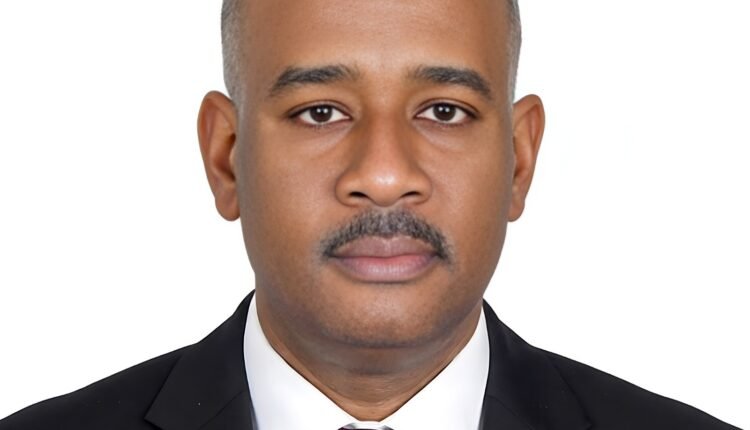
Muhannad Awad Mahmoud
Over three days in the German capital, Berlin, I participated in the 29th Arab-German Business Forum, organised annually by the Arab-German Chamber of Commerce and Industry (GHORFA). The forum is regarded as one of the most important economic platforms that brings together governments, chambers of commerce, financial institutions, and companies from the Arab world and Germany.
As the sessions explored investment, trade, energy, industry, reconstruction and sustainable development, I found myself repeatedly asking a question that remained with me throughout the event:
Why do countries with fewer resources than Sudan attract greater levels of investment? Why have many Arab states succeeded in building deep economic partnerships with Europe, while Sudan, despite its immense potential, remains far from the economic standing it deserves?
Sudan’s Positive Presence
In truth, Sudan was represented with distinction.
The Sudanese Embassy in Berlin, under the leadership of Her Excellency Ambassador Ilham Ibrahim Mohamed Ahmed and His Excellency Ambassador Idris Mohamed Ali, successfully secured a dedicated roundtable on Sudan within the forum’s official agenda under the title:
“Sudan: Partnership for Recovery, Rehabilitation and Reconstruction.”
The embassy also succeeded in attracting German companies and economic institutions to participate in the discussion, creating direct channels of communication between German investors and representatives of Sudan’s public and private sectors.
This was far more than a diplomatic formality. It was a practical example of economic diplomacy being used to advance national economic interests, attract investment and build strategic partnerships.
The Sudanese business delegation also presented a positive image of the country, showcasing genuine opportunities in mining, energy, agriculture, livestock, manufacturing, logistics and food security—sectors that attracted clear interest from participating German companies.
The Lessons from Other Arab Countries
Yet what struck me most was not what was said about Sudan, but what other Arab countries said about themselves.
Jordan: Selling Stability Rather than Natural Resources
The Jordanian ambassador presented his country as a regional hub linking Europe with the Middle East and serving as a gateway for investment in reconstruction and development projects across the region.
He highlighted the strategic partnership between Jordan and the European Union, valued at approximately €3 billion, a significant portion of which is dedicated to supporting investment and the private sector. He also announced a major investment conference to be held under the patronage of His Majesty King Abdullah II, with the participation of the President of the European Commission.
What was particularly striking was that Jordan did not present itself as a country rich in natural resources.
Instead, it marketed itself as a country rich in stability, credibility, institutions and international partnerships.
Jordan is not selling minerals or oil; it is selling its location, its stability and its ability to connect capital with opportunities across the region.
Tunisia: Integration into European Supply Chains
The Tunisian ambassador spoke about his country’s historic relationship with Europe dating back to the era of Carthage, and about Tunisia’s success in keeping pace with industrial and technological development.
By building a modern, productive base and integrating into European supply chains, Tunisia has ensured that its industrial and technological exports reach European markets—particularly Germany—as a matter of course.
His message was straightforward:
Long-term economic partnerships require policy stability, continuous industrial and technological development, and integration with global markets.
Egypt: From National Vision to Regional Platform
The Egyptian ambassador focused on the expanding economic relationship between Egypt and Germany, particularly in renewable energy, green hydrogen, infrastructure and manufacturing.
He presented Egypt as an example of a country that has transformed itself into a regional platform for investment, production and energy through a clear vision, defined projects and institutions capable of implementation.
As a result, German companies increasingly view Egypt as a long-term strategic partner.
The Common Factor
Listening to these different experiences, I realised that what united these countries was not the abundance of natural resources.
It was the clarity of their national vision.
Each country knew precisely:
what it wanted from the world;
what it had to offer investors;
which sectors deserved priority;
and what economic message it wished to communicate to its international partners.
The Yemeni Example
Perhaps the most thought-provoking example was Yemen—not because it is directly comparable to Sudan, but because it has managed to make tangible progress in attracting international investment and partnerships despite years of extraordinary challenges.
The Sudanese delegation attended the Yemen roundtable chaired by Professor Abdulaziz Al-Mikhlafi, Secretary-General of the Arab-German Chamber of Commerce and Industry, where participants discussed efforts to revive Yemen’s economy and strengthen cooperation with European partners.
During the session, the German ambassador to Yemen proudly announced that existing German investments in Yemen amount to approximately €500 million.
The importance of this figure lies not merely in its size but in what it represents.
Despite political, security and economic difficulties, Yemen has succeeded in building sufficient confidence and partnership to enable German companies to maintain a significant investment presence.
The lesson is obvious.
If a sister country that has endured immense hardship can build such an economic partnership with Germany, then Sudan—with its vast resources, enormous investment opportunities and extensive stable areas—should be capable of achieving even more, provided it develops a clear vision, an attractive investment environment and institutional stability.
The Real Challenge
At this point, the picture became clear.
The issue is not merely one of resources or opportunities.
It is fundamentally about confidence, vision, institutions and a coherent message to the world.
Investors do not compare countries based on the amount of gold beneath the ground or the size of their livestock herds.
They compare investment environments, risk management capacity, institutional reliability, available partnerships and the ability of governments to honour their commitments.
Sudan possesses resources that surpass those of many countries that have outpaced it economically.
We have:
millions of hectares of arable land;
approximately 148 million head of livestock;
vast reserves of gold and other minerals;
and a strategic geographical position linking the Arab world and Africa while overlooking one of the world’s most important maritime corridors.
Yet investors look beyond natural wealth.
They evaluate political and security stability, policy consistency, institutional effectiveness and governmental credibility.
Diplomacy Alone Is Not Enough
Despite recent political developments in Sudan, particularly the appointment of a civilian government, many international financial and business circles still regard the country as a high-risk environment—not solely because of the war, but because of uncertainty regarding the future of the state, the existence of multiple centres of armed power and differing political visions for the next phase.
This is not a political judgement.
It is an economic assessment routinely made by banks, insurance companies, financial institutions and investment funds.
One of the most important conclusions I drew from Berlin is that Sudan possesses diplomatic professionals capable of opening doors, creating opportunities and building bridges with the world.
The Sudanese Embassy in Berlin demonstrated this impressively.
At the same time, however, the experience confirmed that even the most capable diplomatic missions cannot achieve genuine breakthroughs unless they are supported by:
a clear national vision;
defined economic programmes;
investment-ready projects;
and stable domestic policies.
Ambassadors can open doors, attract investors and generate interest.
They cannot, on their own, convert that interest into real investment unless investors encounter a state that knows what it wants, institutions capable of delivery, projects ready for implementation and a unified national message reflecting economic stability and direction.
Building the House from Within
Successful economic diplomacy begins at home before it is demonstrated abroad.
The clearer the national vision becomes, the easier the task of diplomats and the greater Sudan’s capacity to attract sustainable investment and international partnerships.
Sudan today does not need to expand its circle of external disputes or engage in new diplomatic confrontations.
It needs a balanced and outward-looking foreign policy based on national interests, economic partnerships and expanded cooperation with the Arab world, Africa, Europe and Asia.
In the modern economy, no nation prospers through isolation, and no country rebuilds its economy while turning its back on the world.
I left Berlin convinced that Sudan still possesses a historic opportunity for renewal and that many investors continue to regard it as one of the region’s greatest untapped opportunities.
But resources alone are not enough.
Opportunities alone are not enough.
Even goodwill alone is not enough.
What Sudan needs is a national economic vision agreed upon by its people, institutions capable of implementation and a unified message to the world declaring that Sudan is ready for partnership, investment and growth.
Ambassadors may open the windows to the world, but building the house must begin from within.
Only then will we no longer need to ask the question that stayed with me throughout the forum in Berlin:
Why have others moved ahead of us?
Shortlink: https://sudanhorizon.com/?p=15036