

Sudan on the Brink of Fragmentation: Is There Still a Chance to Prevent It?
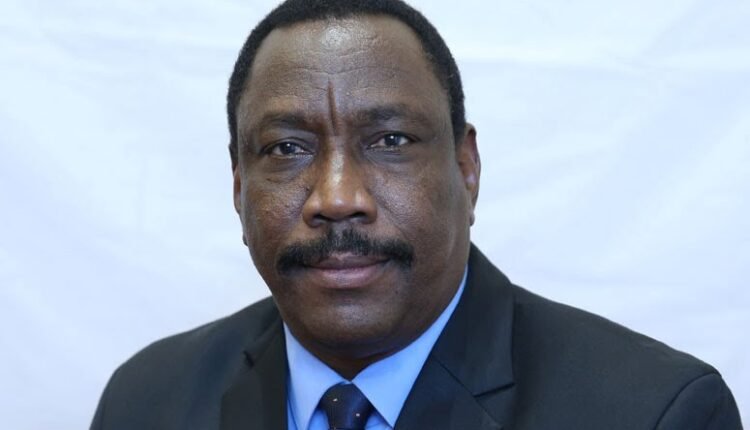
Dr Bahr Idris Abu Garda
Introduction
Those who closely follow Sudanese affairs are aware that the aggression facing the country since 15 April 2023 came in the aftermath of a failed coup that had been meticulously prepared through three coordinated levels:
Internationally, under the sponsorship and encouragement of several dominant global powers;
Regionally, under the leadership of the United Arab Emirates, acting as a functional state entrusted with carrying out the mission;
Locally, through the Rapid Support Forces (RSF), which were employed as the instrument of direct implementation on the ground.
Despite the occasional divergence of agendas due to the overlapping interests of the various actors operating at these three levels, the principal objective of the international power behind the project is widely understood to be the fragmentation of Sudan into small, weak entities that can be more easily controlled, along with their resources, while simultaneously eliminating Sudan’s vital geopolitical role in the Red Sea region, the Horn of Africa, and the African Sahel.
The Reality of Partition
The project to divide and fragment Sudan, which has passed through various stages over a prolonged period, has now reached an advanced stage. The facts and indicators supporting this conclusion include:
The formation of a parallel government to the Sudanese Government, headed by the militia leader in Nyala, exercising many of the functions and manifestations of governance.
Despite repeated declarations by states and international organisations involved in Sudanese affairs affirming their commitment to Sudan’s unity and their refusal to recognise a parallel government, practical developments show strong, undeclared support from these same actors for establishing the parallel government as a fait accompli.
The most significant indicators include:
For the first time, and in what represents the most dangerous step yet, the parallel government (the “Founding Government”) was formally and openly invited, under the umbrella of the Ta’sis Alliance, to participate in the meeting held in Addis Ababa from 3–5 June, while the Sudanese Government itself was not invited. A separate meeting was also allocated for Ta’sis with the Quint Mechanism (the African Union, the League of Arab States, IGAD, the European Union, and the United Nations), which had originally been tasked with contributing to resolving the Sudanese crisis by preserving Sudan’s unity.
This move effectively re-legitimises the RSF and its allies as a politico-military entity. It grants them international and regional recognition under the cover of the Ta’sis Alliance and the Ta’sis Forces. It serves to distance them from the RSF name and the crimes associated with it, while avoiding their designation as a terrorist organisation. The ultimate objective is to reintegrate them into Sudanese political life through the Sudanese-Sudanese dialogue they seek to shape according to their own standards and parameters.
To appreciate the scale of the effort and the long-term planning involved, it should be noted that the organisers openly declared that the outcomes reached in Addis Ababa were an extension of the Berlin Conference. This means that the processes initiated at the Paris, London and Berlin conferences culminated in the Addis Ababa outcomes, after the RSF militia and the parallel government had been effectively legitimised through their declared participation under the Ta’sis umbrella.
The parallel government has begun establishing a central bank, appointing a former Central Bank governor as its governor, printing a national currency with the assistance of supportive states, and injecting that currency into banking channels operating within areas under its control.
In another major step towards partition—despite attempts by some to downplay its significance—the parallel government conducted what it termed Sudanese Certificate examinations in Nyala, with the militia leader and head of the Ta’sis Alliance publicly inaugurating the process. The issue is not the value of these examinations themselves, which currently have no recognised standing and would not be accepted anywhere in the world. Consequently, the students who sat them are likely to become victims of the process. Nevertheless, the move remains politically significant as part of a gradual effort to impose a new reality over time.
It is also noteworthy that the Sudanese state leadership has not clearly articulated its position regarding these developments, despite remarks by Volker Perthes’ successor and UN representatives praising the conference and its outcomes. Does this imply that the leadership agrees with the UN envoy and the conference conclusions? Does it indicate coordination with the political forces that participated without expressing clear reservations?
The stagnation of military operations by the Sudanese Armed Forces and allied forces has occurred at a time when the axis backing the aggression is making intensive efforts to mobilise manpower and weaponry across all military fronts through nearly every neighbouring country, except Egypt and Eritrea.
Despite repeated appeals and advice urging the leadership to conclude strategic agreements, including mutual defence treaties with states capable of assisting Sudan in confronting what is viewed as an existential threat—Turkey being a notable example—no such agreements have materialised.
Ambiguous dealings with the United Arab Emirates, regarded as primarily responsible for the aggression against Sudan, as illustrated by the meeting held in Switzerland with the Emirati delegation two weeks ago.
The marginalisation of the Popular Resistance and restrictions placed upon some of its leaders despite its major contributions during the conflict, as well as hesitation and scepticism in dealing with allied forces, particularly the Joint Forces, and pressure exerted on some supporting groups, such as the Al-Bara’oun, reportedly in response to external pressures from actors that continue to provide military and political support to the militia.
The state leadership has failed to engage positively with the proposals and visions submitted by national political forces supportive of state institutions over recent months. Rather than coordinating efforts to fill the vacuum exploited by groups claiming to represent civilian forces abroad, the government has pursued a divide-and-rule approach among these forces, weakening their cohesion and undermining their unified position internationally.
The same approach has also been applied to supportive civilian and political forces abroad, resulting in visible fractures and a decline in the scale of activities and demonstrations in support of the state. The demonstrations held in Britain last week provide a clear example of this trend.
Can Sudan’s Fragmentation Still Be Prevented?
The only opportunity to avert the fragmentation of Sudan, and it must be seized urgently, lies in rebuilding and strengthening the national front militarily, politically, in the media sphere, and among the public, both inside and outside the country, through the following measures:
Forming a strong and effective government that remains continuously engaged through its various sectors and across all states, working seriously to combat corruption, provide educational, healthcare and social services, address energy and agricultural challenges, and operate according to transparent, measurable standards with information accessible to citizens and the national media.
Granting the Sudanese Armed Forces and allied forces full freedom to liberate the remaining territories.
Mobilising Sudanese citizens everywhere to participate in all fronts and camps, while guaranteeing that no obstacles or restrictions will be imposed upon them until all territories are liberated and the militia and its allies are compelled to accept a peace settlement that preserves national unity and the unity of state institutions, foremost among them the Armed Forces.
Signing a strategic partnership and mutual defence agreement with Turkey.
Developing and signing a comprehensive joint vision between the state leadership and the civilian and political forces supporting it both domestically and internationally, and implementing it through shared mechanisms at home and abroad.
Activating both official and popular diplomacy to isolate the United Arab Emirates and other states involved in the aggression.
Supporting and empowering the national media, which has consistently defended the country and taken the lead since the beginning of the aggression, without direction or instruction from any party.
Abandoning the belief that solutions can come from abroad. While maintaining active and continuous engagement with external actors remains important, one fact must be clearly understood: unless the effective social and political forces within Sudan reach an agreement among themselves, no external actor will be able to impose a lasting solution.
Finally
The state leadership, the foreign power behind the project, and the Sudanese political forces aligned with external actors must recognise that the profound transformations brought about by the aggression against Sudan exceed those that followed the December Revolution.
Anyone who believes it is possible to recreate the Framework Agreement, exclusionary politics, or systems of political empowerment through external backing is living under an illusion.
Likewise, every citizen concerned about the country’s future must understand that allowing the separation of any part of Sudan will inevitably lead to further fragmentation elsewhere. The broader plan, according to this perspective, is to dominate the Red Sea and its ports, control agricultural lands in eastern Sudan and integrate them into Ethiopia, seize the gold resources of the north and east, exploit the uranium reserves of Darfur, and dominate the agricultural lands of central and southern Sudan.
Such objectives can only be achieved by dividing Sudan into weak, fragmented entities devoid of genuine sovereignty.
Shortlink: https://sudanhorizon.com/?p=14769