

Towards a New Sudan: Visions for Building a Developmental State and a Productive Economy (2)
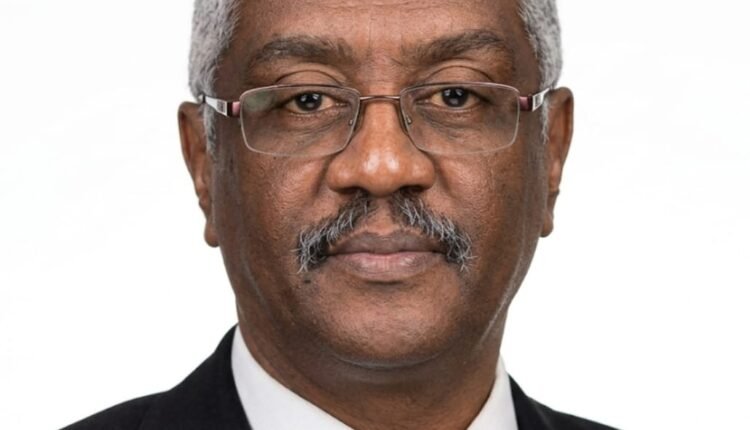
Nu’man Yousif Mohamed
When countries emerge from wars, attention usually turns to concrete before people, buildings before institutions, and the amount of money required rather than the nature of the economic model into which that money will be injected. While everyone becomes preoccupied with rebuilding what has been destroyed, the more important question is often overlooked: What kind of State do we want to build?
This question is not an intellectual luxury. It lies at the heart of the post-war struggle. Genuine reconstruction does not begin when cranes return to construction sites. It begins when confidence returns to State institutions, when the economy regains its capacity to create value, and when citizens feel that the law has become stronger than influence, competence takes precedence over loyalty, and the future is no longer hostage to political accidents.
Economic history has demonstrated that wars, despite their devastating consequences, have often become starting points for countries that succeeded in rediscovering and reinventing themselves. What made the difference was neither the volume of assistance they received nor the abundance of their natural resources, but their ability to build public institutions characterised by competence, independence, discipline and long-term vision.
Buildings can be reconstructed within a few years, but institutions require political will, strategic thinking and a new culture of State administration.
This is where the concept of the developmental state becomes important—not as a political slogan, but as a model of governance and administration that has demonstrated its effectiveness in numerous experiences.
A developmental state is neither a state that monopolises the economy nor one that withdraws from it entirely. Rather, it is a state capable of directing development, creating an environment in which private initiative can flourish, ensuring that markets operate according to fair rules, and bringing together economic efficiency and social justice.
One of the greatest dangers facing countries emerging from conflict is the belief that reconstruction simply means reproducing what existed before the war.
War does not merely destroy buildings. It also exposes structural weaknesses already embedded in the economy, public administration, and public policy.
If we merely repair what has been destroyed without addressing the underlying causes of fragility, we postpone the crisis rather than resolve it.
In Sudan, the war should not be viewed merely as a painful event that the country seeks to overcome. It should also be regarded as a historic opportunity to reconsider the very nature of the State.
Do we want a State that consumes its resources managing crises, or one that builds an economy capable of preventing crises or limiting their consequences?
Do we want institutions governed by reactions, or institutions guided by vision, planning and foresight?
The developmental state begins by redefining the function of the State.
Its role is not to become the largest investor, the largest trader or the largest employer. Rather, it should guarantee the rule of law, safeguard fair competition, stimulate production and coordinate the activities of different economic actors.
It is a State that invests in people before concrete, in knowledge before expenditure, and in building capabilities before distributing resources.
For this reason, Sudan’s first reconstruction project should not be a road, bridge or airport. It should be the reconstruction of the public institution.
Institutions plan, implement, monitor, hold actors accountable and safeguard the sustainability of development.
When institutions are weak, even the best projects will falter, the largest investments will disappear, and the richest natural resources will become sources of conflict rather than engines of prosperity.
The size of their buildings does not measure strong institutions, but by the quality of their decisions.
They are not built through legislation alone, but through an institutional culture in which competence is the criterion for appointment, transparency is the foundation of administration, and accountability is an integral part of everyday work.
When these values become embedded in practice, the State is transformed from an administrative apparatus burdened by responsibilities into a national platform for generating development.
One of the most important transformations Sudan requires is the transition from a State that manages the economy to a State that enables the economy.
A modern economy does not prosper when the State controls everything, nor when it abandons its responsibilities. It prospers when the State performs its natural role of building an institutional environment that enables the private sector, cooperatives, local communities and entrepreneurs to innovate, produce and expand.
Investment in governance therefore becomes more important than investment in cement. Investment in human capabilities generates greater returns than investment in equipment, while investment in data and digital transformation is more sustainable than temporary solutions.
Countries that build intelligent institutions capable of making decisions based on reliable information are better positioned to manage resources, attract investment and respond effectively to crises.
The developmental state also does not view the economy as a collection of separate sectors. Rather, it sees the economy as an interconnected system.
Agriculture cannot develop without financing. Financing cannot prosper without a strong banking sector. The banking sector cannot develop without modern digital infrastructure. Digital infrastructure cannot achieve its potential without quality education, an independent judiciary and an efficient public administration.
Development is not a collection of neighbouring projects. It is an interconnected network in which the weakness of one component affects the entire system.
Building a developmental state, however, cannot be achieved merely by announcing intentions or reforming a number of government agencies.
It requires restructuring the relationship among the State, the economy, and society in line with an integrated development vision.
The developmental state is not a single institution. It is a system in which policies and roles are integrated to achieve a common objective: increasing productivity, maximising value addition and improving citizens’ quality of life.
This system rests on five principal pillars:
Efficient public institutions capable of leading development with competence and independence.
A productive economy based on value chains, industrialisation and innovation rather than the export of raw materials.
A competitive private sector capable of investing and expanding within a fair and transparent environment.
A developed financial sector that channels savings towards productive activities and facilitates access to finance.
Qualified human capital supported by quality education, continuous training and healthcare systems that ensure the sustainability of productivity and innovation.
None of these pillars can achieve its objectives in isolation from the others.
Sound institutions require accurate data. The private sector requires stable legislation. Financing requires productive projects. Value chains require physical and digital infrastructure. And all economic actors require the rule of law and an institutional culture based on competence and accountability.
The success of the developmental state is therefore not measured by the amount governments spend, but by their ability to build a system that operates harmoniously and transforms resources into production, production into added value, and added value into sustainable development whose impact citizens can experience through improved living standards, better public services and greater employment opportunities.
Only at that point does the State move from managing crises to shaping the future.
Sudan’s reconstruction must therefore begin with a new institutional compact based on clear principles: the rule of law, institutional independence, good governance, strategic planning, results-based management, and linking public expenditure to indicators of performance and impact rather than merely to budgetary allocations.
The world does not measure the strength of countries by the quantity of resources they possess, but by their ability to transform those resources into sustainable economic and social value.
Sudan does not lack resources. What it needs are institutions capable of managing them effectively, policies capable of transforming them into production, and leadership that understands that building the State begins with strengthening its foundations rather than painting its façades.
The post-war period is not merely a stage for repairing what has been broken. It is a moment for redefining the relationship between the State, society and the economy.
If Sudan succeeds in building strong, independent and effective institutions, rebuilding its cities will become a matter of time.
But if it begins with buildings and neglects institutions, it may find itself years from now with new cities but the same old crises.
The question that must therefore precede every reconstruction project is this:
Are we merely laying one stone upon another, or are we building an institution capable of protecting every stone that will subsequently be laid?
The future of Sudan lies in the answer to this question.
It is also where the genuine journey begins: from a State exhausted by war to a State that generates development, anticipates the future and lays the foundations for a renaissance based not on the abundance of resources, but on the quality of institutions.
This article is part of the series “Towards a New Sudan: Visions for Building a Developmental State and a Productive Economy”, which seeks to present practical visions for rebuilding Sudan on the foundations of production, governance, innovation and value chains, thereby establishing a modern developmental state and an economy that is more competitive and sustainable.
“The future is not inherited… it is built.”
Former Banker – Institutional Development Consultant
Shortlink: https://sudanhorizon.com/?p=15787