

A Reading of Malaysia’s Technical and Vocational Education Policy: Universities as a Model
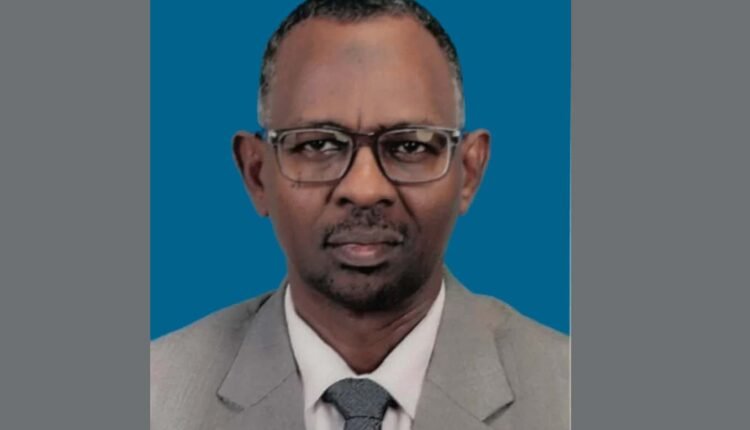
Dr Ahmed Abdelbagi
Technical and Vocational Education and Training (TVET) in Malaysia is no longer burdened by the social stigma and perceived inferiority that once accompanied it when compared with traditional academic university education. Instead, TVET has become a cornerstone of Malaysia’s economic strategy, producing skilled workers and highly qualified graduates equipped with the technical competencies required by the future labour market. In doing so, it helps create a new generation of innovators and leaders in the advanced industry.
To achieve this vision, Malaysia adopted its TVET Policy 2030, whose measures have produced remarkable results. Enrolment in technical and vocational education increased from 40,767 students in 2023 to 423,276 students in 2024. The country now has 1,398 TVET institutions, reflecting a significant shift in public attitudes towards vocational and technical education. Graduate employability rates at these institutions range from 94.5 to 99 per cent, with some students receiving job offers even before completing their studies.
TVET institutions in Malaysia operate on the principle of lifelong learning. They offer both formal education and professional training leading to certificates, diplomas, bachelor’s degrees, postgraduate diplomas, master’s degrees and doctoral qualifications, depending on students’ prior education and the structure of continuing education programmes. This approach enables people from different segments of Malaysian society to acquire skills, improve their productivity and contribute meaningfully to national development.
Given the diversity of institutions and systems within the TVET sector, this article focuses specifically on Malaysia’s technical and vocational universities, which represent a major step forward in producing highly trained graduates whose skills align with the demands of the twenty-first-century labour market in the era of the Fourth Industrial Revolution.
Malaysia has deliberately linked TVET to emerging industries such as electric vehicle manufacturing, semiconductor production, renewable energy and the digital economy. To support this objective, TVET curricula have been designed to anticipate future labour market needs, with a strong emphasis on artificial intelligence and the Internet of Things (IoT). Malaysia also aspires to become a regional hub for technical and vocational education through partnerships with China and the United Kingdom. Furthermore, the country hosts the ASEAN Regional Technical and Vocational Council, which focuses on regional policy dialogue and training in the field of TVET.
Technical and Vocational Universities
In 2000, Malaysia had several university colleges offering technical and vocational programmes. In 2007, these colleges were upgraded into four specialised Technical and Vocational Education and Training Universities (TVET Universities):
University of Malacca (Melaka State)
University of Perlis (Perlis State)
University of Pahang (Pahang State)
Tun Hussein Onn University (Johor State)
These institutions were subsequently brought together under the Malaysian Technical University Network (MTUN) to strengthen governance, improve coordination and enhance institutional effectiveness.
Key Features of TVET Universities
(A) Strong Emphasis on Practical Training
These universities place particular emphasis on practical education and vocational training across a range of engineering and technological disciplines that are aligned with the requirements of the Fourth Industrial Revolution.
In addition to technical knowledge, students receive training in entrepreneurship and investment, ensuring that graduates possess the skills required not only to secure employment but also to establish their own businesses related to their fields of specialisation.
During a visit to the Technical University in Malacca, I learned that the Malaysian government assists graduates by providing entrepreneurship loans to help them establish their own businesses. Furthermore, some engineering faculties include one or two modules specifically dedicated to entrepreneurship and business investment.
(B) Dedicated Financial Resources
Unlike comprehensive universities, which must distribute their budgets across a wide range of faculties and disciplines, technical universities allocate a substantial proportion of their resources directly to engineering and technical education.
This focused approach ensures adequate funding for technical education. In 2026 alone, Malaysia allocated approximately US$2 billion to the TVET sector as a whole.
(C) Long-Term Skills Development and Industry Integration
These universities promote lifelong learning and continuous professional development, ensuring that graduates’ knowledge and skills remain aligned with labour market demands.
To achieve this, specialised technical and vocational university centres have been established. These centres function similarly to teaching hospitals in medical schools, serving as “teaching factories” where students gain practical industrial experience alongside theoretical instruction.
The objective is to enable students to combine academic knowledge, applied learning, and hands-on industrial experience in ways that directly align with modern industrial requirements.
(D) Accredited Academic Programmes
Academic programmes offered by these universities are accredited by both the Malaysian Qualifications Agency (MQA) and the Engineering Accreditation Council Malaysia (EAC), ensuring compliance with recognised national and international quality standards.
(E) Professional Registration
Graduates are eligible to receive professional registration through the Malaysian Board of Technologists (MBOT), the statutory professional body responsible for recognising and certifying technical professionals in Malaysia.
Malaysia’s Commitment to TVET
The Malaysian government has demonstrated a strong commitment to developing and modernising technical and vocational education.
In 2025, it established a dedicated TVET Authority and allocated funding to support its operations. The government also increased the minimum wage levels for TVET graduates and incorporated ambitious employment targets into the Thirteenth Malaysia Plan, including:
700,000 jobs in the manufacturing sector.
500,000 jobs in the digital economy.
These targets are expected to be achieved by 2030.
In addition, Malaysia allocated US$2 billion to the TVET sector in 2026, including funding to train approximately 79,000 students in technical and vocational fields during that year.
To support these objectives, TVET curricula have been designed around emerging industries such as electric vehicles, semiconductors, renewable energy and the digital economy, with particular emphasis on artificial intelligence and the Internet of Things. Malaysia’s ambition to become a regional TVET hub is further reinforced by its cooperation with China and the United Kingdom, as well as by hosting ASEAN’s regional policy and training platform for technical and vocational education.
What About Sudan?
In Sudan, responsibility for the development of technical and vocational education rests with the National Centre for Technical and Vocational Education, established in 2005.
While the Centre has an important mandate, Sudan requires broader policies to raise public awareness of the value of technical and vocational education and to overcome the persistent social stigma that regards vocational training as inferior to academic education. Such attitudes continue to discourage many young people from pursuing technical careers.
There is also a need to promote the concept of TVET as a lifelong learning process open to people of all ages and educational backgrounds. This would enable individuals to improve their livelihoods, increase their incomes and contribute more effectively to national reconstruction and economic recovery.
Equally important is the development of policies that support graduates through programmes of upskilling and reskilling, ensuring that their competencies remain relevant in a rapidly changing labour market.
Sudan should also strengthen its engagement with international organisations, particularly UNESCO and its specialised centres for technical and vocational education and training. Greater cooperation with university networks and international partners would enable Sudan to draw on global experience and best practices.
Particular attention should be paid to UNESCO’s strategy entitled “Transforming Technical and Vocational Education and Training for Successful and Just Transitions (2022–2029)”, which is available through the UNESCO Digital Library.
Conclusion
Given Sudan’s urgent need for reconstruction and economic recovery, Malaysia’s experience offers many valuable lessons that could be adapted to Sudanese circumstances.
It should also be acknowledged that Malaysia has previously extended considerable support and cooperation to Sudan in this field. Unfortunately, the shortcomings lie not on the Malaysian side but on our own failure, as Sudanese institutions and stakeholders, to approach these opportunities with the seriousness, commitment and determination necessary to overcome the challenges we faced—and continue to face today.
Shortlink: https://sudanhorizon.com/?p=14603