

From Salvation to Hope… Who Actually Has Sudan’s Economic Plan?
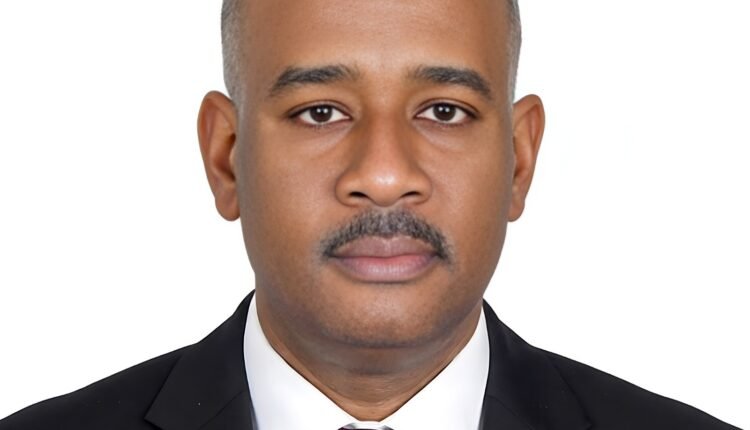
By Mahand Awad Mahmoud
The history of nations is not measured by slogans, but by outcomes. Economics, in particular, does not deal in compliments because numbers are more truthful than speeches, and results are more eloquent than rhetoric.
That is why the most important economic question in Sudan today is not who we disagree with politically, but who genuinely possesses an economic plan capable of pulling this country out of its accumulated crises.
When the National Congress Party government came to power, Sudan was already facing extremely complex economic conditions: a foreign currency crisis, shortages of essential goods, and weak public finances, followed by years of sanctions and international isolation that further tightened the pressure on the country. In that context, economic liberalisation was not merely an intellectual luxury or an ideological whim, but a choice imposed by objective circumstances: a sanctioned state, an empty treasury, and a market that needed a mechanism to provide goods.
Fairness, however, requires acknowledging that the Salvation government was not devoid of economic thinking. There were influential figures such as Abdel Rahim Hamdi, Abdel Wahab Othman, Saber Mohamed Hassan, Al-Zubair Mohamed Al-Hassan, and Awad Ahmed Al-Jaz. There were also five-year and ten-year plans, alongside attempts to restructure the economy to suit the realities of that period.
Then came the major turning point: oil. Through partnership with China, Sudan succeeded in transforming itself from an oil-importing country into an oil-producing and exporting one, and between the late 1990s and 2011 experienced what was relatively its best modern economic period. At the height of the oil era, the official exchange rate hovered between 2 and 2.5 Sudanese pounds to the US dollar, while economic growth rates exceeded 8% in some years, with average growth during the oil boom at roughly 6%. Public revenues improved, markets became relatively stable, purchasing power strengthened compared with later years, and the country witnessed expansion in roads, bridges, electricity, and infrastructure.
But the great strategic mistake was not in generating revenue, but in how it was used. That moment could have become a historic opportunity to turn oil revenues into a foundation for rebuilding the real economy: modern agriculture, manufacturing industries, a sovereign wealth fund, diversified exports, and an economy less vulnerable to shocks. Instead, most resources went towards security and defence, recurrent expenditure, and infrastructure, despite their importance, while the required structural transformation never took place. When South Sudan seceded and most oil revenues were lost, the fragility of the model became unmistakably clear.
Yet fairness again requires recognising that if the Salvation government built its economic model under sanctions, isolation, and immense pressure, it was only natural for the governments that followed to reassess that model entirely, rather than treat it as sacred doctrine.
Then came the government born of the revolution, amid enormous hopes, led by a Prime Minister with a distinguished international economic background. Sudanese people logically expected a serious review of the entire economic model, not merely day-to-day crisis management. Economically, however, events unfolded differently.
By the end of 2019, annual inflation stood at approximately 57% — already a dangerous and elevated figure. Yet during Abdalla Hamdok’s tenure, inflation surged to unprecedented levels, exceeding 269% in 2020 before peaking above 350% in 2021. Meanwhile, the US dollar had been trading officially at around 55–60 Sudanese pounds at the beginning of that phase, before the Hamdok government sharply devalued the currency and effectively recognised the parallel market rate through the so-called “exchange rate unification” policy, causing the dollar to climb to nearly 580 pounds.
These were not merely abstract figures. They had a direct impact on people’s daily lives. Prices exploded, wages eroded, purchasing power collapsed, and ordinary living became a genuine struggle.
Then came perhaps the most economically controversial episode of that era: the payment of 335 million US dollars in compensation to the United States in relation to terrorism victims, as part of arrangements for removing Sudan from the list of state sponsors of terrorism.
Some may argue that the decision was politically and diplomatically necessary. Economically, however, injecting such massive demand for dollars into a fragile and distorted market placed enormous pressure on foreign exchange availability and deepened existing imbalances at a time when the country was already suffering acute currency shortages.
The unavoidable reality is that, despite the political momentum of that period, it did not produce a clear structural economic project capable of redefining the role of the state, reforming agriculture, building competitive industries, restoring confidence in the banking system, or offering a genuine alternative to the existing economic model.
Then came the military period. Again, fairness requires acknowledging that any state fighting an existential war will inevitably prioritise security and defence. That is entirely understandable. But the economy does not stop bleeding simply because the state is preoccupied with war. The conflict destroyed infrastructure, disrupted production, reduced revenues, displaced millions, and pushed the economy into one of its most severe phases. Gross domestic product contracted sharply, inflation surged once more, the currency deteriorated, and poverty and economic vulnerability expanded dramatically.
Today, the so-called “Government of Hope” stands before a completely different country from all that came before: a nation burdened by war, with destroyed infrastructure, crippled production, weak exports, a banking sector in crisis, and citizens exhausted by the cost of living.
At this moment, Sudan can no longer afford governance on a day-to-day basis. Emergency measures and slogans are no longer enough. What Sudan needs today is a genuine economic plan — written, public, measurable, and actionable — one that addresses the consequences of war, restarts production, defines the future of agriculture, industry, exports, and foreign exchange, and places people’s livelihoods at the centre of national priorities.
Because the most dangerous thing that could happen to Sudan now is to move from one government to another, and from one crisis to another, without anyone possessing a clear economic roadmap.
The Salvation government had its own distinct economic model, whether later governments approved of it or not. The revolutionary government was expected either to revise that model or present an alternative, but it failed to do so.
The military period had understandable security priorities.
But today, there is no longer the luxury of time, because the Sudanese economy cannot endure further experimentation.
And so the question that must now be asked with complete clarity is this: from Salvation to Hope… who actually possesses Sudan’s economic plan?
Shortlink: https://sudanhorizon.com/?p=14229