

Losing Power
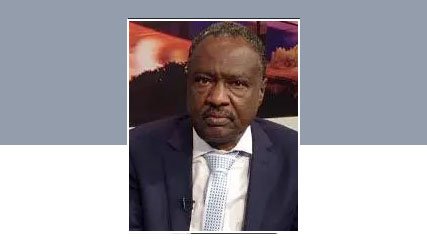
Mahjoub Fadl Badri
We are approaching the anniversary of the May 25 Government — a regime that, despite penetrating and initiating numerous political, sporting, and other initiatives, ultimately failed to achieve what satisfied the Sudanese people.
Its first Revolutionary Council, which represented the highest authority in the state, included communists such as Hashim al-Atta, Arab nationalists such as Abu al-Qasim Hashim, and Ba’athists such as Major Farouk Othman Hamdallah. Yet the regime eventually turned against most of them, eliminating them after crushing their attempted military movement.
In the same manner that May triumphed over political parties within government, it also crushed the military activities of opposition parties outside it, united under the National Front, which included the Umma Party, the Democratic Unionist Party, and the Muslim Brotherhood.
Militarily, the May regime also suppressed other poorly organised military attempts, such as the movement led by Hassan Hussein Osman.
Beyond military confrontations, May decisively dealt with the Republican Brotherhood by executing its leader, Mahmoud Mohamed Taha.
Among May’s most controversial actions — and one that contradicted Sudan’s broader national orientation — was permitting the evacuation of Ethiopian Falasha Jews through Sudan.
Yet the regime did manage to win some public approval through the Addis Ababa Agreement, which halted the southern war for a decade before conflict resumed due to disagreements among southern leaders over whether governance should be organised under a single region or three separate regions.
May’s harshness was not confined to military affairs. It also intervened aggressively in sport, dissolving sports clubs and introducing what it called the “Mass Sports” project.
In doing so, it deprived the public of Alhilal and Mirrikh — and ultimately lost popular support because of it. The regime also introduced gambling into sport through the football betting scheme known as Toto Kora.
In education, May failed to gain entry to the University of Khartoum, which openly challenged its strongman, Abu al-Qasim Mohamed Ibrahim. However, it did reshape the education system by altering the educational ladder from the old four-year structure into three stages: six years of primary education, three years of general secondary education, and three years of higher secondary education.
It may also have succeeded in penetrating the traditional political forces by recruiting capable figures from different backgrounds to strengthen its rule. From the universities, it brought in men such as Dr Jaafar Mohamed Ali Bakhit and Professor Al-Nazir Dafallah; from diplomacy, figures such as Dr Mansour Khalid.
It also drew prominent individuals from the civil service and many other fields, benefiting from distinguished personalities such as Abel Alier, Bona Malwal, Badr Addin Suleiman, Al-Rashid Al-Tahir Bakr, Maamoun Beheiry — the most famous Governor of the Bank of Sudan — Sharif Al-Tahami, the Umma Party politician who served as Minister of Energy, Dr Fatima Abdel Mahmoud, Major General Abdel Majid Hamid Khalil, and many other notable and distinguished Sudanese figures.
Despite May’s broad penetration of Sudanese institutions and extensive foreign relations, it failed to secure public satisfaction commensurate with its efforts. The reason was simple: it did not deliver tangible improvements in the everyday lives of Sudanese citizens.
The people suffered from inflation, shortages, and even famine — producing what became known as “Reagan Bread”, a phrase referring to the relief supplies donated by the United States when the government proved unable to secure sufficient food assistance from the agricultural regions of Northern, Eastern, Blue Nile, White Nile, and Gazira states.
May never achieve the stability people longed for. It was perhaps the military government during which gunfire echoed most frequently through Sudan’s streets, witnessing confrontations such as the Communist July movement and the July clashes involving the National Front.
May was arguably the most active military government in Sudan’s history — yet also among the least productive and least satisfying to the public.
It worked constantly, moved relentlessly, yet achieved little of lasting value.
And in the end, it lost much because it delivered too little.
Shortlink: https://sudanhorizon.com/?p=14059