

Sudanese Diplomacy Faces the Test of War
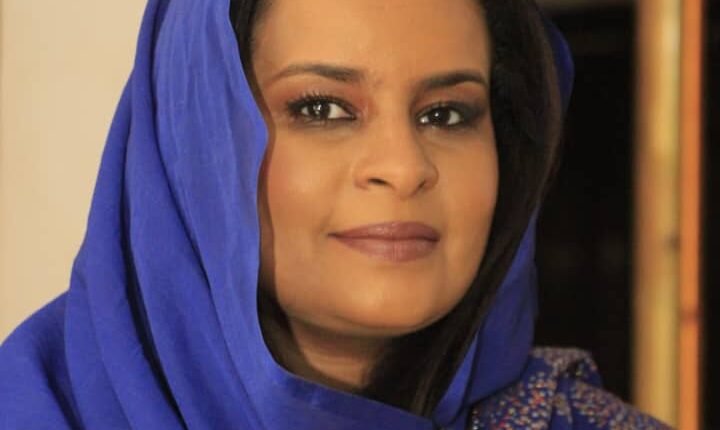
Dr. Mayada Swar Al-Dahab
In major wars, a nation’s strength is not measured solely by its military achievements on the battlefield, but also by its diplomatic successes in international forums, at the negotiating table, and in the battle to win global public opinion. While military action may temporarily halt the threat, diplomacy alone can secure gains, safeguard sovereignty, and prevent the isolation of the state, the tarnishing of its image, or the re-definition of its cause according to the narratives of its adversaries.
In the Sudanese case, this reality is clearer than ever. Sudan is facing a complex and multifaceted war that is no longer merely an internal conflict, but has transformed into an open-ended struggle involving intertwined regional agendas, cross-border interventions, and political and media disinformation campaigns, all within what international reports classify as one of the world’s worst humanitarian disasters.
Despite the gravity of this phase, it cannot be overlooked that the Sudanese Ministry of Foreign Affairs has achieved significant breakthroughs at various points throughout the war, contributing to the consolidation of Sudan’s position in several regional and international forums. Its diplomatic missions have also played a commendable role in defending state institutions and clarifying the nature of the Sudanese crisis.
However, the very nature of the war, its increasing complexities, and the expanding regional, humanitarian, and media dimensions have rendered these efforts insufficient to meet the rapidly evolving challenges. The longer the war persists, the greater the need for a more intensive, flexible, and multifaceted diplomatic effort, capable of keeping pace with daily developments and simultaneously pursuing multiple avenues for political, legal, media, and humanitarian action.
Therefore, the fundamental challenge lies not in the absence of diplomatic activity, but rather in the necessity of developing and expanding it to keep pace with the complexities of the current phase and the scale of the accelerating changes.
Today, Sudan faces not only an armed rebellion, but also external aggression and a war waged against its image, its narrative, its legitimacy, and its right to defend its national sovereignty. Sudan also faces organized campaigns to distort the reality of the conflict, presenting the war to the international community in a distorted or misleading light that ignores the scale of the crimes and violations committed against Sudanese civilians.
During this war, Sudan has witnessed grave crimes amounting to war crimes, including mass killings, widespread violations against civilians, forced displacement, and ethnic cleansing in some areas, in addition to the largest wave of displacement and refugees the world has seen in recent years. Despite this, the official Sudanese discourse abroad still falls short of reflecting the magnitude of the catastrophe and the scale of the challenges facing the country.
Sudan’s battle today is not only military, but also a battle for awareness, public opinion, international institutions, and political decisions. Therefore, diplomatic efforts are no less important than those on the battlefield, and may even be more influential at certain stages. What the battlefield cannot achieve, diplomacy can, and what military force cannot accomplish, political will can impose through international institutions and regional alliances.
Sudanese diplomatic missions abroad were expected to be more active and effective, submitting documented reports on human rights violations, organizing legal, media, and political advocacy campaigns, and maintaining continuous communication with governments, parliaments, decision-making centers, and international organizations. They should also be refuting misleading narratives that attempt to redefine the conflict by equating the state and its army with those who bear arms against it.
Furthermore, the issue of internally displaced persons and Sudanese refugees requires extensive diplomatic and humanitarian action that goes beyond traditional statements. This action should focus on building genuine partnerships with international organizations and host countries to ensure the protection of Sudanese citizens abroad, improve their living conditions, and prevent the political exploitation of their plight.
Even more alarming is the escalating use of drones and advanced weaponry in the conflict. International reports and analyses have indicated the presence of launch platforms and long-range drones in areas controlled by the Rapid Support Forces, particularly near Nyala Airport, according to satellite imagery, analyses published by research institutions, and international media reports.
Given the conflicting reports and analyses confirming the existence of cross-border roles and support in operating and backing these drones, which constitutes a direct violation of Sudanese sovereignty, what is required of Sudanese diplomacy is not to brandish the option of military escalation beyond its borders, but rather to build a comprehensive diplomatic and legal track to confront any attacks or interventions through the institutions of the international community, represented by the UN Security Council, the African Union, IGAD, and the relevant courts and legal mechanisms.
Smart diplomacy is that which transforms the violation into a case of international condemnation, and the aggression into political and legal pressure on the parties involved, without sliding into a regional expansion of the war.
On the other hand, it cannot be denied that presidential diplomacy has achieved significant breakthroughs in the recent period and has contributed to political gains that have positively impacted the battle for dignity, especially in sensitive issues that require swift action, flexibility, and direct communication at the leadership level.
However, presidential diplomacy, no matter how effective, cannot be a substitute for the Ministry of Foreign Affairs and its institutions. Its role should be complementary, not a practical replacement. Managing a state’s foreign relations requires a comprehensive institutional framework that is sustainable, capable of follow-up, and able to professionally manage international balances.
Furthermore, while the recent activities of the advisor to the Chairman of the Sovereignty Council for Foreign Affairs have generated significant activity and contacts with influential parties, the nature of these initiatives necessitated a more measured and cautious approach to certain issues, in keeping with the complexities of diplomatic work and the sensitivity of political communications.
Successful diplomacy is not merely about taking initiative, but also about managing information, controlling messages, and maintaining the confidentiality of certain sensitive channels, it is crucial to keep the details of communications and meetings confidential. Initiating the dissemination of information through the media could embarrass some parties, weaken their ability to act, and negatively impact the chances of achieving the desired objectives of those talks.
The primary entity responsible for these details is the state leadership, and this should be done through accurate and confidential reports, not through open media displays. Some diplomatic battles are won more effectively through silence than by revealing details.
Sudan today urgently needs to redefine its diplomatic role by shifting from a reactive to a proactive approach, from traditional statements to intelligent, offensive diplomacy, and from sporadic engagement to continuous action.
A state facing such complex challenges needs to integrate its military, political, and diplomatic tools to ensure its voice is clearly present in all forums and that its true narrative is reflected to the world without distortion or oversimplification.
In this regard, we encourage and support the efforts of Sudanese diplomacy at this critical juncture, and we reaffirm our confidence in its long history and its ability to fulfill its national role in defending Sudan’s interests in various regional and international forums.
We also commend the ongoing efforts of the Ministry of Foreign Affairs and its current diplomatic staff, led by the experienced and competent Minister of Foreign Affairs, in managing this complex issue and addressing its rapidly evolving challenges. This strengthens Sudan’s international presence and supports the defense of its national interests in various regional and international forums.
However, the scale and complexity of the transformations occurring within the Sudanese crisis, and the breadth of its political, media, and humanitarian dimensions, necessitate the continued development of diplomatic tools and an increased pace of external engagement. This is essential to keep pace with the rapid developments and their multifaceted nature, and to enhance Sudan’s ability to influence regional and international decision-making centers.
In light of this, Sudan remains in need of a more flexible, effective, and sustained diplomacy, capable of moving from reactive to proactive, and from traditional approaches to an influential presence in shaping international positions. This will serve to protect national sovereignty and safeguard the state’s supreme interests.
Shortlink: https://sudanhorizon.com/?p=13578