

Sovereign Council Member: Legislative Council A Constitutional Entitlement
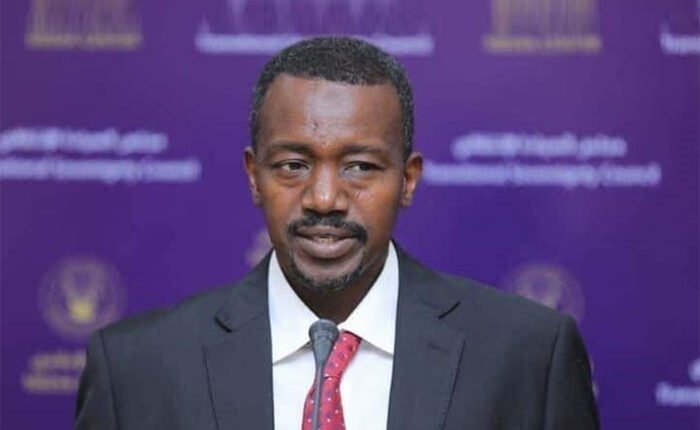
Interview by Sabah Musa
In light of the developments unfolding in Sudan on the military, political, and humanitarian levels, and the growing questions surrounding the future of the transitional government institutions and the paths of war and peace in the Sudan, Sudanhorizon conducted an interview with Sudanese Sovereign Council member Abdullah Yahya to understand the current situation, analyze the behind-the-scenes decision-making processes, and anticipate the outcomes of the crisis and its regional and international complexities.
Abdullah Yahya clarifies the ongoing debate surrounding the continuation of the Sovereign Council, the recent military changes in the leadership of the Sudanese Armed Forces (SAF), the future of the Legislative Council, developments on the ground in Darfur and Kordofan, his vision for a possible solution to end the war in Sudan, his views on the Quartet Initiative and the outcomes of the Berlin Conference, the role of the Quintet Mechanism, and the repercussions of the regional war on Sudan. The following is the text of the interview:-
– There has been much reports recently about dissolving the Sovereign Council. Are these reports accurate, especially after the recent transfers of military members of the Council?
– Such a matter has not been discussed within the Sovereign Council, and assigning some of its military members to other duties does not conflict with their work and responsibilities as members of the Sovereign Council.
– And what is your view on the recent changes in the SAF leadership?
– The changes in SAF leadership undoubtedly contribute to strengthening the decision-making center within the command and enhance the army’s capabilities, especially since it bears the greatest burden in defending the state. Integrating the supporting forces is a technical and organizational matter that requires time.
– There also reports about forming a legislative council, and some oppose the 25% representation allocated to the Juba Peace Movements in the council. What is your response?
– The Legislative Council is a constitutional right stipulated in the transitional constitution. Therefore, the government is working to establish it after completing consultations on the matter. What I can confirm here is that the state is committed to its pledges and obligations under the Juba Peace Agreement.
– Are your forces participating alongside the joint forces and the SAF in the war? When can we talk about integrating the supporting forces into SAF?
– Yes, absolutely. Our forces are actively participating on all fronts of the fighting, under SAF command. As for the integration issue, it is a technical and organizational matter that requires time, and it will be done as soon as possible, God willing. Our forces are actively participating on all fronts of the fighting under SAF command
– What are the latest military developments in Darfur and Kordofan?
– There is significant progress on all fronts of the fighting, with major victories being achieved, in addition to collapses and defecting within the ranks of the rebellion. What about the humanitarian situation?
– The war has targeted civilians in every aspect of their lives, resulting in immense human suffering. There is a pressing need for concerted local and international efforts to contain the situation, especially in displacement camps.Significant progress has been made on the battlefronts, with collapses and defections within the ranks of the rebels.
– Three years into the war, why has the military defeat of the militias been delayed, and what are the real reasons for the war’s continuation?
– External support and the complexities of the regional situation are among the most prominent reasons for the delay in achieving a decisive victory. Furthermore, foreign interventions and the exploitation of fragile security conditions in some neighboring countries have contributed to fueling and prolonging the war, which could negatively impact the security of the entire region, not just Sudan.
– How do you view regional interventions in the war?
– The positions of some neighboring countries have been negative, highlighting the security fragility. Additionally, the long and porous borders with these countries have contributed to escalating the conflict.
– How do you view the roles of Egypt, Eritrea, Saudi Arabia, and Qatar in Sudan?
– These are friendly countries with principled stances supporting stability in Sudan, and they are doing a great deal in this regard. We are deeply grateful to them.
– Do you see any repercussions from the Iranian war on the situation in Sudan?
– This war threatens security and stability in the region and affects waterways and supply chains, which in turn impacts the economic reserves of countries. Furthermore, it contributes to spreading chaos and empowering rogue groups. The humanitarian suffering is immense and requires concerted local and international efforts.
– What is your opinion on the outcomes of the Berlin Conference and the role of the Quintet Mechanism in resolving the crisis in Sudan?
– These outcomes are not significantly different from previous conferences held in Britain and France. While we appreciate any international effort to support the Sudanese people, experience has shown that any action taken in isolation from the state, as the official representative of the people, cannot be relied upon, even if supported by the Quintet Mechanism or any other entity.
– What is your comment on the Quartet Initiative? And can it achieve a breakthrough in the crisis?
– The structural flaws in the Quartet’s composition prevent it from achieving a genuine breakthrough in the Sudanese crisis.
– How do you see a solution in Sudan?
– The solution lies in eliminating the rebellion and ending the war, then having the Sudanese parties sit down together to agree on how to end the crisis, with the role of friends facilitating this dialogue without interfering in the minute details.
Shortlink: https://sudanhorizon.com/?p=13049